

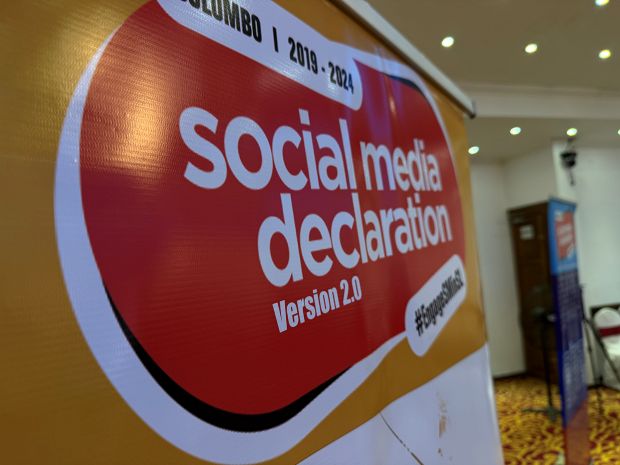
COLOMBO – The Collective for Social Media Declaration (CSMD) has called on the government to withdraw a proposed law establishing a Chartered Institute of Media Professionals, warning that the legislation could be used to restrict media freedom, regulate independent digital content creators, and undermine freedom of expression.
In a statement issued on Wednesday (24), the CSMD expressed grave concern over the proposed Chartered Institute of Media Professionals of Sri Lanka Bill, which was gazetted recently, arguing that while the bill is presented as a measure to promote professional standards in the media sector, several provisions raise concerns about political interference and regulatory overreach.
One of CSMD’s key concerns relates to the appointment of an interim governing council during the first year of the institute’s operation. The Collective argued that the council, which would be appointed with the involvement of the minister and ministry officials, would have significant influence over the establishment of the permanent governing structure and membership criteria.
“The very foundation of the institution could be shaped through political influence rather than independent professional standards,” the statement said.
The Collective also raised concerns over the bill’s definition of a “media professional”, noting that it extends beyond traditional journalists to include online content creators and editors operating on platforms such as YouTube, Facebook and TikTok.
CSMD argued that this provision could bring independent digital communicators under a formal regulatory framework, potentially subjecting them to professional oversight and disciplinary measures.
Another major concern highlighted by the Collective is the bill’s disciplinary framework. It said the legislation grants broad powers to the governing council to establish professional codes of conduct and enforce disciplinary action, while failing to clearly define what constitutes “professional misconduct”.
The absence of a specific definition could create scope for subjective interpretation, allowing criticism of governments or public officials to be categorized as unethical conduct, the organization warned.
The group further expressed concern about what it described as the potential interaction between the proposed legislation and other existing or proposed laws, including the Online Safety Act and the proposed Protection of the State from Terrorism Act.
CSMD argued that a content creator found guilty of professional misconduct could face additional consequences under other legal frameworks, including content removal, penalties, or further legal action, creating what it described as a “triple legal threat” to independent expression.
It warned that the cumulative effect of such legislation could encourage self-censorship among journalists, media workers, and social media activists, noting the proposed law could directly or indirectly affect freedoms guaranteed under Article 14(1)(a) of Sri Lanka’s Constitution, which protects freedom of speech and expression.
Calling for the immediate withdrawal of the bill, CSMD urged civil society organizations, media professionals, and citizens to unite in defence of media freedom and democratic rights.
-ENCL

Comments are closed, but trackbacks and pingbacks are open.