

Sri Lanka weighs death penalty for drug offences as drug threat worsens

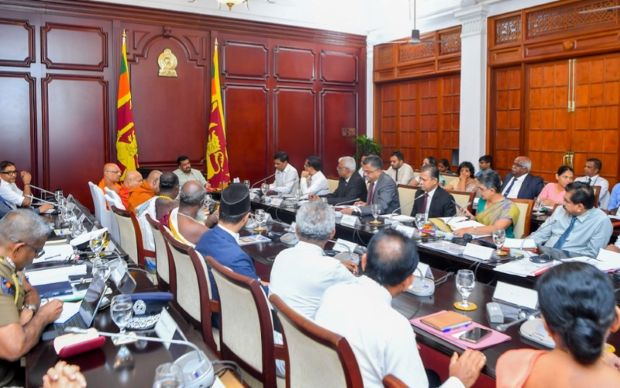
COLOMBO – Sri Lanka’s ‘A Nation United’ (Ratama Ekata) National Steering Council has discussed imposing the death penalty for drug-related offences as the country’s narcotics problem increasingly threatens its economy, tourism industry and social fabric.
The issue was discussed at a meeting of the Council chaired by President Anura Kumara Dissanayake at the Presidential Secretariat on Monday (10).
The Council discussed the need for tougher laws to combat the criminal networks and vast wealth generated through drug trafficking, which officials said had evolved from a threat to individuals and families into a broader national crisis.
President Dissanayake stressed the need for urgent practical measures and a change in public attitudes to eradicate the drug menace and protect future generations. He called for the active involvement of religious leaders, parents and community organizations in the campaign.
The meeting also reviewed proposed amendments to drug-control laws and the bail process. Draft amendments have been prepared and are at the final stage, with the government expected to gazette and present them to Parliament shortly.
Officials said delays in drug-related cases caused by the preparation of Government Analyst’s reports had been significantly reduced, with 6,414 reports issued in July alone.
The President instructed officials to introduce a system classifying drug cases according to the quantity of drugs seized, including categories for less than five grammes and less than 10 grammes, to help expedite legal proceedings involving suspects held in custody pending analyst reports.
He also ordered the establishment of a systematic coordination mechanism between the Government Analyst’s Department, Police and Prisons Department to ensure suspects are produced before court as soon as the relevant reports are received.
The meeting also discussed measures to expand the capacity and facilities of the Government Analyst’s Department, noting that Navy personnel were currently being deployed to address staff shortages. The President instructed officials to allocate funds for installing a security camera system at the department.
The Council reviewed the situation in the country’s prisons, where property damage caused by recent unrest at the Negombo, Mahara, Magazine, Pallansena and Kuruwita prisons has exceeded Rs. 255 million.
The need to expand access to psychiatric services for inmates to help address behavioural problems was also discussed.
The President instructed officials to expedite the presentation to Parliament of amendments to the Rehabilitation Act, No. 54 of 2007. He also directed that experienced retired officers be recruited on a contractual basis to help overcome delays at the Legal Draftsman’s Department.
The Council reviewed the ‘Mituru Pasala’ program, jointly implemented by the Ministries of Education and Health to prevent drug use among schoolchildren. The program includes personality-development initiatives and training for teachers, principals and counsellors to identify children at risk of drug use and provide appropriate guidance.
The President directed officials to introduce targeted programs in schools located in areas with high levels of drug use and population density.
Officials also reported an increasing trend of drug use among children attending international schools, prompting the Council to call for greater attention to the issue.
The meeting discussed making drug-testing kits available through pharmacies to enable parents to test their children, as well as the need for parents to remain vigilant about their children’s wellbeing.
Attention was also drawn to groups promoting drugs through the internet and social media. The Council discussed using social media more effectively to promote anti-drug messages and counter online drug promotion.
The meeting also reviewed programs under the Multisectoral National Strategic Plan on drugs, implemented by government ministries and agencies including the Health, Education and Public Security ministries, National Dangerous Drugs Control Board, Bureau of Rehabilitation, Police, armed forces, Prisons Department and National Child Protection Authority.
The programs are being implemented under six strategic areas: prevention of drug use; early identification; rehabilitation; legal and institutional reforms; relapse prevention and follow-up; and planning, regulation, monitoring and reporting.
Senior government officials, security force commanders, police officers and representatives of religious communities also attended the meeting.
-ENCL

Comments are closed, but trackbacks and pingbacks are open.