

DMC warns staff shortages leave Sri Lanka vulnerable to future crises

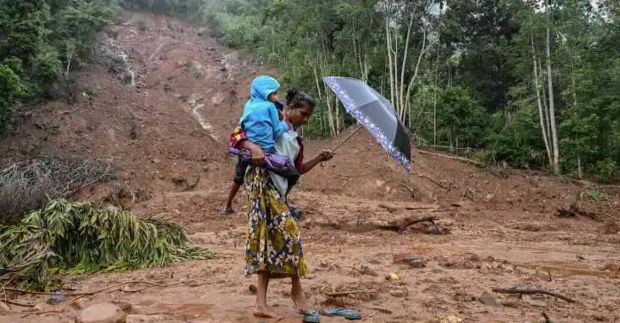
COLOMBO – Sri Lanka’s Disaster Management Centre (DMC) is ill-equipped to respond effectively to future climate-related disasters due to severe staff shortages, inadequate funding and weak operational capacity, Director General Sampath Kotuwegoda has told Parliament’s Committee on Public Enterprises (COPE).
Appearing before a recent COPE meeting, Kotuwegoda warned that the country must strengthen its disaster preparedness as the risks posed by climate change and extreme weather events continue to increase.
“With global warnings about El Niño and climate change, Sri Lanka could face disasters similar to the impact of the Ditwah cyclone in the future. We must ask ourselves how such disasters can be managed when the Disaster Management Centre itself lacks the necessary resources,” he said.
Kotuwegoda revealed that the DMC had 188 vacant positions when it responded to the Ditwah cyclone, significantly hampering its ability to manage the emergency.
“The Disaster Management Centre itself was like a shell confronting a disaster as large as an elephant,” he told the committee, describing the challenges faced by the institution during the crisis.
He also highlighted the difficulties faced by staff operating the DMC’s 24-hour emergency hotline, saying they continue to provide round-the-clock services despite inadequate facilities and difficult working conditions.
The Director General further pointed to shortcomings in the district-level disaster response system, noting that each Disaster Management Coordination Unit is staffed by only a deputy director, five clerks, an assistant and a driver, all of whom leave duty at the end of normal office hours.
“If a natural disaster occurs after 4.30 p.m., it becomes difficult to immediately contact the responsible officers, delaying the emergency response,” he said.
Kotuwegoda urged authorities to fill existing vacancies without delay and allocate adequate funding for the maintenance of critical disaster management equipment, which he said had been neglected for years.
He warned that unless these structural weaknesses are addressed, Sri Lanka’s capacity to respond effectively to increasingly frequent climate-related disasters would remain severely constrained.
–ENCL

Comments are closed, but trackbacks and pingbacks are open.