

Sri Lanka’s Haiti deployment raises UN screening concerns, say rights advocates

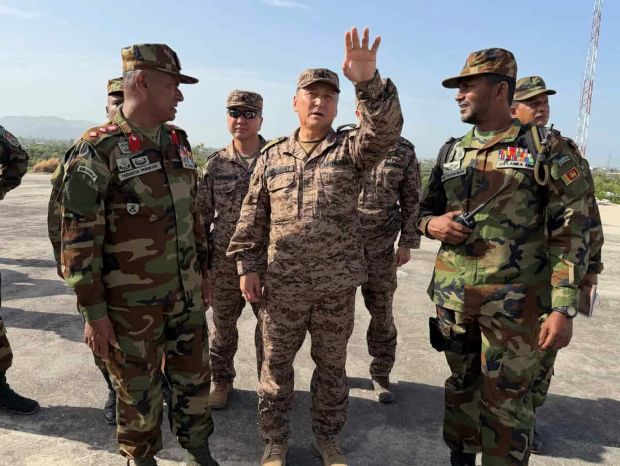
COLOMBO ‒ Human rights advocates Yasmin Sooka and Frances Harrison have raised concerns over Sri Lanka’s contribution to the Gang Suppression Force (GSF) in Haiti, questioning whether adequate human rights screening was carried out before the deployment of Sri Lankan personnel.
In an opinion article, published on PassBlue the two authors said the United Nations Security Council is due to decide on the renewal of the GSF mandate, which expires on September 30, while the United States and Panama are leading negotiations on the mandate.
Sri Lanka has contributed one of the larger contingents to the militarized operation, with 900 Army personnel and 189 Special Task Force personnel, according to Sri Lanka’s Ministry of Defence.
The authors said the deployment was particularly concerning given the findings of a confidential UN investigation in 2007 into allegations of sexual exploitation and abuse involving members of successive Sri Lankan contingents serving in Haiti between 2005 and 2007.
According to the investigation, credible allegations implicated at least 134 Sri Lankan personnel in the sexual exploitation and abuse of Haitian children, some as young as eight. More than 108 Sri Lankan personnel were repatriated by the UN in 2007.
Sooka and Harrison said there was no evidence that any of those personnel were subsequently prosecuted for the alleged offences.
They cited findings by joint UN and Sri Lankan investigators that the abuse followed an organized pattern, with children allegedly exploited in exchange for food or small amounts of money at locations where Sri Lankan troops were deployed.
The authors also questioned Sri Lanka’s subsequent handling of the allegations, saying official accounts of disciplinary action varied over time and that no members of the contingents were imprisoned for the alleged rape of children.
Sri Lankan troops serving with the GSF arrived in Port-au-Prince in July 2026, while a further contingent reached Gonaïves in August as the force expanded operations into Haiti’s Artibonite region.
The authors argued that the deployment raises questions not only about Sri Lanka’s screening procedures but also about the UN’s responsibility, as the GSF operates under national flags and a non-UN command rather than as a conventional UN peacekeeping mission.
They noted that the UN Support Office in Haiti (UNSOH), established by the Security Council, provides logistical, medical and transport support to the force. They argued that such support brings the UN’s Human Rights Due Diligence Policy into consideration, requiring the organization to assess and mitigate risks that its assistance could contribute to serious human rights violations.
The authors said credible and independent screening of personnel was therefore essential.
They also pointed to Sri Lanka’s previous human rights screening arrangements for personnel nominated for international peacekeeping missions.
According to the article, the Human Rights Commission of Sri Lanka (HRCSL) assumed a special screening role in 2016 under an arrangement with the UN and in coordination with the UN Office of the High Commissioner for Human Rights (OHCHR).
However, the authors said the mechanism faced difficulties, including the deployment in 2017 of 49 personnel to the UN mission in Lebanon without HRCSL clearance. They said the screening system was subsequently strengthened but that the HRCSL withdrew from its vetting role in June 2024.
Citing the HRCSL’s own lessons-learned report, they said the commission had faced pressure to expedite screening and reconsider decisions not to clear particular applicants.
The authors argued that, two years after the HRCSL’s withdrawal, there was still no credible replacement mechanism for screening Sri Lankan personnel deployed on international operations.
They questioned a proposal to establish an interministerial committee advised by the police and HRCSL, arguing that such an arrangement could leave the state effectively responsible for screening its own personnel.
They also raised questions over whether confidential information held by OHCHR could be incorporated into such a mechanism and whether adverse findings would be binding.
The article further claimed that interim screening of Sri Lankan personnel for the Haiti deployment had relied on information provided by Sri Lankan authorities, diplomatic checks and self-declarations.
The authors said the reported rejection of at least one Sri Lankan candidate by the US Embassy in Haiti under the US Leahy Law raised additional concerns about the screening process.
They also questioned the participation of Sri Lankan Deputy Minister of Defence in discussions on developing a new peacekeeping screening mechanism, noting that he had served as second-in-command of Sri Lanka’s third Haiti contingent during the period covered by the UN investigation.
The authors stressed that this did not establish any personal involvement in the alleged abuses but said it created a potential appearance of a conflict of interest if he participated in designing or certifying a mechanism examining the conduct of former contingents.
They contrasted Sri Lanka’s treatment with that of Bangladesh, saying OHCHR had recommended in February 2025 that Bangladesh establish an effective and sufficiently independent human rights screening mechanism before nominating personnel for the Haiti operation.
Sooka and Harrison questioned why a comparable condition had not been applied before Sri Lanka’s deployment.
They also highlighted the continuing risks facing children in Haiti, citing UN records of substantiated cases of sexual exploitation and abuse involving personnel from the Kenyan-led predecessor mission in 2025.
The authors noted that Sri Lankan troops are now operating at forward bases in the Artibonite region, while UNICEF has estimated that children account for a significant proportion of members of Haiti’s armed groups.
They argued that the combination of Sri Lanka’s previous record in Haiti, the current security environment and the absence of what they consider an independent screening mechanism should prompt the UN and Sri Lankan authorities to review the safeguards governing the deployment.
-ENCL

Comments are closed, but trackbacks and pingbacks are open.