

Rethinking women’s participation in diplomacy in Sri Lanka

By Piyumani Ranasinghe and Nillasi Liyanage
Proclaimed in June 2022 through UN General Assembly Resolution, the International Day of Women in Diplomacy Day was celebrated on June 24 under the theme Diplomacy for All, calling for inclusive diplomacy that represents the diversity of societies and prioritizes equality, peace and cooperation worldwide. The resolution encourages member states, UN bodies, educational institutions and civil society to mark the day through education, public events and awareness campaigns. The aim is to amplify women’s voices in diplomacy and support their full and equal participation at every level of international affairs.
Sri Lanka has much to reflect on, not only the historic contributions of Sri Lankan women to diplomacy and political leadership, but also the continuing drive towards meaningful participation and representation. Viewed in the backdrop of its positive engagement at the 4th Ministerial Conference on Feminist Foreign Policies (FFP), there is hope that the journey is gathering momentum.
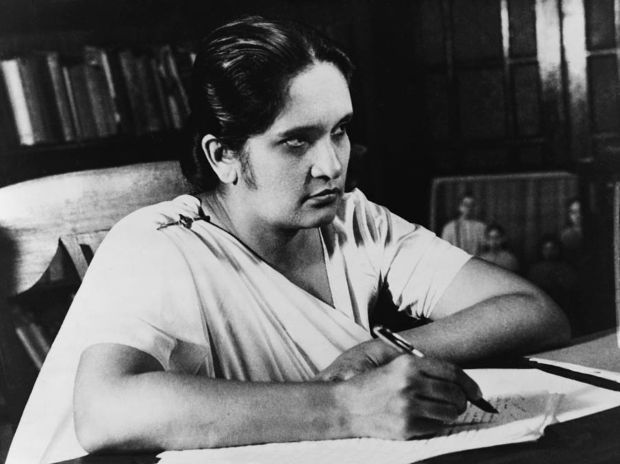
In 1960, Sirimavo Bandaranaike was elected prime minister, making her the world’s first woman prime minister. The Evening News in London remarked, “Presumably, we shall have to call her a Stateswoman”. While framed as a curiosity at the time, this comment captured the novelty with which women’s political leadership was viewed globally.
Sirimavo Bandaranaike played a remarkable leadership role in diplomacy, making pioneering contributions to the international order. Chairing the Non-Aligned Movement in 1976, she advanced conversations on peace, disarmament and cooperation among the so-called developing countries during a period of intense geopolitical competition. Her contributions were instrumental in bringing about enduring change such as laying the foundation for the establishment of the UN Conference on Disarmament and the declaration of the Indian Ocean Zone of Peace.
In 1958, entering a field that had historically been regarded as a male domain, Manel Abeysekera became Sri Lanka’s first woman career diplomat. Her career, which included serving as Ambassador to Germany and Thailand and contributing to diplomatic institution building, demonstrated that women were not merely participants in diplomacy but contributors to shaping its practice.
Speaking at the 4th Ministerial Conference on Feminist Foreign Policy in 2025, Sri Lanka’s Deputy Minister of Mass Media, Dr Kaushalya Ariyarathne, highlighted progress in women’s political representation, including the doubling of women’s representation in Parliament, the introduction of a 25% quota for women in local government and the appointment of women to 38% of ambassadorial positions, a figure higher than the global average.
In her famous work Bananas, Beaches and Bases, feminist international relations scholar Cynthia Enloe states, “Rarely are women seen as the explainers or reshapers of the world. Rarely are they made visible as thinkers and actors.” What this essentially makes us think is how, despite women’s long-held agency, dominant patriarchal frameworks project women as symbols or objects rather than strategic foreign policy actors. How can Sri Lanka move from women’s presence in diplomacy and governance towards ensuring that women meaningfully shape the priorities, practices and outcomes of foreign policy?
The evolution of women’s participation in diplomacy is not only a story of women entering spaces traditionally occupied by men. As Enloe argues, understanding global politics requires asking, “Where are the women?” Enloe is not merely talking in terms of numbers but in terms of whose experiences, knowledge and priorities shape decisions about peace, security and international cooperation.
This is where FFP becomes a useful framework to break down the assumptions that have historically defined diplomacy as a man’s job and expand the understanding of what constitutes a global concern and who can speak up about them.
FFP has been defined as a framework that puts the everyday lives of historically marginalized communities at the centre and proposes a broader and deeper analysis of global issues. Therefore, FFP does not simply seek greater representation of women within existing structures but asks the critical question of whether the structures and priorities as well as practices of foreign policy are sufficiently inclusive and equitable.
A feminist approach to foreign policy also requires attention to issues beyond traditional security concerns. Sri Lanka’s ongoing economic recovery process amid recovery from prolonged war and enduring vulnerabilities caused by environmental and climatic issues demonstrate how communities experience poverty, insecurity and environmental vulnerability disproportionately. An inclusive approach to diplomacy, taking a FFP lens, must therefore consider not only relations between states but also the lived realities of people, particularly women.
Sri Lanka and feminist foreign policy
Sri Lanka’s engagement with FFP remains at an exploratory stage. While its participation in the Paris Ministerial Conference demonstrated openness to the conversation, its decision not to endorse the Paris Joint Political Declaration suggests that translating broad commitments into formal foreign policy principles remains an ongoing process.
The declaration set out feminist tenets that the signing states expressed intent to promote, with the overarching commitment of advancing women’s rights and gender equality across foreign policy platforms, incorporating feminist viewpoints regarding digital, climate and crisis diplomacy, promoting inclusivity in decision making and holding out against anti-rights trends. Despite the reticence to subscribe to the joint political declaration, Sri Lanka’s approach has been one of willingness to engage with the FFP discourse. However, Sri Lanka was not represented at the 5th Ministerial Conference on Feminist Foreign Policy held in Madrid in June 2026.
Currently, the National Policy Framework, the National Policy on Gender Equality and Women’s Empowerment, the Women’s Empowerment Act of 2024, the National Action Plan on Women, Peace and Security and the establishment of the National Commission on Women in 2025 envision promoting women’s representation at various levels, considering specific vulnerabilities faced by women. The current chairperson of the National Commission on Women, Grace Asirwatham, is also a celebrated former diplomat.
Way forward
The challenge is not be only about opening the doors of diplomacy to women but about examining what happens once they cross the threshold. Studies of Sri Lankan women in diplomacy highlight that gendered expectations continue to influence career choices, advancement opportunities and perceptions regarding women’s suitability for certain assignments. Questions around mobility, family responsibilities, care burdens and assumptions about leadership capacity continue to shape women’s experiences within diplomatic careers. Currently, the country also faces multidimensional vulnerabilities, which particularly put women and other vulnerable marginalised groups in precarious positions. Therefore, how women in diplomacy can translate into enhancing equality and shared responsibility in fostering women’s meaningful participation remains critical.
-Piyumani Ranasinghe and Nillasi Liyanage are Attorneys-at-Law, currently serving as Senior Research Fellows at the Lakshman Kadirgamar Institute of International Relations and Strategic Studies and this article was originally featured on groundviews.org

Comments are closed, but trackbacks and pingbacks are open.