

Unite or Perish: The Opposition’s 2029 Challenge

By Kassapa
Anura Kumara Dissanayake may have been at the height of his popularity when he won the presidential election in September 2024, but statistics don’t lie: he polled only 42% of the vote while the votes of Sajith Premadasa and Ranil Wickremesinghe combined totalled more than 50% of the vote.
Come 2029, there is a moral in that story for the opposition: united we stand, divided we fall. That is why there have been murmurs of what is loosely called a ‘Joint Opposition’ (JO) fighting Dissanayake and the National Peoples’ Power (NPP) at the next presidential elections. Some preliminary discussions have been held in this regard.
They have taken the form of meetings of opposition party stalwarts, trying to work out ways of opposing the government. There has been representation from across the range in the political spectrum, including the major players, the Samagi Jana Balavegaya (SJB) and the Sri Lanka Podujana Peramuna (SLPP).
Unsurprisingly, the parties which are most interested in the JO project are the two precursors of the SJB and the SLPP, the United National Party (UNP) and the Sri Lanka Freedom Party (SLFP), respectively. That is only understandable; they both want to maximize their chances of representation in the next Parliament and know that contesting separately, those chances are near zero. Notably, both parties, now being shadows of their former glorious entities, have no discernible potential presidential candidate, at least for now.
The SLFP, especially, is in shambles. The party is divided into several factions, so much so that it is difficult to keep track of which faction does what. Nimal Siripala de Silva, Dayasiri Jayasekara, Anura Priyadarshana Yapa and Duminda Dissanayake would all like to lead the party, and there is a spate of court cases that need to be sorted out. It is so messy that even party patron and former President Chandrika Kumaratunga don’t want to get involved in the affairs of the party anymore. If anything good can come out of talks of a Joint Opposition, it is the possibility that it could reunite the different factions of the SLFP!
As for the UNP, the party has only one potential candidate as long as Ranil Wickremesinghe is alive. Now recovering after medical treatment that involved major surgery, Wickremesinghe has rarely been seen in public since then, and even when he did appear, he hasn’t been his usual feisty self. He will be eighty years of age in 2029, and whether he will be able to step up to the challenges of a gruelling presidential election campaign then is in doubt.
Also joining this so-called Joint Opposition brigade are two relatively new political entities, the Eksath Janaraja Peramuna (EJP- or the United Republic Party) and the Sarvajana Balaya (SB). The former is led by ex-minister Patali Champika Ranawaka. The latter is headed by businessman tuned media magnate turned politician Dilith Jayaweera.
Both the EJP and the SB have common features: they are mostly unknown entities with no extensive grassroots networks, they have little popular appeal, but, in Ranawaka and Jayaweera, they are both led by two very ambitious men who both believe that they are worthy of being the country’s next President. In fact, at the recent May Day rally of the SB, Jayaweera was hailed as the ‘tenth Executive President of Sri Lanka’ when he rose to speak! Ranawaka is less crude but does little to disguise his naked ambition.
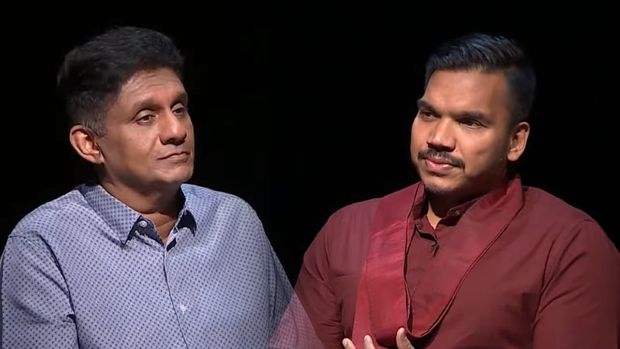
Into this mix that constitutes the ‘Joint Opposition’, the SJB and the SLPP are forced to contribute, lest they appear as if they are dragging their feet. However, it is no secret in the corridors of power that Namal Rajapaksa and Sajith Premadasa desperately wish to be candidates for their respective parties in 2029. No amount of talk about a ‘Joint Opposition’ will change that.
Of course, a ‘Joint Opposition’ which combines the SJB, SLPP, UNP, SLFP, EJP and the SB is by itself a contradiction in many ways. These are erstwhile political rivals who bayed for each other’s blood and criticized each other’s policies in the strongest possible terms. To come together simply for the purpose of opposing the NPP is not a strategy that will sit well with voters, or even their own party members.
Then, there is what is called the ‘Ranawaka Factor’. Patali Champika Ranawaka believes that among the field of potential leading opposition candidates- Premadasa, Rajapaksa, Jayaweera and Ranawaka- he is the smarter, better politician. He is probably right. He is more articulate and comes across as having a plan and a vision among a field of nominees who have already spoiled their chances.
Premadasa’s verbose utterings are the subject of social media jokes, Rajapaksa is under the cloud of corruption, and Jayaweera is seen mostly as an ‘also-ran’, and the blatant racist stance of his party will not help his chances. Premadasa and Rajapaksa have also not demonstrated anything special in their political lives other than bearing the correct surname and being the children of their fathers, who haven’t exactly left fond memories with most voters.
That is why, even while there are ongoing discussions about forming a so-called ‘Joint Opposition’, there is a suspicion that Ranawaka is cleverly using this forum to project himself as the candidate with the best possible chance of defeating Anura Kumara Dissanayake at a presidential election.
What Ranawaka is hoping for is for all opposition parties to realize that he is their best bet and provide him their endorsement for 2029. Right now, that seems impossible. However, stranger things have happened in Sri Lankan politics. Opposition parties did pool their resources and allow Maithripala Sirisena to challenge Mahinda Rajapaksa in 2015, and the Janatha Vimukthi Peramuna (JVP) lent their tacit support by not contesting. The end result is history now with Sirisena securing the unlikeliest of victories.
Three years is a very long time in politics, and it would be foolish to make predictions about the fate of the opposition now. Nevertheless, it is safe to assume that the lessons of 2024- that divided, they are certain to fail- will certainly hold true.
–counterpoint.lk

Comments are closed, but trackbacks and pingbacks are open.