

Sri Lanka’s tainted coal deal and the resignation of energy minister Kumar Jayakody

By Shihar Aneez
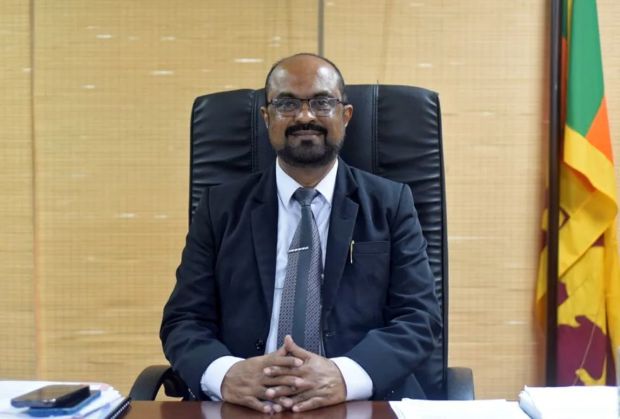
COLOMBO – In a dramatic turn of events that has sent shockwaves through Sri Lanka’s political establishment, Energy Minister Kumar Jayakody has tendered his resignation following allegations of a coal procurement deal that resulted in substandard coal.
The controversy, which centres on the quality of coal imported for the Chinese-built Norochcholai Power Plant, has forced the government of President Anura Kumara Dissanayake to take unprecedented measures to protect its core mandate of anti-corruption,
The same decision a month earlier could have significantly saved the government’s reputation, as the resignation followed huge reputational damage.
It also threatens all previous energy ministers and government officials who handled coal procurement deals, with the appointment of a special presidential commission to probe all tenders since the start of the Norochcholai plant.
Lower Quality Coal
The crisis began when internal testing results from the Ceylon Electricity Board (CEB) leaked, showing that a significant coal shipment failed to meet the specified calorific value.
While the international laboratory at the loading port in Indonesia certified the coal at above 5,900 kcal/kg, the unloading port tests in Sri Lanka indicated values as low as 5,520 kcal/kg.
This discrepancy suggested two possibilities: either the coal was tampered with during transit, or the initial certification was fraudulent.
The financial implications are massive; substandard coal not only damages the sensitive machinery of the power plant but also results in a lower energy output for the same price, essentially amounting to a multi-million-dollar loss to the state.
Government’s Defence
During the special press briefing held on Friday (17), Foreign Minister Vijitha Herath strongly defended the energy minister.
The government’s stance was clear: while they acknowledge that a “low-quality” batch of coal arrived, they maintain that the procurement process itself was followed rigorously and without corruption.
Cabinet Spokesman and Health Minister Nalinda Jayatissa at the same media briefing emphasized that the current administration had implemented a five-year anti-corruption plan and that the procurement in question followed all established international guidelines.
“We followed the procurement guidelines, the sample testing, and utilized independent international laboratories,” Herath stated.
However, he admitted that the quality levels of the received coal were indeed “at a low level”, leading to a crisis of confidence that the minister’s resignation sought to mitigate.
Full-Scale Inquiry
To address the mounting public outcry and allegations of a deal between officials and suppliers, President Anura Kumara Dissanayake appointed a high-powered Presidential Commission.
This commission, led by Supreme Court Justice Gihan Kulatunga, has been given a broad mandate to investigate the entirety of Sri Lanka’s coal-related power generation history up to April 16, 2026.
The Commission is now expected to identify the specific political authorities and officials at Lanka Coal Company (Pvt) Ltd who approved the shipments, while determining if the government has the legal standing to suspend payments to suppliers who provided substandard fuel.
It will also investigate if this was an isolated incident or part of a systemic coal mafia operation that has existed since the inception of coal power in Sri Lanka.
Political Sacrifice or Accountability?
The resignation of the energy minister is being viewed through two different lenses.
For the opposition, it is a clear admission of guilt and evidence that the new government has fallen into the same traps as its predecessors.
For the administration, it is presented as a new political culture where ministers take responsibility for their departments’ failures, even if personal corruption is not yet proven.
The government challenged the opposition during the briefing, with Minister Bimal Rathnayake urging those making accusations to stop shouting in Parliament and instead bring their evidence before the newly formed commission.
During the media briefing, the government was reminded of its earlier remarks on the former speaker who resigned after he was unable to prove his educational qualification, a doctorate from a Japanese university.
The government, which defended the former speaker, later said he failed to produce the evidence for his claim.
The government’s intention is the key in this fiasco.
Analysts say it remains to be seen if the government’s effort is a time-buying process or a genuine effort to clean up systemic corruption.
Economic Implications
Beyond the political fallout, the tainted coal deal presents a severe threat to Sri Lanka’s energy security.
Norochcholai provides a significant portion of the country’s base-load power.
Using substandard coal leads to increased maintenance costs: Impurities in low-quality coal can cause boiler tube leaks and long-term structural damage to the furnaces.
This could also lead to higher electricity costs: If the coal generates less heat, more of it must be burned to meet demand, driving up the cost per kilowatt-hour.
At a time when Sri Lanka is carefully managing its reserves, paying premium prices for low-grade fuel is a direct hit to the national economy.
Though the government has vowed to prevent a power cut at any cost, Sri Lanka may have to depend on the mercy of Middle Eastern de-escalation for cheaper fuel to reduce the cost of energy and prevent a power cut.
-economynext.com

Comments are closed, but trackbacks and pingbacks are open.