

UNDP-backed program helps SGBV survivors rebuild livelihoods in Sri Lanka

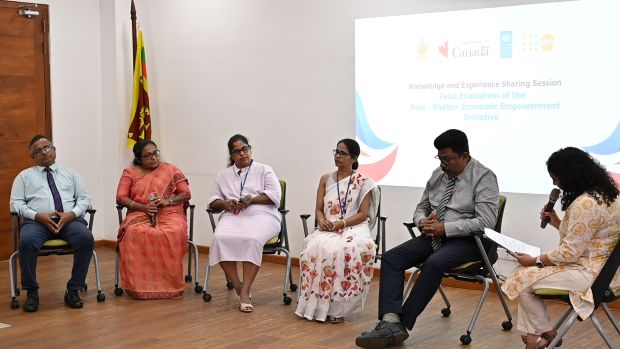
COLOMBO – The United Nations Development Program (UNDP) in Sri Lanka, with support from the Government of Canada, hosted a ‘Knowledge and Experience Sharing’ event on Thursday (2) to showcase the results of the final evaluation of the 15-month ‘Capacity building for post-shelter economic empowerment of Sexual and Gender-Based Violence (SGBV) victims-survivors’ program.
The initiative forms part of the broader Ensuring Justice for Victim-Survivors of Sexual and Gender-Based Violence in Sri Lanka project, implemented by UNDP in partnership with the United Nations Population Fund (UNFPA) and with financial support from the Government of Canada.
The event brought together representatives from the Government of Sri Lanka, the High Commission of Canada, UN agencies, civil society organizations, shelter managers, financial institutions and private sector stakeholders to discuss lessons learned and opportunities to expand survivor-centred economic empowerment programs.
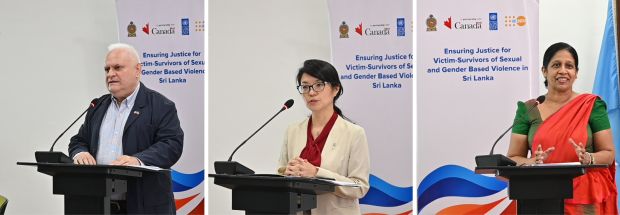
Highlighting the importance of the economic empowerment of survivors of SGBV, Tharangani Wickramasinghe, Secretary, Ministry of Women and Child Affairs, said economic independence was essential to helping survivors break cycles of abuse. “Economic empowerment is not optional; it is essential,” she said, describing access to sustainable livelihoods as a critical safeguard against returning to cycles of abuse and dependency.
Noting that the program supports Sri Lanka’s National Action Plan on Sexual and Gender-Based Violence (2024–2028) and complements the country’s National Shelter Guidelines by focusing not only on protection but also on long-term recovery and reintegration, she said the pilot program demonstrated the need for stronger collaboration among government institutions, civil society organizations and the private sector to expand survivor-centred livelihood opportunities nationwide to break the cycle of violence and ensure no woman is left behind.
Kiril Iordanov, Head of Cooperation at the High Commission of Canada, said the program highlighted the importance of combining protection services with economic opportunities.
“When women have access to safety, skills and economic opportunity, they are able to rebuild their lives with dignity and confidence,” he said, adding that Canada would continue supporting initiatives promoting gender equality and the rights of survivors.
UNDP Resident Representative in Sri Lanka Azusa Kubota said the pilot had shown that economic empowerment could significantly strengthen survivors’ recovery when delivered through a survivor-centred approach. “Even as a short pilot, this initiative demonstrated that post-shelter livelihood support can contribute to recovery, confidence and successful reintegration,” she said.
The program targeted women currently living in shelters, as well as those who had recently left shelter homes, across the Northern, North Central, Central and Western provinces.
Participants received vocational training, entrepreneurship mentoring and business development assistance, while shelter staff underwent specialized training to better support survivors pursuing self-employment or small businesses after leaving shelters. A robust monitoring and evaluation framework ensured the sustainability and impact of the program.
According to the final evaluation, the program produced measurable improvements in employment readiness, self-confidence, income generation and social reintegration.
Of the 79 survivors interviewed during the final assessment, 56 had established or joined income-generating businesses. Nearly 70% were operating individual enterprises, while the remainder were involved in group businesses supported by civil society organizations or other women entrepreneurs.
The evaluation found that many participants had progressed from economic dependence and limited livelihood opportunities to acquiring practical business skills, generating income and rebuilding confidence.
The knowledge-sharing session enabled a meaningful exchange of experiences and strengthened connections with key stakeholders, including commercial banks and private sector partners, to support the integration of victim-survivors into the workforce, contribute to the economy, and improve their standard of living.
-ENCL

Comments are closed, but trackbacks and pingbacks are open.