

Sri Lanka in 2025: A year of crisis, reform and reckoning

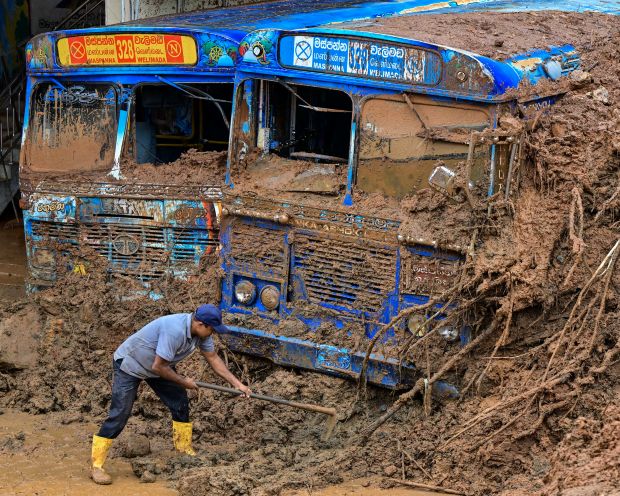
The year 2025 will be remembered as one of the most consequential and testing periods in Sri Lanka’s recent history – a year marked by devastating natural disasters, fragile economic recovery, intense political scrutiny, renewed geopolitical engagement, and tentative steps toward long-delayed reforms in governance, media freedom, education and reconciliation.
From the catastrophic impact of Cyclone Ditwah to debates over economic direction, democratic safeguards and national healing, Sri Lanka’s journey through 2025 was defined by a constant tension between crisis management and long-term transformation.
Sri Lanka’s defining event of 2025 was Cyclone Ditwah, which made landfall in late November, unleashing torrential rainfall, flash floods and deadly landslides across all 25 districts.
Authorities confirmed that more than 640 people were killed, while hundreds remained missing weeks after the disaster. The scale of displacement was unprecedented in recent memory: over 107,000 homes were damaged or destroyed, and an estimated 272,000 people remained displaced well into December, sheltering in schools, religious buildings and host communities.
The economic toll was staggering. A World Bank rapid assessment estimated direct physical damage at US$4.1 billion, equivalent to about 4% of Sri Lanka’s GDP, with roads, bridges, railways, irrigation systems and water supply networks among the worst affected.
Beyond physical damage, the cyclone exposed deep structural vulnerabilities in Sri Lanka’s economy and labour market. The International Labour Organization (ILO) warned that around 16% of national GDP, approximately US$16 billion, and nearly 374,000 jobs were at risk, raising fears of prolonged localized economic disruption if recovery efforts faltered.
Agriculture, a lifeline for rural livelihoods, bore a disproportionate share of the damage. Floodwaters submerged paddy lands, destroyed crops and livestock, and crippled inland fisheries.
The Food and Agriculture Organization (FAO) reported that over 106,000 hectares of paddy land were destroyed, severely affecting smallholder farmers just ahead of the main cultivation season. Tea estates in the Central Highlands also suffered extensive landslide damage, compounding already fragile plantation livelihoods.
Humanitarian agencies warned that food insecurity and malnutrition risks could rise sharply if funding gaps persisted, particularly among children, elderly persons and female-headed households.
Human and Social Impact
Cyclone Ditwah compounded existing inequalities. Many of the hardest-hit communities were already struggling with poverty, weak infrastructure and limited access to services.
The United Nations Office at Geneva cautioned that prolonged displacement threatened children’s education, safety and psychosocial well-being. Thousands of students faced interrupted schooling as classrooms doubled as shelters, underscoring the fragility of Sri Lanka’s education infrastructure in times of crisis.
Civil society groups documented deep social trauma, with entire neighbourhoods buried under mud and families cut off from healthcare, livelihoods and clean water.
Even before Cyclone Ditwah, Sri Lanka’s economic recovery remained fragile following the 2022 sovereign default and ongoing International Monetary Fund (IMF)-supported reform program.
While inflation eased and foreign reserves showed signs of stabilization in early 2025, the cyclone reversed several gains. Agricultural losses alone, estimated at over US$800 million, undermined rural incomes, while damaged transport networks disrupted trade and market access.
The World Bank and IMF acknowledged that reconstruction spending could eventually boost headline GDP growth, but warned that human capital losses and debt constraints would weigh heavily on medium-term recovery.
Governance, Politics and Crisis Management
President Anura Kumara Dissanayake’s National People’s Power (NPP) administration faced one of its sternest tests during the disaster, with scrutiny over relief coordination, centre–provincial cooperation and transparency in aid distribution.
Domestic political debate throughout 2025 extended beyond disaster response to broader issues of institutional reform, fiscal discipline and public accountability. Analysts noted persistent challenges in aligning policy ambition with administrative capacity, particularly in moments of national crisis.
Amid these pressures, 2025 marked a notable year for the media sector. Stakeholders, including journalist unions, civil society organizations and policy experts, worked toward drafting a National Media Policy, aimed at strengthening press freedom, improving professional standards, and safeguarding journalists amid rising digital and physical threats.
The government also initiated moves to replace the Prevention of Terrorism Act (PTA), long criticized by rights groups for enabling prolonged detention and abuse. While concrete legislative changes remained limited by year’s end, the move itself was seen as a cautious step toward aligning national security laws with democratic norms.
Education reform emerged as another critical theme. Authorities launched reviews of curriculum relevance, teacher deployment and digital learning gaps, issues that became more visible as floods disrupted schooling nationwide.
Calls intensified for disaster-resilient schools, expanded psychosocial support, and targeted investment in rural and estate-sector education, highlighting how climate shocks are increasingly intertwined with social policy.
In the Northern and Eastern Provinces, 2025 saw renewed, though cautious, efforts toward reconciliation. Government engagement with local leaders focused on land release, livelihoods and memorialization, while reconstruction projects brought both opportunities and sensitivities in post-war communities.
Observers noted that meaningful reconciliation would depend on sustained political will, accountability and inclusive development, particularly as disaster recovery reshaped local power dynamics.
Geopolitics and Regional Support
Sri Lanka’s strategic position in the Indian Ocean kept it firmly on the regional diplomatic radar.
India played a leading role in post-cyclone assistance, delivering relief supplies, deploying disaster response teams and announcing a US$450 million aid package for repairing railways, roads and bridges. Under Operation Sagar Bandhu, India also installed a 120-foot Bailey bridge in Kilinochchi, restoring vital connectivity and symbolizing New Delhi’s Neighbourhood First policy.
China remained an active partner, with Colombo seeking Beijing’s assistance to repair cyclone-damaged transport infrastructure. Chinese assessments and prospective support featured prominently in reconstruction planning, even as debates over debt sustainability and geopolitical influence continued.
Environment and Climate Reckoning
Cyclone Ditwah sharpened national awareness of climate vulnerability. Scientists warned that warming sea surface temperatures likely intensified the storm, echoing patterns seen across South and Southeast Asia.
Environmental groups highlighted severe damage to biodiversity in the Central Highlands, where landslides devastated fragile ecosystems. Public debate increasingly focused on climate adaptation, early warning systems and resilient infrastructure planning.
Despite the turmoil, 2025 also showcased Sri Lanka’s resilience. Tourism rebounded in unaffected regions, community solidarity surged during relief efforts, and sporting and cultural events, such as the 2025 SLC Invitational T20 League, provided moments of collective relief and normalcy.
Civil society organizations, volunteers and faith groups played a critical role in delivering aid, advocating for vulnerable communities and filling gaps where state capacity was stretched.
Looking Ahead
As Sri Lanka enters 2026, it faces a complex recovery agenda: rebuilding infrastructure, restoring livelihoods, strengthening democratic institutions and preparing for a climate-uncertain future.
The lessons of 2025, hard-earned and costly, underscore the need for integrated recovery strategies that link humanitarian response with economic reform, social protection, reconciliation and climate resilience.
How effectively Sri Lanka translates these lessons into policy and practice will shape not just its post-disaster recovery, but the long-term trajectory of its democracy, economy and social cohesion.
-ENCL

Comments are closed, but trackbacks and pingbacks are open.