

The forgotten history of Malayali workers in Sri Lanka holds lessons for migration today

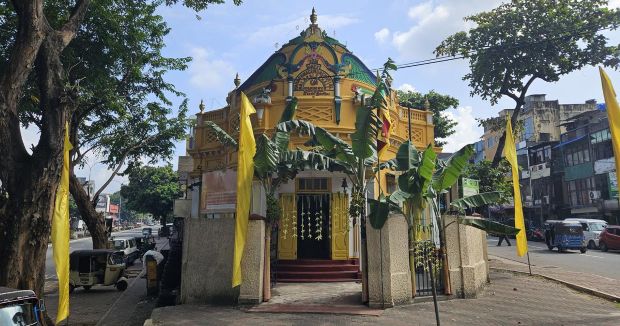
By Nandagopal R Menon
Starting from the 1970s, as the Persian Gulf became the preferred destination for Malayalis seeking work outside India, the history of Malayali migration to Sri Lanka (previously Ceylon) from the late 19th century was largely forgotten.
But understanding the continuities between these two experiences has broader implications for understanding modern migration.
The religious and caste communities from Kerala – Ezhavas and Muslims – that dominated the migration to Sri Lanka were also the ones that drove the migration to the Gulf beginning in the 1970s. It could be argued that it was the experiences of Sri Lanka and the lessons learned there that prepared Malayalis for the migrations that came after.
In the current context of increasing xenophobia and occasional attacks on Indian migrants in Europe, Australia and North America, the history of anti-migrant hostility that followed the movement of Malayali workers to Sri Lanka is worth recalling.
In the first half of the twentieth century, Sri Lanka witnessed calls to repatriate Indian labourers as several political parties took strong positions against Indian migration.
As the independence movement in Sri Lanka began to stir in the 1920s, anti-migrant politics gained legitimacy. From the late 1930s, traffic between the two parts of the British Empire started dwindling. It eventually died out in the 1960s.
Widespread xenophobia
This was not an isolated case. Xenophobic sentiments were also apparent in other areas of the British Empire to which Malayalis and Indians migrated in large numbers (especially Burma and British Malaya).
In Sri Lanka, the Great Depression created widespread economic hardship. The prices of key exports such as copra, tea and rubber began to fall. Rates of unemployment shot up. Indian workers and foreigners more broadly became the target of animosity.
Malayalis predominantly lived in Colombo, in contrast to the labourers in tea estates, who were overwhelmingly Indian Tamil. In cities and towns and in the industrial sector, some Sinhalese politicians singled out Malayalis for attacks, more verbal than physical.
Who were the Malayalis of Sri Lanka? Malayali, a Malayalam newspaper published in Colombo, wrote in March 1926: “There are no Malayali Brahmins among them. Very few Nairs. Malayali Sinhalese (simhalar) called Ezhavas and Theeyas, are the majority. Malayali Muslims are also plenty.”
Communist leader AK Gopalan, who visited Colombo in 1938, wrote that most Malayalis hailed “from Malabar, particularly from Ponnani, and to be more precise from Nattika”.
This area on the coast was part of the erstwhile princely state of Kochi and covered the district of Thrissur and the northern edge of Malappuram district in present-day Kerala.
This connection with Kochi and its port, from where Malayali migrants started their journey, resulted in ‘Kochiyan’ being used as a derogatory term both by ordinary Sri Lankans as well as the colonial state.
Malayali continued: “Most Malayalis are wage labourers (coolie panikar). There are wage labourers who earn half a rupee to one or one and a half rupees a day in factories and companies. There are domestic servants in white [dorai] households known as butlers, maties [assistants in the kitchen] and cooks; syces [kuthirakar], drivers; there are clerks, accountants and peons in companies and offices who earn a monthly salary; and very rarely some civil servants.”
Colombo as Kochi
Sri Lankan labour leader AE Goonasinhe, who was often portrayed as the bete noire of Malayalis by the Colombo Malayalam press, explained why he “singled out” Malayalis during a State Council debate in 1936.
“They take to every kind of job,” Goonasinhe said. “In the case of the Chettairs, for instance, they come here and are engaged in the money-lending business. There are a good number of other Indians who stick to one particular trade…My complaint against these individuals is that the Malayalee always undercuts.”
Viswabharathi, another Colombo Malayalam newspaper, cited Sinhalese politicians in February 1937 saying Colombo had become a Malayali “settlement” (sanketham) and it “would not be an exaggeration to call Colombo Kochi”.
The Malayalam press reported several calls to boycott Malayali shops and restaurants and not to give them places to stay.
Goonasinhe pointed out in a State Council debate in 1939 the “appalling” conditions in which Colombo Malayalis lived, which any other ethnicity (“Sinhalese, Malay, Burgher or Tamil”) with a family could not endure: “They rent out a house for about Rs 20 or Rs 25, and in that there are about 50 to 60 men. Therefore, the house rent that each of them pays is 50 cents for a month.”
These neighbourhoods triggered much anxious imagination. Malayali men, most of whom were single or unaccompanied by their wives, were rumoured to be preying on hapless Sinhalese women.
Culturally deep-rooted associations between Kerala and black magic (manthravadam), peppered with pseudoscientific theories of racial miscegenation citing the Nazi example, were invoked in the Sinhalese press to warn Sinhalese women to be wary of Malayali men.
However, colonial records and Malayali narratives tell a different story. The British contrasted the readiness of Malayalis (and Indians more broadly) to do all kinds of work with the purported inefficiency of Sinhalese workers and their aversion to certain kinds of work. This was part of the circulation of ethnic stereotypes produced by the British.
In the Colombo port, Sinhalese labour evidenced “a dislike for carrying of heavy bags over considerable distances…” and were “not as efficient as the Indians either in the slinging of difficult cargo… or in the stowing of cargo in the ship’s hold”, claimed Sir Edward Jackson, who led an inquiry into immigration to Ceylon in 1936-’37.
Jackson wrote that while “a strongly marked sense of individualism was the apparent reason for the failure of Ceylonese workers… in work requiring the merging of the individual in a team…Malayalees [we]re especially inclined to work in teams”,
The Colombo-based Malayalam press was not behind in reproducing such tropes. Affirming that Sinhalese labour could not “tolerate” the “difficulties of work” like Indians, an editorial in Viswabharathi in February 1937 wondered why “the Sinhalese could not immigrate to different parts of the world like the Indians? They could go to India also; Indians won’t object.”
The proliferation of ethnic stereotypes fed off each other, though the impact of the British narrative was far more potent and fanned the fires of suspicion between the Sinhalese and Malayalis.
These tensions are now a minor and almost forgotten footnote to modern South Asian history, unlike the Tamil-Sinhalese divisions that shaped post-Independence Sri Lanka, with bloody consequences.
Great Depression
The economic distress caused by the Great Depression and colonial domination framed the Sinhala-Malayali discord. As the world stands on the precipice of another economic crisis, thanks to US-Israeli imperialist adventures in West Asia, and an exacerbating climate catastrophe that triggers desperate mass migrations from the Global South to the North, many core elements of the Sinhala-Malayalee discord have become pertinent once again.
Labour and livelihood issues were the heart of the Malayali-Sinhalese friction. This was coupled with Sinhalese demands to end Indian migration and repatriate Indian migrants. Ethnic stereotypes were constructed – while Malayalees were accused of stealing the work opportunities of Sinhalese, the latter were blamed for missing out because of their inefficiency and slackness.
Currently, political campaigns that migrants from India and the Global South (both documented and undocumented) are “stealing” jobs of “natives” are rife in several Western countries. Calls for “remigration” are fast gaining legitimacy. Taking a strong position against migration is an important electoral plank for political formations across the spectrum in the West.
–Nandagopal R Menon is a postdoctoral research fellow at the Department of Social and Cultural Anthropology, University of Münster, Germany, and he can be contacted at nr.menon@uni-muenster.de. A version of this post first appeared on the blog of Colombohistories

Comments are closed, but trackbacks and pingbacks are open.