

One hundred years after S.W.R.D. Bandaranaike’s federal vision

By Raj Sivanathan
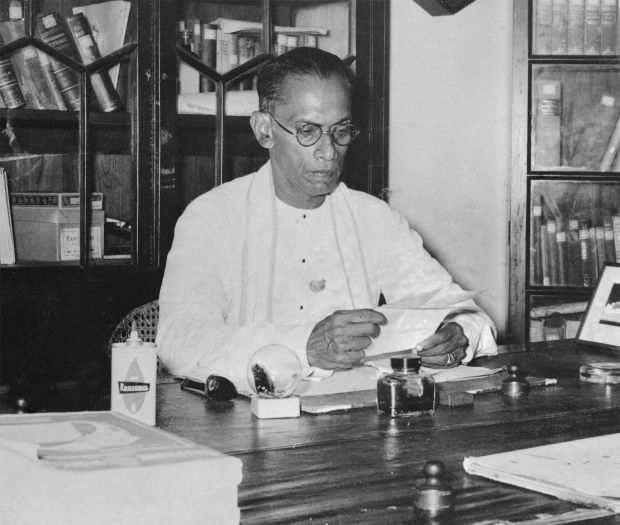
One hundred years ago, in July 1926, a young S.W.R.D. Bandaranaike argued in Jaffna that “Some form of Federal Government will be the only solution” to Ceylon’s political problems. One hundred years later, Sri Lanka continues to grapple with many of the same constitutional and political questions.
Since independence in 1948, successive governments have acknowledged, in different ways, that the country’s ethnic question requires a durable political settlement. From the Bandaranaike-Chelvanayakam Pact and the Dudley-Chelvanayakam Agreement to the Indo-Lanka Accord, the 13th Amendment, constitutional reform proposals and repeated commitments made before the international community, the pattern has been remarkably consistent: promises have been made, negotiations have begun, expectations have risen, political resistance has emerged, and implementation has stalled.
This is no longer simply a Tamil political issue; it has become a national governance issue. Countries that fail to resolve internal political disputes often pay a heavy economic and institutional price. Sri Lanka’s post-independence history illustrates this reality. Decades of conflict, mistrust, emergency rule, militarization, political instability, corruption and policy inconsistency weakened democratic institutions and diverted enormous national resources away from education, innovation, regional development and economic growth.
The financial collapse of 2022 resulted from multiple factors including poor economic management, unsustainable borrowing, weak fiscal discipline, corruption and governance failures. Yet those economic failures occurred within a political system that had struggled for decades to build inclusive institutions capable of earning the confidence of all communities.
Every generation of leadership has faced the same fundamental question: how should power be shared within a multi-ethnic democratic state?
Some leaders recognized the need for compromise but retreated under political pressure. Others rejected reform altogether. The consequence has been declining public confidence in political leadership itself. History will ask whether Sri Lanka’s leaders collectively demonstrated sufficient courage to resolve the country’s most difficult constitutional challenge.
President Anura Kumara Dissanayake inherited a country exhausted by economic collapse, public frustration and widespread distrust of the political establishment. His election represented more than a change of government; it represented public rejection of decades of political patronage, corruption and ineffective governance.
The NPP administration has pledged cleaner government, institutional reform and accountability. However, history is likely to judge whether this administration is willing to address the deeper structural issues that previous governments repeatedly postponed. These include conducting Provincial Council elections, implementing meaningful devolution under the constitution, ensuring balanced regional development, strengthening democratic institutions and engaging honestly with the long-standing political aspirations of the Tamil people.
Democracy is not merely the conduct of elections; it is the willingness to respect political diversity, protect minority rights, uphold constitutional commitments and distribute power fairly. The Tamil political question has survived changes of government, constitutions and generations because ignoring it has never made it disappear.
One hundred years after Bandaranaike recognized that constitutional innovation deserved serious consideration, Sri Lanka still debates whether meaningful power sharing is politically possible. Perhaps the more important question is whether the country can afford another century without resolving it.
President Dissanayake now has an opportunity to demonstrate that democratic renewal means more than fighting corruption. It also means creating institutions that every citizen – Sinhala, Tamil, Muslim and others – can trust equally.
If his administration succeeds in strengthening democracy, rebuilding independent institutions, promoting balanced regional development and engaging honestly with long-standing constitutional questions, it may begin restoring confidence in the state. If not, future generations may conclude that another historic opportunity was lost.
History rarely remembers leaders only for the offices they held. It remembers whether they solved the problems their predecessors left behind.
One hundred years after Bandaranaike’s federal vision entered the constitutional debate, the challenge remains. The question is no longer whether the issue exists. The question is whether today’s leaders possess the political courage, democratic conviction and statesmanship to resolve it.
History is watching.
-This article was originally featured on groundviews.org

Comments are closed, but trackbacks and pingbacks are open.