

PM launches ‘1000 Villages, 1000 Works’ project to boost rural livelihoods

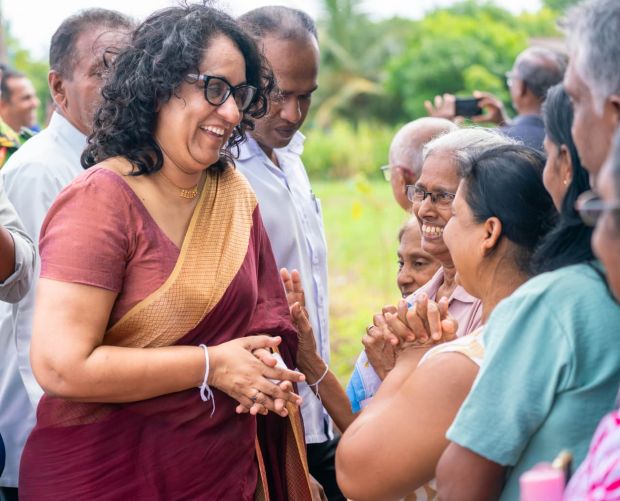
COLOMBO – Prime Minister Harini Amarasuriya described the government’s ‘Prajaa Shakthi’ (People’s Power) initiative as a key expression of participatory governance, aimed at empowering communities, reducing poverty and developing region-specific economic opportunities across the country.
The Prime Minister made the remarks while launching a project to cultivate previously abandoned agricultural land in the Nampamunuwa Grama Niladhari Division, marking the Colombo District rollout of the ‘1,000 Jobs in 1,000 Villages’ program under the National Poverty Eradication Movement.
The initiative is being implemented by the Ministry of Rural Development, Social Protection and Social Empowerment through Prajaa Shakthi Development Societies established at the grassroots level.
Addressing the gathering, Amarasuriya said the program reflected the government’s commitment to involving citizens directly in decision-making and development activities rather than limiting public participation to election periods.
“The People’s Government is not about the government acting alone. It is about government institutions, public officials and citizens working together to build the country,” she said, noting that the Prajaa Shakthi program had been established in Grama Niladhari divisions across the country to encourage community participation in local development and economic decision-making.
She argued that previous empowerment programs had often failed to deliver meaningful benefits to ordinary people and instead strengthened political interests. In contrast, she said, the new initiative seeks to place responsibility for local development directly in the hands of communities.
According to Amarasuriya, the program will focus on identifying the unique economic strengths and opportunities of individual regions, enabling communities to develop sustainable livelihoods based on local resources and needs.
She also stressed the importance of strengthening domestic production and food security amid growing global economic and geopolitical uncertainties.
“In a world facing increasing challenges, economic security depends on building self-sufficiency. Goods that can be produced locally should be produced locally, while imports should be limited to what is essential,” Amarasuriya said, adding that improving agricultural productivity and reviving underutilized land would contribute to national food security and help build a more resilient economy.
Amarasuriya said the success of the program would depend on close cooperation between government institutions, public officials and local communities. “When poverty is reduced and people are economically empowered through these initiatives, it will contribute to the creation of a prosperous nation and a better quality of life for all,” she noted..
The event was attended by Colombo District Coordination Committee Chairman and MP Lakshman Nipunaarachchi, local government representatives, public officials, farmer organizations and community leaders.
-ENCL

Comments are closed, but trackbacks and pingbacks are open.