

Govt. expands CT scanner network to strengthen early disease detection

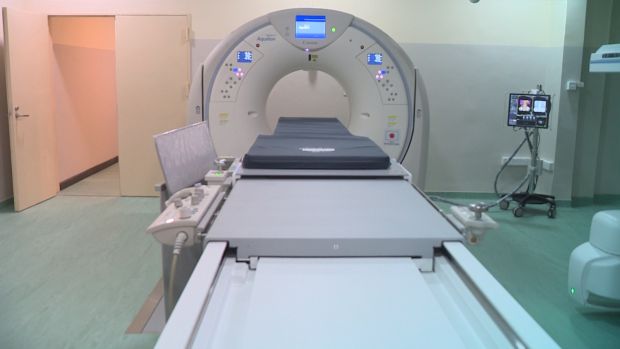
COLOMBO – Sri Lanka’s Health Ministry has launched a major initiative to expand and modernize CT scanner services across the country, investing more than Rs 1.9 billion in advanced diagnostic equipment aimed at improving early disease detection and patient care.
The program, implemented under the direction of Health and Mass Media Minister Dr Nalinda Jayatissa, forms part of a broader effort to strengthen healthcare infrastructure and enhance access to modern diagnostic services nationwide.
The ministry said priority has been given to upgrading disease detection capabilities through the installation of high-tech CT scanners in both national and regional hospitals.
As part of the initiative, a 128-slice CT scanner valued at more than Rs 200 million has been installed at Kalutara Teaching Hospital, while Kurunegala Teaching Hospital has been equipped with a CT scanner worth approximately Rs 160 million. Both installations were carried out by the Ministry’s Biomedical Engineering Services Division.
In addition, four state-of-the-art CT scanners valued at around Rs 640 million have been provided to the National Hospital of Sri Lanka (Colombo), the National Hospital Kandy, Teaching Hospital Karapitiya in Galle, and Colombo South Teaching Hospital, with financial assistance from the Asian Development Bank (ADB).
The ministry said procurement is also underway for five additional advanced CT scanners at a cost of approximately Rs 950 million. These units are expected to be installed at Kuliyapitiya Teaching Hospital and the District General Hospitals in Dambulla, Nawalapitiya, Chilaw and Mannar.
Health officials noted that many government hospitals have traditionally relied on 16-slice CT scanners, which, while effective, offer lower imaging resolution than newer-generation systems.
According to the ministry, the introduction of 64-slice and 128-slice CT scanners, will help strengthen the diagnosis and treatment of a range of critical illnesses, including strokes, cancers, cardiovascular diseases, trauma injuries resulting from accidents, and other medical emergencies.
Officials said the program extends beyond hospitals directly administered by the Ministry of Health and includes institutions operated by Provincial Councils, ensuring that patients in rural and underserved areas also benefit from improved diagnostic services.
They described the initiative as a key component of wider healthcare reforms aimed at enhancing clinical decision-making, reducing diagnostic delays and improving patient outcomes, noting that the expansion of the CT scanner network would play an important role in addressing growing healthcare challenges posed by the rise in non-communicable diseases, increasing road traffic accidents and Sri Lanka’s ageing population.
-ENCL

Comments are closed, but trackbacks and pingbacks are open.