

Supreme Court will decide whether 22nd Amendment needs referendum says Minister Jayatissa

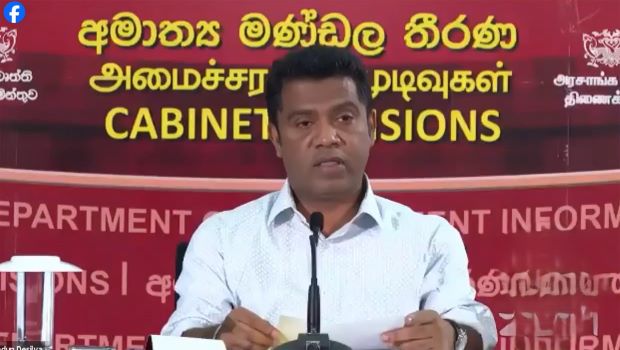
COLOMBO – Sri Lanka’s Supreme Court will determine whether the proposed 22nd Amendment to the Constitution can be passed by a two-thirds majority in Parliament or requires approval through a national referendum, Cabinet Spokesperson Minister Nalinda Jayatissa said on Tuesday (Sept 1).
Speaking at the Government Information Department’s weekly Cabinet briefing in Colombo, Jayatissa said neither the government nor the opposition, nor any individual who had filed a petition, could determine whether a referendum was required before the Supreme Court issued its decision.
“The Supreme Court will make that determination,” he reiterated.
Jayatissa said the Supreme Court was expected to communicate its determination to Parliament within three weeks, in accordance with the constitutional process governing bills seeking to amend the Constitution, noting that the Supreme Court had the authority to determine the number of judges who would hear the petitions challenging the proposed amendment and to decide which judges would constitute the bench.
He said there was no legal requirement for judges to be appointed to the bench strictly according to seniority, despite calls by some parties for such a practice.
“The court will decide which judges should hear the petitions,” he said.
The Minister also rejected claims that rallies being organized by the National People’s Power (NPP) were connected to the pending Supreme Court proceedings or any possible referendum on the proposed amendment.
He said the rallies had originally been planned for December but were postponed due to adverse weather and other circumstances and were now being held as part of the NPP’s efforts to strengthen its grassroots political organization.
Jayatissa said the expenses of the rallies were being borne by the NPP and that no public funds were being used to organize them.
He also denied that the party was arranging special buses to transport people to the rallies, saying members of the public were attending using their own means of transport.
Commenting on opposition to the proposed constitutional amendment by the Government Medical Officers’ Association (GMOA), Jayatissa said the association, like any political organization or group, had the right to express its views on the issue.
However, he cautioned that any trade union action by doctors, including strikes, could have a serious impact on patients, particularly vulnerable people who depend on the public health system.
He urged medical officers to refrain from industrial action that could adversely affect patients while expressing their concerns over the proposed amendment.
-ENCL

Comments are closed, but trackbacks and pingbacks are open.