

The joke that isn’t: How India’s Cockroach Party exposes Gen Z’s political reality

By Aparna Kishore
The recent viral rise of the so-called Cockroach Janta Party (CJP) in India appears, at first glance, like an internet joke taken too far. Built around irony and self-deprecating humour, the movement describes its members as unemployed, chronically online and skilled at professional ranting. It does not present a manifesto in the traditional sense, nor does it claim to function as a formal political party. Yet its rapid spread across social media reveals something more serious beneath the satire: a generational shift in how politics itself is being understood. What looks like absurd humour may in fact be one of the clearest expressions of Gen Z political sentiment in South Asia today.
The CJP reportedly began as a satirical online idea by Abhijeet Dipke, a political communications strategist and student. Dipke himself has described it as a joke but the joke resonated because it tapped into a real emotional and economic condition affecting millions of young people. Unemployment, career insecurity and frustration with institutional systems form the backdrop of this reaction. For many young Indians, the idea of being unemployed and online is not just satire; it is lived experience. This is where the CJP becomes interesting. It does not ask people to imagine a better political system. Instead, it reflects how people already feel about the existing one.
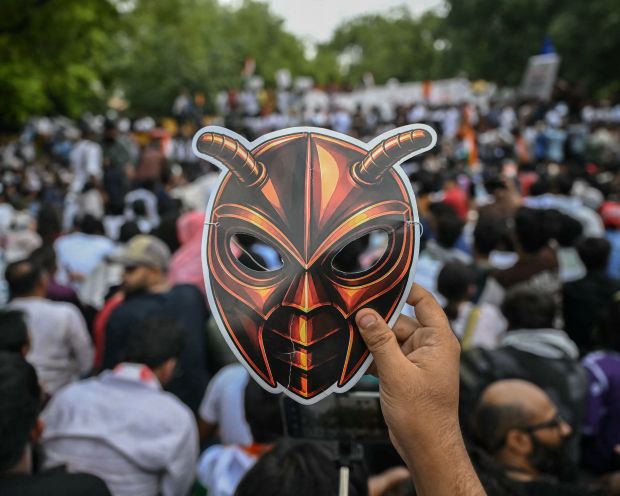
The cockroach metaphor is central. Traditionally used as an insult or symbol of nuisance, it has been appropriated into something closer to identity. The cockroach survives in harsh conditions, adapts quickly and exists in spaces where others struggle to survive. In this sense, it becomes an unintended symbol for a generation navigating economic pressure and uncertainty. The rise of CJP reflects a broader shift in political communication. Across South Asia, younger generations are increasingly using irony, memes and satire not as entertainment alone but as political language. Unlike traditional political messaging, satire allows emotional honesty without formal structure. It enables young people to speak about unemployment, inequality and frustration without needing party membership or ideological alignment.
Political analysts have argued that this form of expression is not a rejection of politics but a rejection of how politics is traditionally performed. In this sense, CJP is not trying to replace political parties. It is exposing how disconnected formal politics feels from the everyday experiences of young people. The resonance of the CJP is not limited to India. It reflects a wider South Asian pattern where Gen Z political engagement is increasingly digital, decentralized and emotionally driven. In Sri Lanka, for example, the 2022 economic crisis and the aragalaya movement demonstrated how quickly political anger can move from online spaces to physical protest. Memes, satire and digital humour played a major role in shaping public sentiment before and during the protests. Social media was not just a communication tool – it was a political arena.
However, the Sri Lankan case also shows a key difference. While the aragalaya became a mass street movement that led to political change, much of Gen Z political expression today begins and often remains online. It exists in meme pages, comment sections and viral content before translating into organized action. The CJP sits exactly in this digital-first phase of political evolution. What makes CJP different from traditional political movements is that it does not rely on organization, leadership or structure. Instead, it operates as a shared identity. People do not join the CJP in the way they join a political party. They relate to it. They share it. They participate in it through humor. This represents a shift from politics as institution to politics as expression.
In earlier generations, political identity was defined by ideology or party loyalty. Today, for many young people, identity is formed through digital participation and cultural belonging. A meme, a hashtag or a satirical movement can become more meaningful than formal political affiliation. At the heart of the CJP phenomenon is not ideology but emotion. The dominant feelings are frustration, fatigue and uncertainty about the future. Many young people feel that traditional political systems do not respond to their concerns about jobs, education or economic mobility. This emotional reality is what gives satire its power. The humour works because it is grounded in truth. When young people describe themselves as unemployed professionals or embrace ironic political identities, they are not necessarily disengaged. They are expressing a kind of political exhaustion. One of the recurring responses to movements like CJP is suspicion. Observers often ask who is behind it, whether it is politically motivated or whether it is being manipulated. This reaction misses the key point. The significance of CJP is not its leadership; it is its reach. Millions engaging with a satirical identity suggests something deeper than coordination – it suggests resonance. It indicates that the language of formal politics is failing to capture how a generation feels.
Instead of asking who created it, the more important question is why it feels relatable to so many people. The CJP represents a broader transformation in South Asian political culture. Gen Z is not abandoning politics. It is changing its format. Politics is becoming more digital than institutional, more emotional than ideological, more satirical than formal and more networked than hierarchical
In this environment, humour is not a distraction from politics; it is one of its primary languages. The cockroach, in this context, becomes more than a joke. It becomes a symbol of survival, adaptation and shared experience in a difficult economic environment. The rise of the CJP should not be dismissed as internet randomness. It is a signal of how political communication is evolving among young people in India and across South Asia. Like Sri Lanka’s meme-driven protest culture during the aragalaya, it reflects a generation that is politically aware but unwilling to express itself through traditional structures alone. The key insight is simple: Gen Z is not less political; it is differently political. And sometimes, the clearest expression of that politics does not come from speeches or manifestos but from a joke that suddenly stops feeling like a joke at all.
-This article was originally featured on groundviews.org

Comments are closed, but trackbacks and pingbacks are open.