

US dollar surges as Middle East war sends oil to cusp of $120

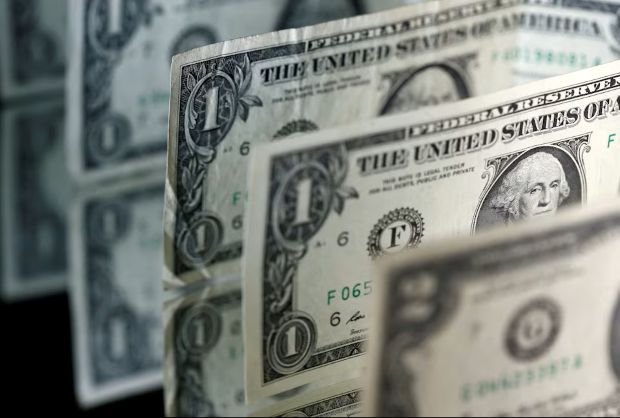
SINGAPORE – The US dollar jumped on Monday (9) as soaring oil prices sent investors scrambling for cash on worries that a protracted Middle East war could severely disrupt energy supplies and hurt global growth.
The euro and sterling were left trading 0.7% and 0.8% lower against the dollar respectively. The Aussie and even the safe-haven Swiss franc both fell around 0.6%.
“The US dollar is finding no shortage of support from traditional haven considerations and obviously, the United States’ net energy exporter status in sharp contrast to most of Europe,” said Ray Attrill, head of FX strategy at National Australia Bank.
Stocks, bonds and precious metals slid on Monday as investors, spooked by the impact of surging oil prices on global inflation and economic growth, turned risk-averse and cashed in on some of their most profitable trades.
“The longer this goes on, the more exponential the damage becomes in a domino effect,” said Michael Every, senior global strategist at Rabobank.
“If we are still in the same position this time next week, things could be quite terrifying.”
The US dollar pared some gains in the Asian afternoon on a Financial Times report that the G7 finance ministers will discuss on Monday a joint release of oil from emergency reserves coordinated by the International Energy Agency.
The report sent oil prices retreating slightly after they earlier spiked to just shy of $120 per barrel.
The euro was down 0.72% at $1.1534, having slid to a 3-1/2-month low earlier in the session, while sterling dropped 0.79% to $1.3319.
Against the Swiss franc, the dollar was up 0.59% at 0.7804. The Australian dollar pared earlier losses to trade 0.56% lower.
Analysts have said Asia could bear the brunt of the energy price shock, due to the region’s heavy reliance on oil and gas from the Middle East. Britain and the euro zone are also heavily exposed.
The dollar was a whisker away from the 159 yen level in Asia, rising 0.48% to 158.59 .
“The real question is how high and how long prices stay elevated, because that’s what will ultimately determine the economic fallout,” said Deepali Bhargava, regional head of research for Asia-Pacific at ING.
“A prolonged conflict, coupled with continued currency weakness, would feed more directly into inflation pressures across the region.”
Iran on Monday named Mojtaba Khamenei to succeed his father, as supreme leader, signalling that hardliners remain firmly in charge in Tehran a week into the war.
The conflict has already led to the suspension of around one fifth of global crude and natural gas supplies, as Tehran targets ships in the vital Strait of Hormuz between its shores and Oman, and attacks energy infrastructure across the region.
Qatar’s energy minister told the Financial Times on Friday (6) he expects all Gulf energy producers to shut down exports within weeks, a move he said could drive oil to $150 a barrel.
Surprisingly weak US jobs data on Friday briefly stalled dollar gains and raised expectations for US rate cuts, but that faded by Monday.
Traders were last betting on around 35 basis points worth of Federal Reserve easing by the end of the year, having priced in more than 55 basis points in late February.
“Ultimately, the dynamic will likely delay any move from the Fed because policymakers will want time to review the impacts of any oil shock and how it influences the data,” said Kyle Rodda, senior financial market analyst at Capital.com.
-Reuters

Comments are closed, but trackbacks and pingbacks are open.