


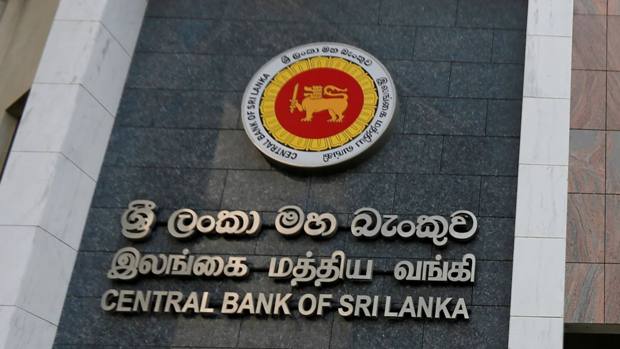
COLOMBO – Sri Lanka’s government and the Central Bank have introduced a series of emergency regulatory measures aimed at curbing foreign exchange fraud and the illegal transfer of funds overseas following the discovery of an alleged scam involving approximately US$85 million.
Authorities said investigations uncovered an organized network of 105 local companies suspected of exploiting weaknesses in import and foreign exchange regulations to transfer large sums of foreign currency out of the country through fraudulent transactions.
According to investigators, many of the companies operated for only short periods, frequently changed their names and ceased operations after several months, making regulatory oversight difficult.
Officials allege that the entities used fabricated import documentation and electronic communications to obtain foreign currency without bringing corresponding goods into the country, resulting in significant losses to the economy and creating artificial demand for dollars.
In response, the government has introduced new regulations under the Import and Export (Control) Ordinance No. 06 of 2026 to strengthen oversight of foreign exchange transactions linked to imports.
Under the new framework, commercial banks are prohibited from providing advance foreign currency payments for imports unless the importer’s identity has been fully verified and the business is registered with Sri Lanka Customs.
Banks will also be required to generate a unique identification number for every import-related foreign exchange transaction. Key information, including the importer’s Tax Identification Number (TIN), banking details and registered address, will be transmitted electronically to Customs authorities to facilitate real-time monitoring and verification.
The Import and Export Control Department has simultaneously introduced a new monitoring mechanism designed to ensure that goods corresponding to foreign currency remittances actually enter the country, while minimizing disruptions to legitimate trade activities.
Authorities said a multi-agency investigation involving the Criminal Investigation Department, the Financial Crimes Investigation Division and Sri Lanka Customs is underway to identify individuals who may have assisted the fraudulent operations.
Investigators are examining the possible involvement of company directors, intermediaries, public officials and banking personnel linked to the transactions.
The government has also frozen the remaining bank accounts of companies identified during the investigation.
Meanwhile, the Central Bank has introduced new regulations governing the repatriation of export earnings under the Rules on Bringing Export Income into the Country, published through Gazette Extraordinary No. 02 of 2026.
The revised rules shorten the period within which exporters are required to bring foreign exchange earnings into Sri Lanka and convert them through the domestic banking system.
Officials said the measures are intended to strengthen foreign currency inflows, improve transparency in cross-border transactions and support exchange rate stability.
Financial analysts noted that curbing fraudulent demand for foreign exchange could help ease pressure on the rupee and strengthen confidence in Sri Lanka’s external sector management.
However, some trade sector representatives have expressed concerns that the tighter controls may initially result in delays for legitimate importers as banks and Customs authorities implement enhanced verification procedures.
Business groups have also pointed to the increased compliance burden on exporters, though officials maintain that the reforms are necessary to safeguard the country’s foreign exchange reserves and strengthen financial governance.
The government said further regulatory action would be taken if additional weaknesses in the foreign exchange system are identified during ongoing investigations.
-ENCL

Comments are closed, but trackbacks and pingbacks are open.