

Govt. yet to decide on extending fuel subsidies beyond June

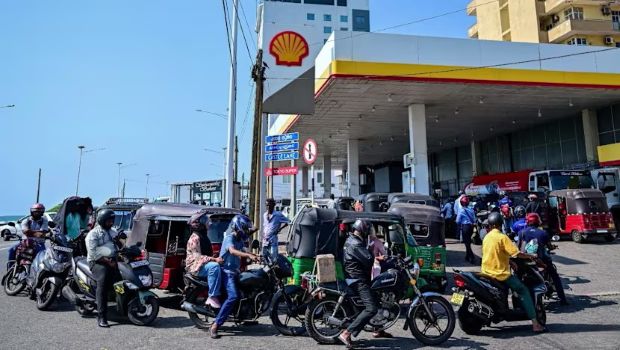
COLOMBO – The government has not yet decided whether to continue fuel subsidies beyond June, Cabinet Spokesman and Minister Nalinda Jayatissa said, as authorities assess global oil market developments amid uncertainty surrounding a proposed ceasefire linked to the recent Middle East conflict.
Speaking at the weekly Cabinet media briefing, Jayatissa said the government would review international fuel prices before making a decision on extending the temporary subsidy program introduced earlier this year to cushion consumers from soaring energy costs.
“We have not made any decision after June. If the ceasefire agreement works effectively and global prices decline, we can consider a price reduction,” he said.
“There is still no stable agreement, and uncertainty remains. Most of the fuel shipments required for this month have already arrived, while one crude oil shipment is still expected. We are continuing to receive fuel that was ordered earlier, so we need to wait and assess the situation.”
The government introduced the subsidy program following a sharp rise in global oil prices triggered by the escalation of conflict in the Middle East earlier this year. President Anura Kumara Dissanayake’s administration allocated Rs 100 billion to provide temporary relief to consumers facing rising fuel and energy costs.
Under the scheme, motorists received a subsidy of Rs 20 per litre of petrol and Rs 100 per litre of diesel. Of the total allocation, Rs 57 billion was earmarked for June alone.
State-owned fuel retailer Ceylon Petroleum Corporation (CPC) has reported significant losses under the subsidy program, estimating losses of approximately Rs 60 per litre of petrol and Rs 129 per litre of diesel at current retail prices.
Jayatissa said the government remains committed to providing relief whenever conditions permit.
“The concession will be provided at the earliest opportunity when reductions in global crude and fuel prices allow us to do so. Earlier fuel stocks were purchased at significantly higher premiums. When reviewing prices, we will take into account any reductions in international prices. The government expects to provide the maximum possible relief to the people,” he said.
Sri Lanka has also maintained fuel rationing measures in an effort to manage consumption and safeguard supplies during the period of heightened market volatility.
The subsidy program was introduced after disruptions linked to the conflict involving Iran, Israel and the United States triggered sharp increases in international oil prices and concerns over shipping through the Strait of Hormuz, one of the world’s most critical energy trade routes.
The resulting price surge pushed domestic fuel prices sharply higher, with petrol rising to around Rs 434 per litre and diesel reaching approximately Rs 407 per litre, placing additional pressure on households, businesses and the transport sector.
In addition to fuel subsidies, the government’s emergency relief package included electricity subsidies for low-income households and direct financial assistance to vulnerable families and farmers.
However, the continuation of such measures has raised questions about Sri Lanka’s commitments under its International Monetary Fund (IMF) program.
Under the country’s Extended Fund Facility (EFF) arrangement, the IMF has emphasized the importance of maintaining cost-reflective pricing for fuel and electricity and gradually phasing out broad-based subsidies. The program calls for domestic energy prices to be aligned with international market conditions through an automatic pricing mechanism while limiting the fiscal burden on the state.
-ENCL

Comments are closed, but trackbacks and pingbacks are open.