

Sri Lanka’s economic turnaround braces for testing times amid Iran conflict

By Marwaan Macan-Markar
COLOMBO – On the eve of Sri Lanka celebrating its traditional new year this week, the country’s left-leaning government rolled out a relief package to ensure poorer households in the island nation have a few crumbs of joy.
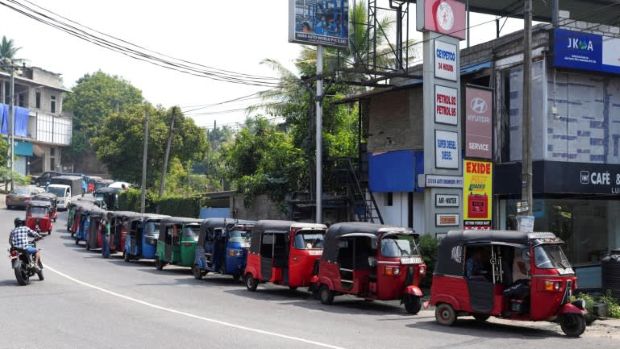
During a special address to the parliament last week, President Anura Kumara Dissanayake announced a 100 billion Sri Lankan rupee ($316 million) pre-new year gift, which he said will support people for three months. It includes a 60-billion-rupee subsidy for diesel and gasoline, since local fuel prices tripled and electricity prices shot up 40% in March with the oil shock caused by the US-Israel war with Iran.
The Dissanayake administration subsidies will inevitably invite scrutiny from the International Monetary Fund (IMF). It came to the island-nation’s rescue with a $3 billion bailout package after Sri Lanka faced an economic meltdown in 2022. The South Asian nation had run out of dollars and defaulted on its $46 billion external debt.
The current IMF bailout is Sri Lanka’s 17th, making it the second most frequent country in Asia, after Pakistan, to turn to the Washington DC-based fund with a begging bowl.
An IMF delegation departed last Thursday (9) having warned that the next $700 million tranche of approved funds still hinges on the restoration of market-based pricing formulas for electricity and fuel. The staff-level agreement is subject to IMF executive board approval contingent on “the restoration of cost-recovery electricity and fuel pricing while protecting the vulnerable,” Evan Papageorgiou, head of the IMF’s Sri Lanka mission team, told reporters.
Local and foreign analysts see a big difference today from the dire economic plight of four year ago, when Sri Lanka faced bankruptcy under the regime of former President Gotabaya Rajapaksa. The most hawkish member of the nation’s once formidable Rajapaksa dynasty was forced to flee mid-term on the back of widespread public protests over economic collapse.
“Sri Lanka is in the best position in a very long time to withstand the oil shocks that hit us in the first quarter of this year,” said Yolani Fernando, an economist and executive director of Arutha, a Colombo-based economic and public policy think tank.
“What happened in 2022 was a disaster, and it is a miracle that we are in the current situation.”
Foreign investors note that the rapid turnaround from the misery of 2022 is rooted in the country’s commitment to restore its macroeconomic fundamentals hammered out under the IMF’s four-year bailout, which ends next year.
The country stuck to the IMF’s program of “reforms and recommendations, which [sought to bring] about macro stability, sustainable economic growth and overall discipline,” said Ruchi Desai, a fund manager at Asia Frontier Capital, a Hong Kong-based investor in frontier and emerging markets.
“Before the [Iran] conflict began, Sri Lanka was undergoing very strong economic momentum, with GDP growth of 5% in 2024 and 2025, which were well ahead of expectations.”
A clutch of reports by the World Bank, the Asian Development Bank and the IMF mirror milestones in the economic turnaround, with gross official reserves reaching $7 billion, successive years of primary surplus since 2024, and a rise in tax revenue.
Yet the harsh austerity measures that accompanied the IMF bailout have translated into the country’s poorer households bearing most of the pain, with World Bank reports noting that the nation’s poverty levels after the crisis have risen to over a quarter of the population from lows of 8.9% in 2010. “Forty per cent of Sri Lankans cannot afford nutritious meals,” Fernando added.
Colombo-based diplomats note that the IMF is playing up the positive side of the Sri Lankan recovery story in its quest for a template to deal with countries saddled with unsustainable debt.
“Sri Lanka has become the IMF’s poster-child,” one Western envoy told Nikkei Asia. “It wants a success story and is not open to criticism.”
But such a turn, say Sri Lankan lawmakers, is also grounded in an unprecedented display of political bipartisanship that took hold after the 2022 collapse.
This new political chapter heralded a break from the country’s notorious record of abandoning IMF programs midstream, when a new government succeeded the administration that signed the original agreement.
According to Verite Research, a local think tank, Sri Lanka only completed nine of the 16 IMF programs it had signed prior to the latest.
“IMF officials told us that one of the key reasons for the Sri Lankan program’s success was it got opposition support,” Harsha de Silva, an economist and opposition parliamentarian, told Nikkei Asia. “[Members of parliament] had to look beyond their political lenses and build consensus to shape the debt restructuring program.”
Laws were passed to implement the bailout. “No IMF program before led to new laws being approved,” he said. “So, it was unprecedented, and the current government is benefiting from what was done before [Dissanayake’s] term.”
Some European investors with an eye on capital markets are therefore bullish about Sri Lanka’s economic trajectory as it heads into the final year of the IMF bailout.
“Sri Lanka’s rebound has been fast, remarkable and it is now resilient,” said one investor based in Europe. “Investors are gearing up for Sri Lanka to return to the capital markets soon — it could have easily gone to the bond market last year.”
-asia.nikkei.com

Comments are closed, but trackbacks and pingbacks are open.