

How elite politics brought Sri Lanka to its knees

And why it can rise again
By Prabath Vithana
Sri Lanka, once celebrated as the Pearl of Asia and the Pearl of the Indian Ocean, entered independence in 1948 with extraordinary promise. It enjoyed one of the highest literacy rates in the developing world, a respected civil service, a thriving plantation economy, democratic institutions and a strategic position along one of the world’s busiest sea routes. Following independence, it was widely regarded as one of Asia’s most promising nations.
At a time when many countries in Asia were struggling with poverty and instability, Sri Lanka possessed the foundations necessary for long term prosperity. It had talent, resources, education and opportunity. Yet nearly eight decades later, the nation has endured civil conflict, economic collapse, debt default, corruption scandals, political dysfunction and an unprecedented loss of public confidence in its governing institutions. How did a nation with so much promise fall so far?
A problem older than independence
The roots of Sri Lanka’s challenges did not begin in 1948. For more than four centuries, the island came under successive Portuguese, Dutch and British domination. While colonial powers imposed their authority through military and economic strength, they often relied on cooperation from sections of local ruling classes and elites seeking to preserve their own privilege and influence.
History teaches a difficult lesson. Nations are rarely weakened by outsiders alone but also when powerful insiders place personal advantage above the national interest. Colonial rule ended in 1948; elite domination did not.
Independence without transformation
When independence arrived, political power largely passed into the hands of an English-speaking upper class educated in elite schools and institutions, many enjoying opportunities beyond the reach of ordinary citizens.
Many of Sri Lanka’s leaders were intelligent, articulate and highly educated. Some studied in prestigious universities abroad and inherited a nation rich in human potential. Yet what became of that knowledge and those opportunities? Why was the promise of independence never translated into broad national prosperity?
Prime Minister Dudley Senanayake’s reported remark in a BBC interview that he drank Alpine water has long been cited by critics as symbolic of a political culture increasingly distant from the daily realities of ordinary citizens. Whether fair or unfair, many people came to feel that those governing the country often lived in a different world from those they governed.
The rise of dynastic politics
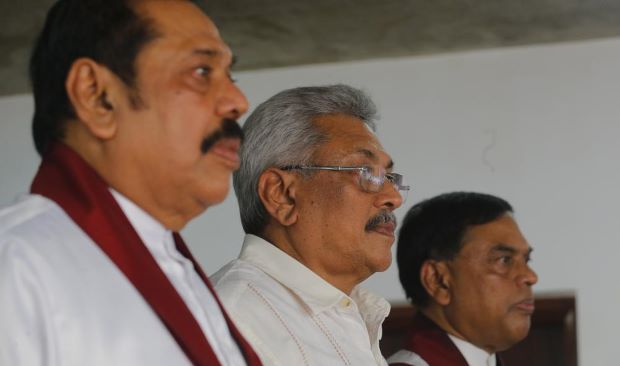
Over the decades, politics became associated with powerful families and entrenched political networks – the Senanayakes, the Bandaranaikes, the Rajapaksas and the Wickremesinghes. Governments changed, parties changed and slogans changed but the same privileged circles remained close to the centres of power. Supporters point to the important contributions made by these families during different periods of the country’s history. Critics argue that dynastic politics weakened accountability, encouraged patronage and concentrated political influence among a small elite.
The Rajapaksa era became the most visible example of this concentration of power. While some people credit the family for ending the civil war in 2009, critics argue that centralization of authority, nepotism and poor economic management contributed to conditions that eventually culminated in the economic crisis of 2022. The collapse that followed was not simply financial; it was a collapse of public trust.
The Singapore question
Perhaps no comparison is more painful than Singapore. In the decades after independence, Sri Lanka compared favourably with Singapore in literacy, healthcare, education and social development. Today Singapore ranks among the world’s most prosperous, efficient and well-governed nations.
Sri Lanka, meanwhile, has endured bankruptcy, inflation, shortages and economic hardship. The difference was not geography, intelligence or natural resources; it was governance. Singapore built strong institutions, rewarded merit, punished corruption and planned for future generations. Sri Lanka became trapped in cycles of patronage politics, family influence, political favouritism and short-term decision making.
Singapore demonstrated that even a small country without significant natural resources can become a global success through clean government, meritocracy, professional public administration and unwavering commitment to national development. Its lesson is clear: no nation prospers when connections matter more than competence.
Following the devastation of the Korean War, South Korea was poorer than many developing countries. Through investment in education, technology, industrialization and long-term planning, it transformed itself into one of the world’s leading economic powers. Its success proves that a nation’s future is determined less by its starting position than by the quality of its institutions and leadership.
At independence, Botswana was one of Africa’s poorest nations. Rather than allowing political elites to capture national wealth, it built relatively strong institutions, maintained fiscal discipline and invested in national development. Today Botswana is widely regarded as one of Africa’s more successful democratic and governance stories.
Denmark, Norway, Finland and Sweden consistently rank among the least corrupt and most prosperous societies in the world. Their success is built on transparency, accountability, rule of law, independent institutions and equal opportunity.
The people reject the old order
The crisis of recent years fundamentally changed public attitudes. Sri Lankans began demanding something more than a change of government; they demanded a change of system, transparency, accountability and an end to corruption and privilege.
Public opinion reflects this shift. A nationwide survey conducted by the Centre for Policy Alternatives (CPA) in 2024 found that trust in Parliament stood at only 22% while trust in political parties was just 19%, illustrating deep public dissatisfaction with traditional political institutions. It showed continued support for democracy itself, demonstrating that while people had lost faith in many politicians, they had not lost faith in democratic principles. The people had not rejected democracy; they rejected those who failed democracy.
A new political moment
Against this background came one of the most significant political shifts in modern Sri Lankan history. The rise of Anura Kumara Dissanayake and the National People Power (NPP) was widely seen as a rejection of traditional elite politics and a demand for accountability, transparency and systemic reform. Analysts noted that voters increasingly sought an alternative to established political forces and longstanding family-centred politics.
Many supporters believe the NPP has so far demonstrated a level of transparency, modesty and commitment to anti-corruption reforms that contrasts with many previous administrations. That has generated hope, not blind hope but genuine hope that politics can once again become a vehicle for public service rather than personal enrichment, that leadership can be measured by integrity rather than lineage and that ordinary citizens can finally become more important than political dynasties.
Support reform but never surrender your voice
Those who seek a better Sri Lanka should support genuine reform wherever it appears. If the NPP continues to strengthen institutions, combat corruption, improve transparency and govern in the interests of ordinary people, it deserves support. But democracy demands something even more important than support; it demands vigilance. The purpose of democratic change is not to replace one ruling elite with another but to create a Sri Lanka where no family, no political party, no business interest and no individual is powerful enough to place themselves above the people. Citizens must therefore never abandon their right to question those in power. Governments must earn trust continuously. The day citizens stop holding leaders accountable is the day democracy begins to weaken.
The reforms needed for a new Sri Lanka
To finally break the cycle of elite dominance, Sri Lanka should pursue strong and independent anti-corruption institutions; mandatory public disclosure of assets and interests by politicians and senior officials; merit-based appointments throughout state institutions; electoral reforms that reduce the influence of money and family connections; independent courts and oversight bodies; professional public administration free from political interference; equal opportunity regardless of class, wealth, family name, ethnicity or political affiliation; and greater public participation in democratic decision making. The future must belong to merit, not privilege.
There is reason for optimism. The people have survived colonial rule, insurrection, terrorism, war, natural disasters and economic collapse but never surrendered their belief that the country could be better.
Today Sri Lanka stands at another historic crossroads. Support the reforms that strengthen the nation, leaders who demonstrate honesty and accountability and governments that serve the people rather than themselves. But never surrender your right to question authority never place any leader above scrutiny. The country’s future will be determined by ordinary citizens who refuse to bow to corruption, refuse to be divided and refuse to allow their country to be captured by elites ever again.
-This article was originally featured on groundviews.org

Comments are closed, but trackbacks and pingbacks are open.