

Upper-middle-income status masks rising poverty says Harsha

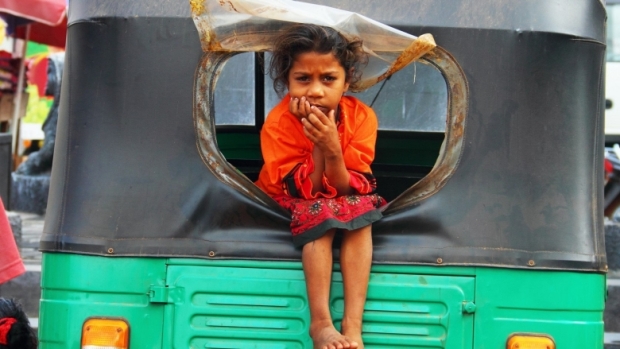
COLOMBO – Sri Lanka’s reclassification by the World Bank as an upper-middle-income country masks the country’s worsening social and economic reality, with poverty having doubled since 2019 despite the improved income status, opposition MP Harsha de Silva said.
Responding to media queries on the World Bank’s latest country income classification, the Samagi Jana Balawegaya (SJB) parliamentarian said Sri Lanka had regained upper-middle-income status primarily because its Gross National Income (GNI) in US dollar terms exceeded the World Bank’s threshold, rather than as a result of broad-based economic growth.
De Silva said the improvement was driven largely by the appreciation of the Sri Lankan rupee against the US dollar, which strengthened from around Rs 370 to approximately Rs 300 during 2023-2024.
“This is the second time Sri Lanka has reached upper-middle-income status. However, unlike in 2019, the country’s social indicators paint a far bleaker picture,” he pointed out.
According to de Silva, Sri Lanka’s national poverty rate stood at 11.5% when it first attained upper-middle-income status in 2019. By the end of 2025, despite regaining the classification, the poverty rate had climbed to 22.1%.
He also cited World Bank data showing that the number of people facing inadequate food security had tripled compared with 2019.
“While some government officials are celebrating this reclassification as a major achievement, genuine and sustainable development is measured by improvements in the living standards of the entire population, not by wealth accumulating among a privileged few,” he said.
De Silva argued that the country’s current macroeconomic indicators present a misleading picture, contending that economic gains have been unevenly distributed while low-income households continue to struggle.
He also criticized the government’s reliance on short-term relief measures, saying temporary reductions in fuel prices did little to ease the cost of living when essential expenses, including daily bus fares, remained high.
The MP urged President Anura Kumara Dissanayake and the government’s economic team to focus on addressing the country’s underlying economic challenges rather than celebrating statistical milestones.
He called on the government to implement policies aimed at preserving Sri Lanka’s upper-middle-income status while reducing poverty levels back to around the 11% recorded in 2019 and preventing a return to economic instability.
-ENCL

Comments are closed, but trackbacks and pingbacks are open.