

Chemmani Excavation: A defining test for Truth, Justice and Reconciliation

By Raj Sivanathan
The visit by Minister of Justice Harshana Nanayakkara to the ongoing excavation site at Chemmani in Jaffna has once again focused national attention on one of the country’s most sensitive and unresolved human rights issues. His assurance that the government is committed to pursuing the truth and ensuring justice has been welcomed but for the families of the disappeared and for communities that have lived with the consequences of war, the true test will not be in words but in actions.
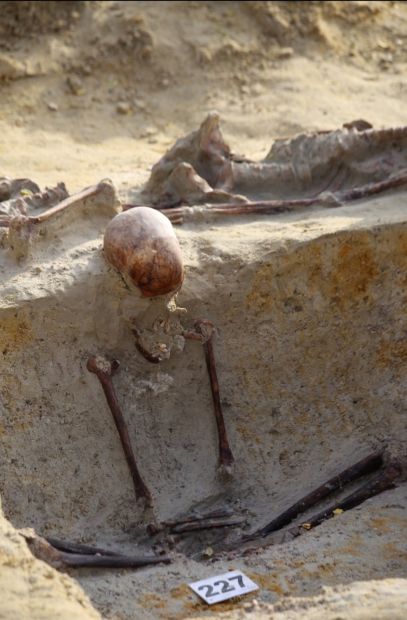
The excavations at Chemmani are not merely a forensic exercise. They represent a profound search for truth, accountability and closure. They also offer Sri Lanka an opportunity to demonstrate its commitment to the rule of law and to a reconciliation process that has often been promised but only partially delivered.
The name Chemmani evokes painful memories. The area first came to public attention in the late 1990s when allegations emerged that the remains of individuals who had disappeared during the conflict had been buried there. Those allegations attracted significant local and international attention and became symbolic of the wider issue of enforced disappearances that affected thousands of families across the country.
Despite the passage of time, many questions have remained unanswered. Families continued to search for loved ones who never returned home. Parents waited for news of missing sons and daughters. Spouses and children lived with uncertainty, unable to move forward because they lacked even the most basic information about what had happened to those they had lost.
The current excavations carry significance far beyond the boundaries of a single site. They are part of a broader national struggle to address the legacy of conflict and to establish whether Sri Lanka is willing to confront difficult truths about its past.
According to the Justice Minister, the government has allocated the necessary resources to ensure that the excavation process is carried out professionally and according to accepted scientific standards. Forensic specialists, archaeologists, medical experts and legal authorities are reportedly working together to recover, preserve and analyze evidence.
This multidisciplinary approach is essential. Modern forensic investigations are capable of providing information that was previously unavailable. Advances in DNA analysis, forensic anthropology and archaeological methods can help identify victims, establish timelines and reconstruct events. Such evidence can also provide an objective basis for legal proceedings and historical understanding.
However, the credibility of any investigation depends not only on technical competence but also on transparency. Public confidence can only be maintained if the process is seen to be independent, professional and free from political interference.
This is particularly important because previous investigations into disappearances and mass graves in Sri Lanka have often been accompanied by controversy. Over the years, numerous commissions of inquiry have been established, reports have been prepared and recommendations have been made. Yet many families feel that meaningful accountability has remained elusive.
As a result, scepticism remains understandable. Victims’ families have heard promises before. They have participated in investigations, provided testimony and submitted evidence. Many continue to ask why so few cases have resulted in prosecutions or definitive findings.
The current government faces a unique challenge. It must demonstrate that this process will be different. It must show that the pursuit of truth is not selective and that accountability is not dependent on political convenience.
Minister Nanayakkara’s remarks regarding the Office on Missing Persons (OMP) are also significant in this context. The OMP was established to address one of the most painful legacies of Sri Lanka’s conflict – the large number of individuals who remain unaccounted for.
The issue of enforced disappearances remains one of the most emotionally charged subjects in Sri Lanka. Unlike many other consequences of war, disappearances leave families suspended between hope and grief. Without confirmation of death, many relatives continue to search, sometimes for decades.
The broader significance of the Chemmani excavation extends beyond individual cases. It also relates to the challenge of reconciliation in a post-war society. Reconciliation is often discussed in terms of development projects, infrastructure investment and economic growth. Yet economic development alone cannot resolve historical grievances.
The excavation at Chemmani therefore represents an opportunity to strengthen trust between citizens and institutions. A transparent and credible process would demonstrate that the state is willing to investigate serious allegations wherever the evidence leads.
The international community will also be watching closely. Questions relating to accountability, human rights and transitional justice have shaped Sri Lanka’s international relations for many years. A credible investigation at Chemmani could represent an important step forward.
The diaspora is likely to follow developments closely as well. Across the world, many members of the diaspora maintain strong emotional and family connections to communities affected by the conflict. There is widespread interest in seeing credible mechanisms established to uncover the truth about the past.
For the current administration, the challenge is therefore both practical and moral. Practical because the investigation must be conducted according to the highest professional standards. Moral because the search for truth concerns fundamental questions of human dignity and justice.
Ultimately, the excavation at Chemmani is about more than the past. It is about the kind of future Sri Lanka wishes to build. A society that is confident enough to examine its history honestly is stronger than one that seeks to avoid difficult questions. Truth may be uncomfortable but it is essential for justice. Justice, in turn, is essential for reconciliation.
For decades, many families have waited for answers. Some have passed away without receiving them. Others continue to hope that the truth will finally emerge. The Chemmani excavation offers an opportunity to honour that hope.
Whether it becomes a turning point in Sri Lanka’s journey towards truth, justice and reconciliation will depend not on promises alone but on the courage to follow the evidence wherever it leads and the determination to ensure that justice is ultimately served.
-This article was originally featured on groundviews.org

Comments are closed, but trackbacks and pingbacks are open.