

HRCSL calls for national policy to address plantation community rights

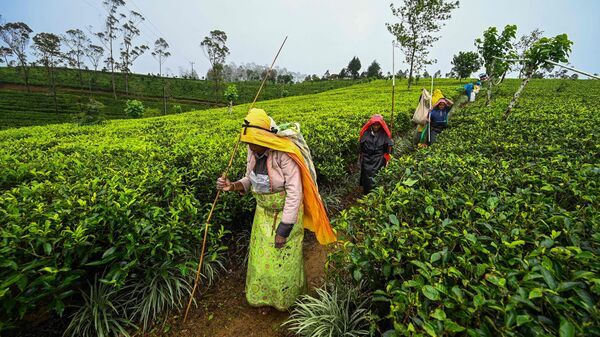
COLOMBO – Sri Lanka’s human rights commission has called for the development of a comprehensive national policy framework to safeguard and advance the rights of the plantation community, highlighting persistent challenges in education, housing, labour rights, public services and economic well-being.
The call was made during a national dialogue convened by the Human Rights Commission of Sri Lanka (HRCSL) in Colombo on Wednesday (17), where the Commission presented the findings and recommendations of an extensive field-based study into the living conditions and rights-related concerns of plantation communities.
Held at the Mandarin Hotel, the event brought together policymakers, academics, civil society representatives, community leaders and former public officials to discuss policy interventions aimed at addressing longstanding social and economic disparities affecting plantation workers and their families.
A key feature of the dialogue was the presentation of the Commission’s research findings by Attorney-at-Law Balasubramaniam Gauthaman and researcher S. Prabhakaran, who conducted field investigations on behalf of the HRCSL.
The report identified a range of challenges facing plantation communities and proposed recommendations across five priority areas: education, labour rights, poverty alleviation, language rights, and access to public services.
Participants heard that despite significant progress in recent decades, many plantation families continue to experience structural disadvantages, including limited access to quality education, inadequate housing, barriers to public services, economic vulnerability and concerns relating to labour conditions.
The dialogue also focused on policy measures required to address land and housing issues within plantation areas, with discussions exploring strategies to improve land ownership rights, housing security and access to essential infrastructure.
A session on ‘Land and Housing Rights: Strategic Policy Interventions and Implementation Actions’ and ‘Strengthening Access to Public Services, Health and Economic Well-being through Policy Interventions’ was facilitated by HRCSL Commissioners Nimal G. Punchihewa and Dr Gehan Gunatilleke.
A separate session examined labour rights, working conditions and educational opportunities within plantation communities. Discussions on ‘Policy-Level Interventions for Enhancing Labour Rights and Working Conditions’ and ‘Promoting Quality and Equitable Education in Plantation Communities’ were facilitated by Commissioners Professor Farzana Haniffa and Professor Prof. Thaiyamuthu Thanaraj.
Participants emphasized the need for coordinated action by government institutions, plantation companies, civil society organizations and community representatives to address longstanding inequalities and improve socio-economic outcomes in the sector.
Educators, researchers, civil society activists and former political representatives also contributed recommendations during the discussions, calling for stronger policy implementation, improved service delivery and greater inclusion of plantation communities in national development planning.
The Human Rights Commission said the findings and recommendations emerging from the dialogue would contribute to ongoing efforts to develop policy responses aimed at ensuring greater equality, dignity and access to opportunities for Sri Lanka’s plantation community.
-ENCL

Comments are closed, but trackbacks and pingbacks are open.