

No special treatment for monks in child abuse cases, Govt. says

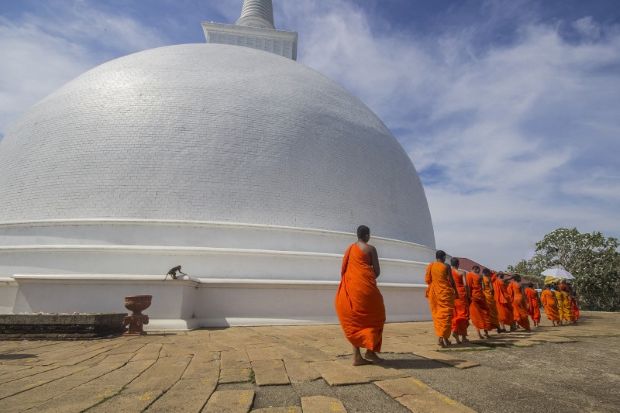
COLOMBO – The government has insisted that Buddhist monks accused of child abuse will be treated no differently from any other citizen under the law, amid growing public scrutiny over investigations and prosecutions involving members of the clergy.
Cabinet Spokesman and Minister Nalin Jayatissa said police investigations and legal proceedings relating to child abuse allegations against Buddhist monks are being conducted impartially and in accordance with the law.
“Everyone is equal before the law and the courts. The law will not be applied more strictly or more leniently because someone is a Buddhist monk, a religious leader, or belongs to any religious group,” Jayatissa told reporters at the weekly Cabinet media briefing on Tuesday (2).
His remarks came in response to questions regarding data released by the National Child Protection Authority (NCPA) under the Right to Information Act, which reportedly showed that child abuse allegations had been recorded against nearly 300 Buddhist monks, while legal proceedings had been instituted in 27 cases.
Jayatissa said investigations into such complaints were being carried out by state institutions, including the police and the NCPA, and stressed that the government had not interfered with the process.
“Police investigate complaints, record statements, arrest suspects where necessary, and produce them before the courts. These actions are taken according to the law, regardless of a person’s status or position,” he said.
The minister added that decisions relating to disciplinary or administrative action involving Buddhist clergy would also take into account the guidance of relevant Sangha bodies and senior Buddhist prelates, including the Maha Nayaka Theras, while legal proceedings would continue through the judicial process.
Addressing broader concerns about child protection, Jayatissa said the government was moving ahead with plans to strengthen age-appropriate sexual education and personal safety education in schools as part of ongoing curriculum reforms.
He noted that health authorities had already provided recommendations to the Ministry of Education on incorporating child protection, personal safety and sexual health awareness into school curricula.
“There is a clear need to provide children with knowledge appropriate to their age so that they can better understand issues relating to personal safety and abuse prevention,” he said.
The minister acknowledged that proposals to introduce comprehensive sexuality education have faced opposition from some sections of society, but argued that educational reforms should be guided by experts rather than political campaigns.
Jayatissa said the Ministries of Health and Education were working together to incorporate the necessary content into textbooks, circulars and revised curricula under the government’s broader education reform programme.
He also criticized what he described as politically motivated campaigns against curriculum reforms, saying previous efforts to introduce subjects such as computer literacy, entrepreneurship, environmental studies and sexual education had faced resistance despite recommendations from education specialists.
The government remains committed to implementing reforms aimed at improving child protection and awareness while ensuring that allegations of abuse are investigated and prosecuted without fear or favour, he said.
-ENCL

Comments are closed, but trackbacks and pingbacks are open.