

The robe does not make the man holy

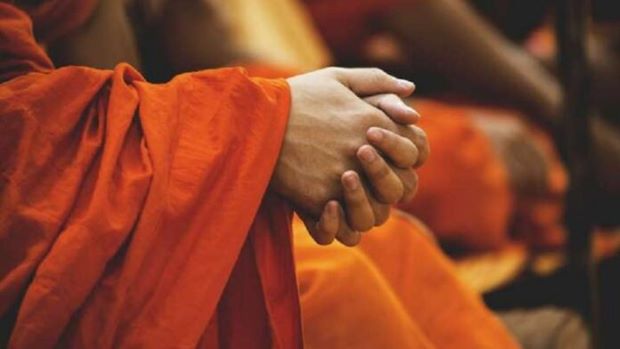
In a rare and striking disciplinary move, Sri Lanka’s Buddhist hierarchy last week stripped 71-year-old Pallegama Hemarathana of his responsibilities as chief custodian of one of the faith’s most sacred sites, a venerated fig tree grown from a sapling of the very tree believed to have sheltered the Buddha when he attained enlightenment.
“The Council of Monks of the Malwatte Chapter decided today ( to suspend Ven Hemarathana until the conclusion of the legal proceedings against him,” the chief priests said in a formal statement on May 30, 2026. That the Council acted at all, and on Vesak Day, no less, signals how acute the pressure had become. But it also exposes, by its very rarity, how entrenched the culture of clerical impunity has been, and how much further Sri Lanka must go to protect its most vulnerable from those who wield its most sacred authority.
The case that prompted the suspension has shocked this religiously conservative nation. Hemarathana, who oversaw eight of Sri Lanka’s most sacred Buddhist sites, was arrested on May 9 over allegations of sexually abusing a child, a case that attracted international coverage even as many Sri Lankan media outlets maintained a pointed silence. That silence is not neutrality. It is a symptom of the same pathology that made the Malwatte Chapter’s disciplinary action so unexpected in the first place: the deeply embedded presumption that the robe renders a man untouchable.
It does not. And Buddhism has always said so.
The Vinaya Pitaka, the canonical code of monastic discipline compiled from the Buddha’s own teachings, is among the most rigorous ethical frameworks in any world religion. Its gravest prohibitions, the parajika offences, are unambiguous: certain acts result in automatic and irrevocable expulsion from the Sangha. Sexual intercourse/misconduct is the very first of them.
This is not a footnote or a later qualification. It is foundational. The Buddha did not instruct his monks to stand above the law. He instructed them to be more scrupulously bound by it than ordinary people, because they had taken on an extraordinary public trust.
A monk who sexually abuses a child has not merely broken the law of the state. He has, by the Vinaya’s own terms, already ceased to be a monk in any spiritually meaningful sense. The ochre robe he continues to wear is, at that point, a disguise.
Yet, Sri Lanka has spent years treating that disguise as a shield. The country’s National Child Protection Authority has disclosed that nearly 300 Buddhist monks were accused of abusing children in just three years, and charges were brought against fewer than 30. The NCPA’s own legal officer told a court that authorities “had to take a stick and chase the police” simply to get Hemarathana arrested. This is not a failure of the law on paper. It is a collapse of institutional will, rooted in the dangerous conflation of religious piety with personal impunity.
That conflation has real victims. They are children. They are among the most vulnerable people in any society: young, trusting, often from families who regard the local temple as a place of absolute safety. Their abuse is compounded by the silence that follows, of institutions, of media, of communities that choose the comfort of unchallenged reverence over the protection of the defenceless.
The NCPA’s chairperson has noted that over 70% of complaints against monks involved sexual offences, that cases are rising, and that much abuse still goes unreported because victims and families fear social retaliation or disbelief. This environment does not arise from Buddhism. It arises from the distortion of Buddhism, from the corruption of genuine spiritual authority into social dominance that may not be questioned.
Professor Harendra de Silva, the NCPA’s founding chairperson, has noted that leading clergy in Sri Lanka typically command significant wealth and influence. Power protects power. This is not unique to Sri Lanka, nor to Buddhism. The Catholic Church’s global reckoning with clerical abuse, the scandals within evangelical institutions, and the documented abuse by religious teachers across traditions all point to the same structural truth: when institutions prioritize their own reputation over accountability, children pay the price.
The government’s announced plans to amend the Vihara and Devalagam Act of 1931 and re-establish a Dharmadhikaranaya – a formal disciplinary authority for Buddhist clergy – are, on their face, welcome. But they are also a reminder of how long overdue such mechanisms are. An internal disciplinary body has genuine value only if it operates with transparency, independence from political and clerical pressure, and an unambiguous commitment to victims’ rights over institutional reputation.
History across every major religion warns that “internal discipline” can as easily become a mechanism for suppression as for accountability. The law must remain supreme.
Hemarathana’s suspension by the Malwatte Chapter cannot substitute for the criminal process. Disciplinary suspension is not punishment for child sexual abuse. The full weight of Sri Lanka’s legal system must run its course, without deference to the accused’s religious standing, without procedural delays that quietly bury inconvenient cases.
This is equally a question for lay Buddhists, for the millions of ordinary Sri Lankans whose sincere devotion to the Dhamma is being exploited, perhaps unconsciously, to shield wrongdoers. Devotion to the Buddha’s teachings does not require deference to every man who wears his colours. The Buddha himself is recorded in the Pali Canon as saying that one who wears the robe without the qualities of a genuine monk brings shame upon it. To revere Buddhism is not to protect those who have most gravely violated its foundational precepts. It is, in fact, to hold them to account.
The Malwatte Chapter’s action carries bitter symbolism precisely because it fell on Vesak, the commemoration of the Buddha’s birth, enlightenment, and passing. It is, in its way, the right day to insist that the Dhamma must be re-embodied: in protection for children, in justice for victims, in institutions unafraid to act, and in a society that refuses to let the sacred become a sanctuary for the profane.
The robe does not make the man holy. His conduct does. And conduct, in a just society, has consequences.
-ENCL

Comments are closed, but trackbacks and pingbacks are open.