

Sri Lanka’s refusal to host US warplanes before Iran war risks trade backlash

By Maria Siow
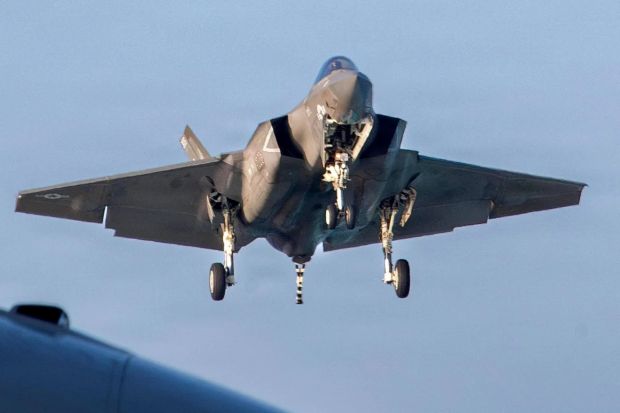
COLOMBO – Two days before the United States and Israel launched their war on Iran, Washington asked Sri Lanka to let two armed warplanes use an airport on its southern coast.
Colombo said no, Sri Lankan President Anura Kumara Dissanayake recently revealed – a decision analysts said reflected the Indian Ocean island nation’s desire to avoid being drawn into a foreign conflict from which it had “nothing to gain”.
The request, made on February 26, reportedly sought to relocate two aircraft from a US base in Djibouti to Mattala International Airport from March 4 to 8.
“They wanted to bring two warplanes armed with eight anti-ship missiles,” Dissanayake said. “We said ‘no’.”
Sri Lanka’s refusal did not keep the war at arm’s length for long. On March 4, a US submarine torpedoed Iranian frigate IRIS Dena just off the island’s coast.
Colombo also turned away three Iranian naval vessels that requested a port call from March 9 to 13, upon returning from exercises in India.
“Had we said ‘yes’ to Iran, we would have had to say ‘yes’ to the US as well,” Dissanayake said.
Still recovering from its worst financial crisis since independence, Sri Lanka depends on the West for export markets, the Gulf for fuel and the wider Indian Ocean economy for the remittances that keep millions of families afloat.
It imports 38%of its oil and 17% of its gas from the United Arab Emirates, with a further 11% of its oil from Saudi Arabia. The South Asian nation also exports nearly US$1 billion worth of goods annually to the Gulf, a market that accounts for roughly 38% of its remittances.
Then there is America. The US is Sri Lanka’s single largest merchandise export market, receiving around 23% of its total exports – close to US$3 billion in 2024 and 2025 – and more than 40% of its garment shipments.
“The Sri Lankan government does not want to be drawn into a conflict from which it has nothing to gain,” said defence analyst Frederic Grare, a senior research fellow at the Australian National University’s National Security College.
Escalation at Diego Garcia
The risk of conflict washing up on Sri Lanka’s doorstep increased further on Friday (20) with Iran’s attempted missile strike on the joint US-UK military base at Diego Garcia – a remote Indian Ocean atoll roughly 4,000km (2,500 miles) from Iran and 1,700km (1,050 miles) from Sri Lanka.
If Colombo was seen to be siding with Washington, an Iranian attack on the island was now a genuine possibility, Grare said.
Friday’s strike, which marked the first time Tehran had tried to target the base, had only hardened Sri Lanka’s resolve “to maintain neutrality”, he added.
Added to this was the island nation’s unhappiness with the conflict itself, said political scientist Sumit Ganguly, a senior fellow at Stanford University’s Hoover Institution who specializes in South Asian politics.
“With hardly a navy worth its name, it can ill afford to allow the war to come closer to its shores,” he said.
Sri Lanka’s naval forces are widely regarded as being limited to coastal defence, constrained by tight budgets and with little power-projection capability.
The island was “no stranger to the idea that foreign powers would see it as an ideal place from which their power can be projected”, said defence analyst Nilanthan Niruthan, executive director of the Centre for Law and Security Studies.
It sits directly astride the primary east-west maritime corridor linking the Suez Canal and the Strait of Malacca, through which nearly 70% of the world’s oil shipments pass.
“So, if any conflict does spread to the island’s territorial waters, that would turn into a global disaster,” Niruthan said.
Sri Lanka rescues Iranian sailors after US torpedo sinks frigate
Risk of trade reprisals
For Dissanayake’s government, the primary concern would be limiting the economic fallout, said Rajni Gamage, a research fellow at the National University of Singapore’s Institute of South Asian Studies.
The conflict is already inflicting fresh pain on an economy that went into total meltdown in 2022, amid foreign exchange shortages, unsustainable debt and policy failures.
Memories of the food shortages, mass protests and long queues for fuel that resulted were still “very fresh”, Gamage said.
“The war will have a heavy economic cost on Sri Lanka, with disrupted supply chains, rising cost of oil and food imports,” she said, also citing the knock-on effects on tourism and remittances.
The government was acutely sensitive to any economic hardship that could cause a drop in its popularity, Gamage said.
Noting Sri Lanka’s economic reliance on the West and India in particular, she said Colombo was under pressure to avoid “bringing the war close to home”.
Niruthan’s advice for Sri Lanka was to stay quiet and wait it out.
“The best possible option is to keep one’s head down and ride out the storm, rather than calling attention to ourselves and pasting a target on our own back,” he said. “Especially when there is nothing to gain by picking a side.”
Still, maintaining a position of neutrality would be easier said than done, Niruthan added.
Given the level of Sri Lanka’s exposure to the US market, trade retaliation “could bring the economy to its knees”, he said.
For now, Niruthan does not believe Washington considers Colombo “important enough to warrant any retaliation or reprisals”.
But that assessment “could change in a heartbeat”, he warned.
-Maria Siow is a long-time China-based correspondent and analyst with keen interest in East Asia and this article was originally featured on scmp.com

Comments are closed, but trackbacks and pingbacks are open.