


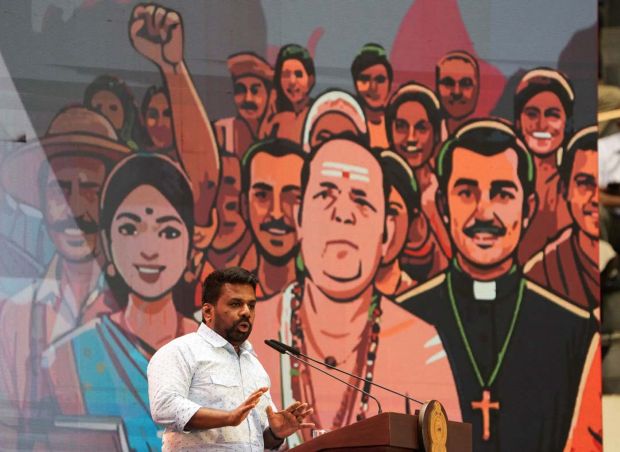
Twin elections in 2024 transformed Sri Lanka’s political landscape, bringing to power a president and parliamentarians who pledged sweeping reforms. So far, however, the new government has made little progress toward this end. It has work to do to show it can do politics differently
By Alan Keenan
What’s new? Almost eighteen months into its term in office, President Anura Kumara Dissanayake’s National People’s Power (NPP) government has kept Sri Lanka’s economic recovery on track and made notable efforts to fight corruption. But it faces growing questions about its ability and commitment to achieve its bold promises of “system change”.
Why does it matter? Dissanayake’s election in September 2024 and the NPP’s subsequent parliamentary majority created a rare opening to address the country’s most important and intractable governance problems. Failure to achieve a substantial portion of their ambitious agenda threatens to open the way to a return to ethnic tensions and political authoritarianism.
What should be done? To regain momentum for reform, Dissanayake’s government should reinforce its anti-impunity campaign through investigations of wartime atrocities; adopt a more inclusive, less defensive style of governance; strengthen independent oversight of the state; end abuses of counter-terrorism policing; and do more to protect the most economically vulnerable.
Executive Summary
As it nears completion of eighteen months in power, the National People’s Power (NPP) government of President Anura Kumara Dissanayake has kept Sri Lanka’s fragile economic recovery on track but is struggling to live up to bold promises of “system change”. Dissanayake’s election in September 2024 was made possible by Sri Lanka’s 2022 economic collapse and the subsequent popular uprising that toppled the president and ruling family. The two-thirds parliamentary majority the NPP won later in 2024 created a rare opening to address longstanding governance challenges, whether the protection of top officials involved in serious crimes, the concentration of powers in the presidency or the ethnic fault lines underlying the country’s civil war. So far, however, the government has made little progress on key reforms. To show that it is willing to do politics differently and regain momentum, the NPP should reinforce its anti-impunity campaign to include investigation of wartime atrocities, strengthen independent oversight of the state and do more to protect the economically vulnerable.
Dissanayake’s and the NPP’s 2024 campaign platform was extremely ambitious. It promised to bring relief from economic austerity, end deeply entrenched corruption and impunity for crimes by the politically connected, restore the rule of law, put an end to ethnically divisive politics, and adopt a new constitution that reduces the concentration of power in the executive. Previous governments had promised much of the same, without ever delivering. But the NPP’s outsider status and limited involvement in past administrations made them, for many voters, more credible agents of systemic change.
By the time of local elections in early May 2025, these high hopes had faded somewhat: the NPP’s share of the vote fell to 43%, placing it well ahead of its rivals but far short of its 61% share in the parliamentary vote the previous November. The reduced support stemmed partly from the sweeping nature of the new government’s promises of a reset in governance. Lack of experience in state office fed optimism that the NPP could break with traditional politics. But it also hindered the government in managing the machinery of state and arguably contributed to the authorities’ poor preparation for and slow response to November’s devastating Cyclone Ditwah. The party’s rhetoric about “clean” governance has, in turn, allowed critics who see it as self-righteous to seize on any misstep as proof of its supposed hypocrisy and dishonesty. NPP responses to such accusations have often sounded arrogant and defensive.
Sri Lanka remains dangerously vulnerable to external shocks, such as storms supercharged by climate change and now the Middle East war.
On the economy, the NPP has sustained the fragile recovery, but only by abandoning key electoral promises. Facing the realities of a weak fiscal position and an uncharitable global financial system, Dissanayake and the NPP shifted gears, embracing the reforms prescribed by the International Monetary Fund (IMF) as part of a 2023 bailout, which they had earlier criticized. Their pragmatism has won praise from the IMF and other creditors, helping ensure economic stability in the short term. Sticking so closely to the IMF program, however, has left them with little money to address the needs of millions of newly impoverished Sri Lankans. With a debt burden that remains, even after successful restructuring, one of the highest of any middle- or low-income country, Sri Lanka remains dangerously vulnerable to external shocks, such as storms supercharged by climate change and now the Middle East war.
As for the NPP’s signature issue of fighting corruption and restoring the rule of law, newly invigorated police and anti-corruption agencies have produced a notable increase in arrests and investigations. Previously unencumbered by the corrupt relationships that have plagued parties with long histories in power, the NPP must now prove itself capable of answering accusations about its own procurement deals. To fulfil its pledges to hold accountable those responsible for the 2019 Easter bombings and political killings during previous administrations, the NPP government will also need to face down powerful sections of the national security apparatus, particularly following February’s arrest of the former intelligence chief.
Should it extend its anti-impunity campaign to military atrocities during the civil war, the challenge will be even greater, given the military’s political clout and its prestige among the Sinhalese majority population. Tamil families of the forcibly disappeared and other rights activists in the North continue to face harassment and surveillance by the military and counter-terrorism police. A key test of Dissanayake’s leadership will be whether, building on speeches denouncing war and stressing the need to prevent ethnic or religious conflict, he can take the first step toward accountability for wartime abuses. Legal and constitutional reforms designed to meet Tamil and Muslim aspirations will require distancing the NPP from the long history of Sinhala nationalism of its main constituent party, the Janatha Vimukthi Peramuna (JVP or People’s Liberation Front), while still managing the expectations of the NPP’s predominantly Sinhala and Buddhist voter base.
With its continued popularity and large parliamentary majority, the NPP is better placed than preceding governments to take on these challenges. But if it wishes to reinvigorate its reform project and preserve its credibility as an agent of change, the NPP should tone down the moralizing and instead move to strengthen the independence of the police and oversight bodies to the point where they can hold the incumbent government and ruling party to account. To reinforce its anti-impunity drive, and build trust with Tamils and Muslims, the government should provide backing for exhuming mass graves and pursuing any criminal prosecutions that might follow. It should either withdraw or amend its draft anti-terrorism legislation to remove the threat it poses to democratic norms, while ending intimidation of rights activists by counter-terrorism police.
To share the burden of economic recovery more fairly, the NPP should push for wealth taxes, while preparing a case with its international creditors for greater debt relief. Foreign powers could in turn do more to support governance reforms as well as renegotiate debt payments to create more fiscal space for the government as it deals with post-cyclone rebuilding and the effects of the Middle East war.
Dissanayake and the NPP are learning how hard system change can be. Still, with careful doses of political courage, a bit of luck and support from abroad, they have the chance to move Sri Lanka further away from its violent and unstable past.
Read full report on https://www.crisisgroup.org/rpt/asia-pacific/sri-lanka/356-sri-lankas-bumpy-road-political-reset
-An analysis of the first 18-months of the National People’s Power government, led by President Anura Kumara Dissanayake by Alan Keenan, Senior Consultant, Sri Lanka, International Crisis Group

Comments are closed, but trackbacks and pingbacks are open.