

Sri Lanka faces ‘crisis beyond our control’, says President

By Danish Manzoor Bhat
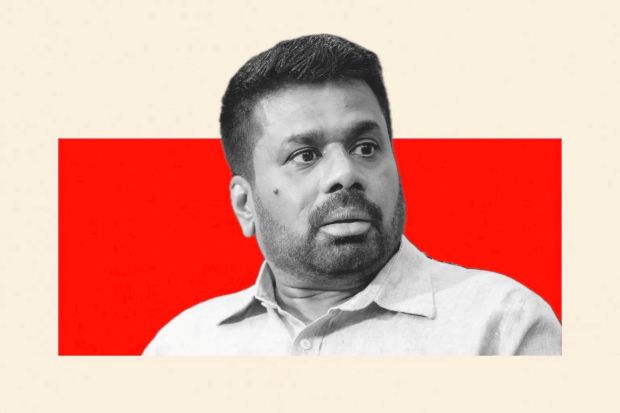
Sri Lanka is struggling to recover from the devastating Cyclone Ditwah even as it was trying to rebuild from a debt crisis and political turmoil, President Anura Kumara Dissanayake told Newsweek in an exclusive interview as he called for a new approach for debt-burdened countries vulnerable to climate change.
Cyclone Ditwah tore through the Indian Ocean island in late November, leaving well over 600 people dead and 20,000 homeless and causing damage estimated by the president to be in the billions of dollars.
“The damage may well be beyond any natural disaster that our island has endured. So, we will have to service debt while simultaneously rebuilding from climate disasters,” Dissanayake told Newsweek at the Presidential Secretariat in Colombo. “This is why debt sustainability frameworks for climate-vulnerable countries must change.”
“We just completed historic debt restructuring – $25 billion restructured, $3 billion forgiven. But now we are confronted with a crisis beyond our control,” Dissanayake said.
The country of 22 million people off the coast of India has rarely been spared from crises and suffered nearly three decades of civil war until 2009. Dissanayake was elected just over a year ago on promises of reform in the wake of a 2022 financial crunch that led to protests that brought down the long-standing Rajapaksa political dynasty and then austerity policies as a condition for debt relief.
Sri Lanka holds an important geopolitical position given its proximity and cultural ties to India but also close relations with China – its biggest lender – without forgetting the United States as its largest export market.
Dissanayake noted the rapid Indian help after the cyclone.
“India responded the quickest with Operation Sagar Bandhu. They deployed aircraft, helicopters, naval vessels including aircraft carrier INS Vikrant, and National Disaster Response Force personnel. Our neighbours Pakistan and Maldives also provided invaluable support,” he said.
Sri Lanka did not see its relationships with the major powers of India, China and the United States as a matter of balancing, Dissanayake said.
“Each of our relationships is important to us. We work with everyone, but always with a single purpose – a better world for Sri Lankans, in a better world for all,” Dissanayake said.
Dissanayake wrote a personal appeal to President Donald Trump in April over the imposition of tariffs on clothing and other exports. Tariffs were subsequently lowered.
“For Sri Lanka, success means market access, and renewed investment flows. We are engaging with President Trump’s administration to position Sri Lanka as a stable and reliable partner, and an Indian Ocean hub,” the president said.
Debt to China
Sri Lanka was held up by China’s critics as a prime example of ‘debt-trap diplomacy’, particularly over borrowing for the Hambantota deep water port and Port City. The prospect of long-term Chinese control of the projects also raised fears among China’s adversaries that they could serve military purposes.
“We have been clear that no foreign military bases are permitted and we enforce it. Port City is primarily a commercial development. It will create jobs, attract investment, and generate revenue,” Dissanayake said.
“We have to monitor operations, ensure compliance with Sri Lankan law, and maintain sovereignty over how these assets are used. The projects are realities that we must manage with clear-eyed assessment of Sri Lanka’s interests.”
Before Cyclone Ditwah struck, Dissanayake had been facing the challenge of meeting the expectations of supporters. Thousands of opposition protesters held their first major rally against him in October, accusing him of failing to bring safety and to end corruption and of using law enforcement agencies against his rivals.
The president said he was committed to reforming laws such as the Prevention of Terrorism Act and restrictive online safety legislation.
“These laws have been used as tools of repression. They are out of place in a democracy,” he said. We are trying to dismantle systems that have been built over decades. The political culture of control and institutional habits don’t change overnight. It requires sustained effort. Our partners should see whether we are moving in the right direction and whether our reforms are substantive.”
The president said authorities were working with victims’ groups, civil society organisations and local experts on a process for addressing past rights violations, including during the civil war marked by atrocities.
Corruption
With regards to the arrest of his predecessor, President Ranil Wickremesinghe, on corruption charges, he rejected accusations of political interference.
“Whether Mr. Wickremesinghe’s arrest is justified depends on evidence, and that should be tested in court through proper process – not the media or through political pressure,” he said.
“On institutional corruption more broadly – yes, it seems as if we haven’t done enough yet. The reason it seems that way is because corruption is deeply entrenched in institutions, built over decades. This means that putting things right requires systemic change, not just arrests.”
Recovering from Cyclone Ditwah now loomed over other challenges, Dissanayake said. Critics have faulted his government’s response and he said such criticism could help to shape future responses, with disaster management systems now under review.
Climate change meant Sri Lanka needed to be prepared for future shocks as well, he said.
“We will be trapped if we don’t act now. This trap is not of our own making. Sri Lanka contributes negligibly to global emissions. But we face existential climate shocks that can destroy years of development progress overnight. But we must break this cycle. We can’t have every flood, every cyclone, every drought does set us back to where we started,” he said. “So we urge our partners to help us build an escape plan to get out of the trap. Help us build climate-resilient infrastructure. This will cost more upfront but will save us from repeated reconstruction.”
– Danish Manzoor Bhat is Editorial Director & Senior Vice President (Asia) at Newsweek where this article was originally featured

Comments are closed, but trackbacks and pingbacks are open.