

Cyclone Ditwah, the disaster that shook Sri Lanka to its core

By Robert Antony
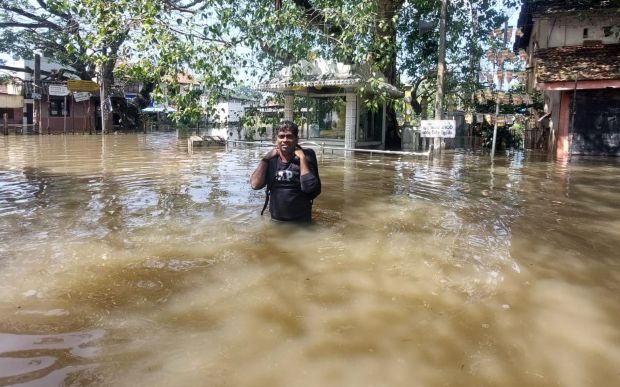
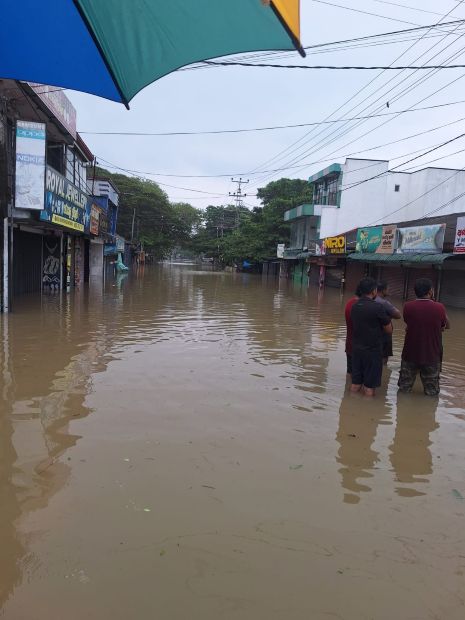
NATTANDIYA – Cyclone Ditwah unleashed a level of devastation that Sri Lanka has not witnessed in years. What began as a powerful tropical storm escalated into an island-wide catastrophe – floods swallowing entire towns, landslides burying villages, roofs torn away by violent winds, and torrential rains washing away homes, roads, and livelihoods. Entire communities were left unrecognizable, with properties submerged, vehicles carried off by raging water, and families trapped without help for days.
According to the Disaster Management Centre (DMC), 474 people have been confirmed dead, while 356 remain missing as of 10:00 a.m. Wednesday (3). Many fear the actual toll could be even higher, as rescue workers continue to unearth homes buried under earth and debris.
The latest situation report indicates that 1,558,919 people from 437,507 families have been affected across the island, making this one of the most widespread natural disasters in recent history. Puttalam, Badulla, Kandy, Nuwara Eliya, and Colombo remain among the hardest-hit districts. Kandy alone recorded 118 deaths, followed by 89 in Nuwara Eliya and 83 in Badulla.
According to the DMC, more than 31,417 homes have been partially damaged, and 783 completely destroyed. Thousands of families have been displaced, many forced to seek refuge on upper floors, in temporary shelters, or with relatives. Others have lost everything: homes, land, documents, belongings, and the stability of their lives.
Cruel Face of Ditwah
Ditwah’s destruction was not a single event. It was a deadly cascade of impacts. Torrential rains triggered landslides that buried entire villages within minutes. Floodwaters rose unexpectedly in the night, trapping families in their homes. Roads collapsed, bridges disappeared, and key transport routes became inaccessible, leaving whole districts isolated.
One of the most painful sights was the helplessness of people watching their houses disappear under water or mud. Vehicles were submerged, shops destroyed, and small businesses wiped out in hours. Livelihoods built over decades vanished in a single weekend.
Stories of Loss and Courage
The human stories emerging from the disaster are heartbreaking.
A journalist from Nattandiya, which has experienced floods previously, but never to this extent, described how the water entered his house for the first time.
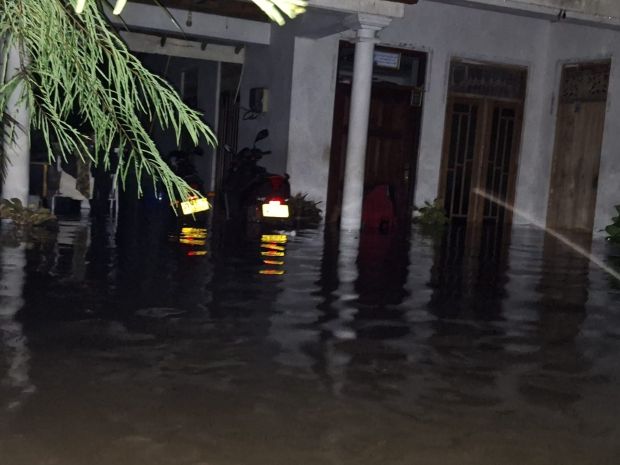
The water suddenly surged on Friday (Dec 28) night. Within minutes, it was four or five feet high, he said, recalling the terrifying moments when at midnight he had to move his mother and father to safety through five feet of water, without light, and without shoes.
The journalist and his family lost all their belongings – documents, valuable items, and furniture, all submerged under five feet of water. But ever resilient, he said, “We won’t lose hope; we will bounce back.”
A small-scale entrepreneur, who did not wish to be named, broke down over the loss of his livelihood as he watched his vehicles being submerged.
“My three cars, a lorry, and a van are underwater. I can see them from here, but I cannot go to that place. I don’t know what I am going to do,” he agonized.
Another resident, Sunil, 62, expressed his frustration at the delays in rescue efforts.
“People have been waiting for two days to get to another town. But the officials still haven’t been able to provide even one boat for that purpose,” he lamented.
Contrasting views also emerged, praising the government’s rescue and management efforts. An individual who came to observe the floods said, “The government is doing what it can. Officials are also working. But since this is a sudden, nationwide disaster, no one can do everything immediately. We should not complain at this time, but rather provide our cooperation to everyone.”
Communication Breakdown
One of the most crippling failures during the disaster was the collapse of mobile and internet services. Even during previous disasters like the 2004 tsunami, communication systems did not remain down for this long.
A woman who sought refuge at a shelter said tearfully, “The water suddenly entered our house in the night. We managed to reach a safe place with the family. But I still cannot inform my relatives because mobile connections are down.”
Another individual, frustrated by the delays, vented his anger: “The government has provided several contact numbers for assistance, but none of our phones work. There’s no power, no signal. How are we supposed to reach anyone? What’s the point of giving us numbers we can’t use?” he questioned.
A man desperate for news about his wife and children in Kottaramulla, Negombo, pleaded: “Can someone please go and check on them? I’ve been trying for four days.”
These stories reflect not just inconvenience, but the trauma of feeling cut off from loved ones during the most terrifying days of their lives.
In the heart of flood-hit Nattandiya town, residents also recounted the desperate moments that unfolded as the waters kept rising. On the first day of the floods, a young woman due to give birth needed to be rushed to the Marawila Hospital. With no vehicles able to move through the submerged streets, those gathered quickly assembled a makeshift raft, placed the pregnant woman on it, and ferried her across the floodwaters. They then lifted both the woman and the raft onto a lorry to continue the journey. But midway, the road disappeared under another surge of water. Once again, they carried her off the vehicle, waded across with the raft, and managed to transfer her to another vehicle that finally took her to the hospital. It was one of many emotional, life-or-death rescues reported from the area.
In another incident, a man in his 40s was found shivering uncontrollably from the cold. Young people immediately built a raft and rushed him to the hospital, but by the time they arrived, he had already passed away.
Heroic Rescues and Tragedies Amid the Tragedy
Despite the communication blackout, rescue operations moved forward with immense courage. Helicopters, boats, and military teams worked without pause. Local villagers, often the first responders, built makeshift rafts and guided stranded people through chest-high water.
One of the most heart-rending incidents occurred during a rescue mission in Wennappuwa, where a helicopter crashed, killing the pilot. Residents were devastated.
“A man who came to save us has died,” one witness said, tears in his eyes.
In temporary shelters, humanity shone brightly. At 2:00 a.m., a young woman, one of the 150 who had sought shelter, cried that her 80-year-old mother was missing. Suspecting she might be trapped in the house, local youths immediately built a raft from banana trunks and set off to check on her, finding and rescuing her from her flooded home.
These stories highlight the strength and compassion of ordinary Sri Lankans, even in their darkest hour.
Have We Learned Anything?
Many criticisms have been raised about the way Sri Lanka prepared for this disaster, with questions being asked as to whether the early warnings were adequate, whether the people received evacuation instructions, and whether local authorities were prepared to handle such a situation.
Some say they received warnings; others insist no such message was communicated. Many accuse authorities of reacting too slowly or failing to coordinate relief effectively.
Sri Lanka has endured tsunamis, landslides, and major floods before. Each time promises were made about better preparedness, better early warning systems, and better coordination. Yet here we are again, counting the dead, searching the mud, and asking: Have we learned nothing from these experiences?
According to official data, more than 31,000 homes have been fully or partially destroyed. According to the UN in Sri Lanka, 200 roads have become impassable, and 10 bridges have collapsed. The widespread destruction and the displacement of hundreds of thousands demand accountability and introspection. But the call now is for everyone to unite to overcome the crisis and rebuild the country.
Sri Lanka must move swiftly to recover from this crisis. Relief for affected families must be delivered efficiently, fairly, and without delay. At the same time, the country must urgently strengthen its preparedness to ensure that future disasters do not inflict the same scale of loss and suffering.
International Aid: A Lifeline
Several countries rushed to assist Sri Lanka. India, our closest neighbour and long-standing partner, was the first to respond, sending three aircraft with emergency relief supplies and deploying two helicopters for rescue missions. Additional aircraft and naval vessels transported equipment, food, and personnel, while its National Disaster Response Force teams were deployed in the hardest-hit areas.
Pakistan, too, has stepped forward with support. Other nations are preparing assistance packages.
Coordinating this aid effectively, transparently, and responsibly will also be crucial for Sri Lanka’s immediate recovery.
The biggest question Sri Lanka faces now is what happens next. Will we, as a nation and as a people learn any lessons from this crisis and recover? In this context, it is essential to share the stories of the people, document their losses and their recovery process. Our next step depends on how we are going to bounce back.
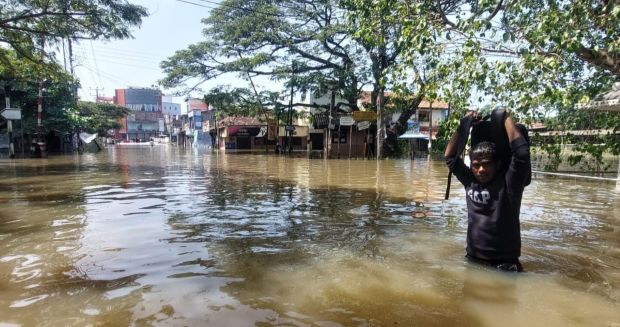
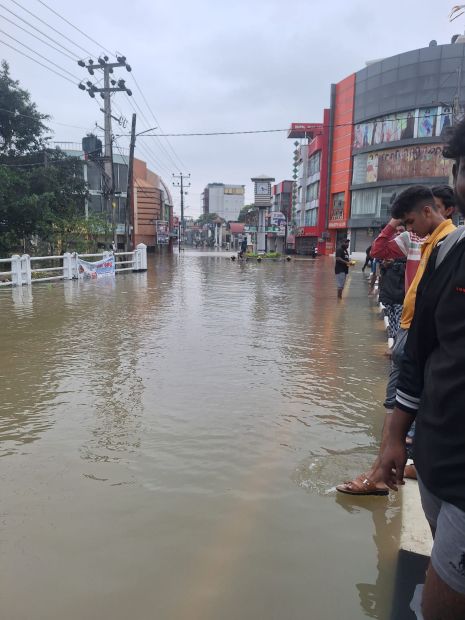
–Robert Antony, a multiple award-winning journalist, currently serves as Assistant Editor at VirakesariThe writer trudging through waist-deep floodwaters – RA

Comments are closed, but trackbacks and pingbacks are open.