
Trump signs executive order to neuter state AI laws

By Cecilia Kang
WASHINGTON — President Donald Trump signed an executive order Thursday (11) that aims to neuter state laws that limit the artificial intelligence industry, a win for tech companies that have lobbied against regulation of the booming technology.
The order grants broad authority to the attorney general to sue states and overturn laws that do not support the “United States’ global AI dominance,” putting dozens of AI safety and consumer protection laws at risk. If states keep their laws in place, Trump directed federal regulators to withhold funds for broadband and other projects.
Trump, who has said it is important for the United States to dominate AI, has criticized the state laws for generating a confusing patchwork of regulations. He said his order would create one federal regulatory framework that would override the state laws, and added that it was critical to keep the United States ahead of China on the technology.
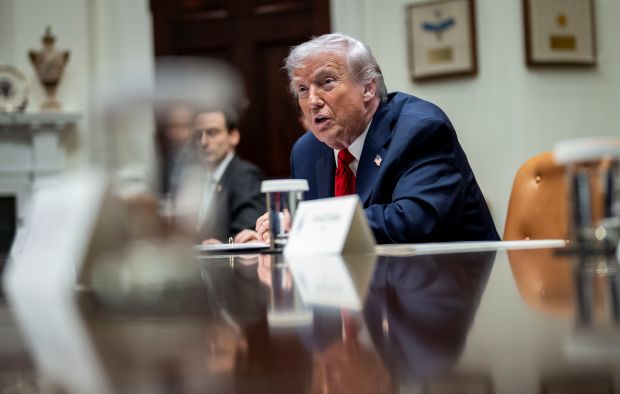
“It’s got to be one source,” Trump told reporters in the Oval Office, surrounded by officials including David Sacks, the AI and crypto czar. “You can’t go to 50 different sources.”
The president has increasingly embraced the AI industry, signing executive orders to limit regulation, provide access to federal data and make it easier for companies to build infrastructure to power the technology. He has also knocked down barriers to exporting chips that drive AI, including this week, and publicly praised the companies’ leaders. And he has given Sacks, who is also a Silicon Valley investor, heavy influence over policy decisions.
The order Thursday, which has sparked broad, bipartisan opposition, is likely to be challenged in court by states and consumer groups on the grounds that only Congress has the authority to override state laws, legal experts said.
If Trump succeeds in neutering state laws, he should instead offer a robust national standard on AI regulations, said Wes Hodges, the acting director of the Centre for Technology and the Human Person at the right-leaning Heritage Foundation.
“Doing so before establishing commensurate national protections is a carve-out for Big Tech,” Hodges said.
New generative AI technology that can imitate human writing and voices and create realistic videos and images has taken off. But the technology can be misused to trick consumers, and chatbots have been documented offering harmful advice to minors, among other issues.
States have rushed to fill a void of federal regulation with their own laws on AI safety, requiring certain safety measures from companies and putting guardrails around the way the technology can be used. This year, all 50 states and territories introduced AI legislation, and 38 states adopted about 100 laws, according to the National Conference of State Legislatures.
California has passed a law that requires the biggest AI models, including OpenAI’s ChatGPT and Google’s Gemini, to test for safety and to disclose the results. South Dakota passed a law banning deepfakes, which are realistic AI-generated videos, in political advertisements within months of an election. Utah, Illinois and Nevada passed laws related to AI chatbots and mental health, requiring disclosures that users are engaging with chatbots and adding restrictions on data collection.
At the signing of the order, Sacks said that the administration would target the most “onerous” state laws, pointing to AI legislation that could “embed ideological bias” within AI models.
States have also passed a growing number of child-safety regulations targeting AI chatbots and social media companies that use AI-based technologies.
Thursday’s order said it would not pre-empt laws related to child safety, but did not offer details.
“Blocking state laws regulating AI is an unacceptable nightmare for parents and anyone who cares about protecting children online,” said Sarah Gardner, the CEO of Heat Initiative, a child safety group. “States have been the only effective line of defence against AI harms.”
AI companies have waged a fierce lobbying campaign in Congress and the White House to get rid of the state regulations. Earlier this year, some lawmakers attempted to include a decade-long moratorium on state AI laws in the domestic policy bill, but dropped the measure after strong bipartisan opposition.
“A 50-state patchwork is a startup killer,” Marc Andreessen of venture capital firm Andreessen Horowitz posted on social media last month.
-New York Times

Comments are closed, but trackbacks and pingbacks are open.