

HRCSL warns of rising threats to free expression, urges halt to Online Safety Act enforcement

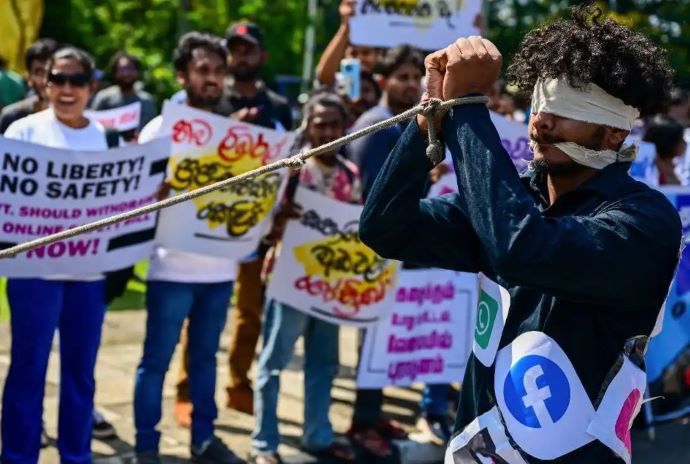
COLOMBO – Sri Lanka’s Human Rights Commission (HRCSL) on Tuesday (3) voiced concern over what it described as growing threats to freedom of expression, particularly the ability of journalists to work without interference, and called for a moratorium on the use of the Online Safety Act (OSA).
In a statement, the Commission said it was troubled by what it sees as an increasing tendency by law-enforcement authorities to initiate investigations into allegedly defamatory speech, including publications by journalists.
The HRCSL cited the recent summoning of journalist Tharindu Jayawardena, who also serves on the Commission’s Sub-Committee on Freedom of Expression, for police questioning without prior disclosure of the reasons. The Commission said the inquiry later appeared to stem from complaints over his reporting on alleged corruption in the use of public funds.
It added that the failure to inform a person of the grounds for summoning violates a police circular issued by the Inspector General of Police in July 2025 directing investigators to disclose such reasons.
Freedom of expression is guaranteed by Article 14(1)(a) of Sri Lanka’s Constitution and applies to all forms of communication, including online platforms, the HRCSL noted, citing Supreme Court rulings that protect even speech that may offend or disturb sections of society.
While acknowledging that restrictions are permitted under the Constitution in limited circumstances, the Commission said they must meet standards of necessity, proportionality and reasonableness, warning that excessive curbs could fuel public frustration and unrest.
Defamation is one of the grounds on which expression may be restricted, the statement said, but only through civil proceedings. Sri Lanka repealed criminal defamation provisions in 2002, meaning police have no authority to investigate complaints solely on that basis, the Commission stressed.
The HRCSL said it has observed a pattern in which political actors and influential figures lodge complaints with police units, including cybercrime divisions, over allegedly defamatory online content. International human-rights standards require public officials to tolerate a higher degree of criticism than private individuals, it said, urging such figures to rely on public clarifications rather than law-enforcement action.
The Commission also reiterating earlier concerns about the Online Safety Act of 2024, noting that the law does not fully comply with a Supreme Court determination on the bill and may have required approval by a special parliamentary majority. Using the Act to curb speech, including to prevent alleged defamation, raises serious constitutional questions, it added.
Although online safety is a legitimate regulatory goal, the HRCSL said the current law fails to adequately address genuine digital threats such as hacking, malware and phishing, while reproducing outdated criminal offences. Following consultations with civil-society groups, the Commission said there was broad agreement that the legislation should be repealed and replaced through a consultative process.
The HRCSL called on the government to impose a moratorium on enforcing the Online Safety Act pending its repeal, urged the police chief to remind officers that defamation is not a criminal offence, and appealed to political leaders to refrain from filing criminal complaints over allegedly defamatory statements.
-ENCL

Comments are closed, but trackbacks and pingbacks are open.