

US-Israel Strikes on Iran spark global shockwaves, threatening Sri Lanka’s fragile recovery

COLOMBO – As dawn broke over Colombo on Saturday (February 28), news of coordinated United States – Israeli military strikes on Iranian strategic targets sent shockwaves far beyond the Middle East. For Sri Lanka, still recovering from its 2022 economic collapse, the escalation represents more than distant geopolitics; it is a direct economic threat.
With inflation having eased to 1.6% in February, the country was cautiously stabilizing. That fragile recovery is now at risk.
A System Shock from the Middle East
The conflict has entered uncharted territory. Following weeks of mounting tension, direct military engagement between the US-Israeli coalition and Iran has sharply escalated regional instability. Retaliatory missile and drone strikes have targeted Israeli territory as well as US-linked military installations across the Gulf. Airspace disruptions and threats to the Strait of Hormuz, through which roughly 20% of global oil flows, have amplified global anxiety.
For Sri Lanka, which maintains delicate diplomatic ties with both Washington and Tehran, the crisis demands neutrality. Economically, however, the island remains deeply exposed.
Energy: The First Pressure Point
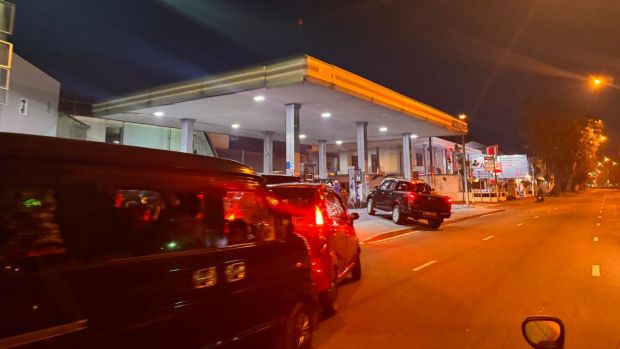
The immediate impact was visible in global oil markets. Brent crude surged over 7%, breaching US$90 per barrel. For the Sri Lankan layman, this translated instantly to the pump, even as the Ceylon Petroleum Corporation (CPC) announced a price hike: Auto Diesel by Rs 4 and Super Diesel by Rs 6.
Though the price hike was based on a predetermined fuel price formula and not related to the latest Middle East tension, the timing heightened public concern.
Sri Lanka depends heavily on Middle Eastern crude, particularly for operations at the Sapugaskanda refinery. Any sustained disruption to shipping routes through the Strait of Hormuz would jeopardize supplies. While authorities say stocks are sufficient for over a month, future shipments will likely carry higher geopolitical risk premiums.
Higher fuel costs ripple quickly through the economy, raising transport expenses, food prices, and electricity generation costs. Non-food inflation, already edging up to 2.3% in February, could accelerate again, threatening the hard-won price stability achieved after the crisis.
Trade Under Strain
The Middle East is both a major export market and a critical import corridor for Sri Lanka.
Tea exports are particularly vulnerable. Countries such as Iran, Iraq, and the UAE are key buyers of Sri Lanka’s low-grown tea. Currency instability and banking disruptions in the region could stall orders, placing pressure on thousands of smallholder farmers who rely on these markets.
At the same time, oil imports, the country’s largest import bill, will grow more expensive. Increased freight charges, insurance premiums, and war-risk surcharges act as a tax on every shipment entering or leaving the island.
Shipping disruptions may also affect routes via the Suez Canal. If vessels are rerouted around the Cape of Good Hope, transit times to Europe and the US could lengthen by up to two weeks, raising freight costs for apparel and rubber exports and reducing competitiveness.
Labour and Remittances at Risk
More than 1.5 million Sri Lankans work in Gulf Cooperation Council (GCC) countries. The region functions as a crucial employment outlet and generates the country’s largest source of foreign exchange: worker remittances.
In 2025, remittances exceeded US$8 billion. This inflow stabilizes the rupee, supports rural households, and underpins foreign exchange reserves required for debt servicing under Sri Lanka’s IMF-supported recovery program.
If regional instability disrupts Gulf labour markets or forces evacuations, Sri Lanka would face a dual crisis: the loss of billions in annual remittances and the sudden reintegration of large numbers of returnees into a domestic economy still in recovery.
Even a slowdown in recruitment could raise youth unemployment at home, removing one of the country’s most important economic safety valves.
Tourism: The Indirect Casualty
Tourism, another pillar of recovery, could also suffer.
Major Gulf hubs such as Dubai, Doha, and Abu Dhabi serve as transit gateways for a large share of European and North American travellers to Sri Lanka. Airspace closures and flight suspensions would disrupt connectivity during what was expected to be a strong season.
Perception also matters. Even though Sri Lanka is geographically distant from the conflict zone, broader regional instability can deter Western travellers. A decline in arrivals would immediately affect hotels, transport operators, and small tourism-linked businesses, reducing daily foreign exchange inflows.
Currency and Debt Pressures
Sri Lanka’s recovery remains closely tied to exchange rate stability and reserve accumulation. A spike in oil import costs, combined with weaker remittances or export earnings, would pressure the rupee.
Currency depreciation would make fuel, medicine, and food imports more expensive, potentially reigniting the cost-of-living crisis. It could also complicate debt restructuring efforts by straining reserve targets required under the International Monetary Fund (IMF) program.
With core inflation already trending upward at 3.7%, policymakers may be forced to maintain tight monetary conditions, dampening investment and slowing growth.
A Fragile Recovery Tested
The Middle East crisis is, in effect, an external tax on Sri Lanka’s recovery. It threatens energy security, trade competitiveness, labour markets, tourism, and currency stability, all simultaneously.
For a nation emerging from sovereign default, the timing is particularly difficult. Living standards had only recently begun to stabilize after years of contraction. Now, uncertainty looms again.
While Colombo cannot influence events in the Middle East, it can manage the domestic response: safeguarding fuel supplies, maintaining fiscal discipline, protecting vulnerable households, and preserving investor confidence.
Sri Lanka finds itself once more in a defensive posture, hoping diplomacy prevails abroad before economic turbulence reignites hardship at home.
The coming months will test whether the island’s recovery is resilient or still too fragile to withstand another global shock.
-ENCL/EN

Comments are closed, but trackbacks and pingbacks are open.