

2026: A stern test for the government and an opportunity to prove its mettle

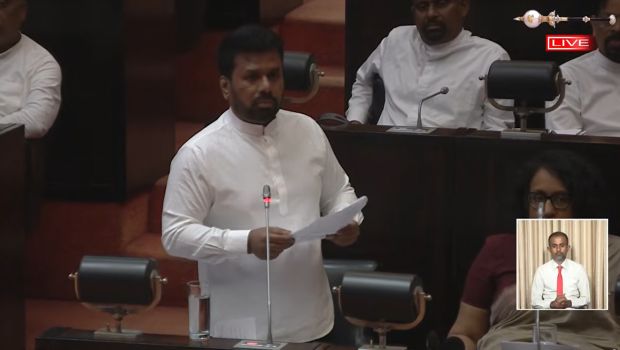
By Groundviews
The government enters its second year with mixed reviews. While gaining points for action on the anti-corruption front and turning away from the elite old political guard, it has earned brickbats for inaction on human rights issues and addressing the concerns of minority communities. There are no concrete moves to deal with the causes that led to the 26-year civil war nor to bring justice to victims of war related crimes.
The country is awaiting a firm date for Provincial Council elections. The dreaded Prevention of Terrorism Act (PTA) and the repressive Online Safety Act (OSA) remain in place. The draft of a new anti-terrorism law has drawn severe criticism from international and national human rights organizations.
Although the economy is recovering, the poorer sections of the population continue to suffer due to high prices and insufficient government assistance. Cyclone Ditwah, which caused a significant loss of life and destroyed villages and infrastructure, has added to their misery. With its large majority in Parliament and widespread grassroots approval, is the government squandering a golden opportunity to turn Sri Lanka around and ensure a peaceful and inclusive future?
Neil DeVotta, a professor of politics and international affairs at Wake Forest University in the US, answered questions from Groundviews about the government’s performance and what the future could hold.
QUESTION: How do you rate the government’s performance in its first year?
ANSWER: It qualifies for a positive rating with some clarifications. If one believed the scaremongers who seemed to suggest an National Peoples Power (NPP) regime would behave like the Khmer Rouge, then it should be awarded an A+ for being just the opposite: a party with a Marxist-Leninist pedigree that has, perhaps reluctantly, put up with the neoliberal milieu it inherited to ensure stability. This must be a shock to those elite who thought their extra vehicles and homes would be expropriated if the NPP won! The scaremongers also claimed an NPP victory would lead to massive violence, the economy would crash once more, the rupee would depreciate and the international community would ostracize the country. If, on the other hand, one goes by the promises the NPP made in its manifesto, the government should perhaps be given a C grade because there are several that could have been enacted quickly, especially considering the supermajority it enjoys.
Q: There is criticism that the government has not delivered on much of its promises. Do you agree?
A: In the main, yes. This inexperienced regime inherited an utter mess and, notwithstanding its lofty promises, enacting substantive changes in line with the “systems change” the aragalaya activists wanted will take time. For instance, it is too much to expect the regime to enact a new constitution and get rid of the executive presidency in its first year or two, although the NPP – assuming it is serious about getting rid of the executive presidency – should find it opportunistic to do so just before President Anura Kumara Dissanayake’s first term ends. I, however, doubt this would happen, especially if the government believes President Dissanayake could be re-elected president. But there are other promises that could have been effectuated like getting rid of the PTA and holding provincial council elections within a year of being elected.
Q: Some analysts say the government is not moving ahead with repealing the PTA and the OSA because it wants to use these laws against future dissent. Do you think this is correct?
A: The ongoing attempts to get rid of the PTA will only be meaningful if the legislation that replaces it is not similarly draconian. The proposed Protection of the State from Terrorism Act, at least in draft form, hardly does so. As for the OSA, it is among the most democratically regressive legislation passed in recent times and should be thoroughly overhauled. Revised versions of the PTA and OSA could benefit immensely from civil society’s input but the regime does not seem to be solicitous of civil society’s expertise despite its main actors lacking experience and expertise.
There appears to be an arrogance rooted in misplaced omniscience that has infected especially some Janatha Vimukthi Peramuna (JVP) personnel and the sooner they cure themselves of this malady the better it will be for the NPP and the country. The notion that the government may want to use such legislation to stymie dissent starts to sound credible when it fails to move quickly to replace such legislation and when some of the regime’s leading spokespersons make claims about having to be in power for twenty years to transform the island’s fortunes. It may indeed take much longer to transform the rotten political culture successive governments have cemented but whether the regime rules that long is for the people to determine, not for the NPP to dictate.
Having spent so long in opposition – and that too on the margins – those in especially the JVP may balk at relinquishing power. No party competes in elections to lose but the JVP and NPP will be better off alternating in power (provided they lose a future election) than trying to crackdown on legitimate dissent to consolidate power.
Whatever shortcomings associated with the NPP’s first year, the JVP-led coalition has transformed its image and generated a degree of goodwill that has befuddled the opposition. This is mainly due to the moderation it has adopted despite having a parliamentary supermajority to run roughshod. The NPP has allowed the JVP to engineer a makeover that is stunning, although the JVP stayed committed to a democratic path despite winning merely 3-4% of the vote for a couple of decades. Any overly undemocratic behaviour on the NPP’s part will get linked to the JVP’s murderous past and undermine such gains. So, while it is understandable why the regime may be tempted to maintain the likes of the PTA and OSA to operate forcefully, if necessary, it stands to generate more political mileage by sticking to its promises and revamping such legislation.
Q: Why are Provincial Councils elections necessary? Has the government the will to hold them?
A: Holding Provincial Council elections is a constitutional necessity and every regime that postponed doing so violated the constitution. The majority community has put up with this violation because it mainly penalizes minorities in the Northeast. There were political reasons for various governments to not hold Provincial Council elections, but under the Rajapaksas the main reason was ethnocratic. The NPP has gone out of its way to cultivate a minority voting base – and this is especially true about the Tamils – and it can strengthen its support among Tamils by holding Provincial Council elections. It seems the main reason it is averse to holding Provincial Council elections is not because it will lose in the North and East but because it fears losing in the other seven provinces. The longer the NPP waits to hold Provincial Council elections, the less well it will do because like nearly all governments it stands to become more unpopular with the passage of time.
The government should have held Provincial Council elections soon after the parliamentary elections even if it did not fare well because doing so will have fulfilled a campaign promise and burnished the NPP’s democratic credentials. It should now hold Provincial Council elections this year even if that means the Sri Lanka Podujana Peramuna (SLPP) and the Samagi Jana Balawegaya (SJB) will fare better than they did in the local government elections. Perhaps the new constitution it has promised to enact coupled with a different electoral system could make setbacks at the Provincial Council level less relevant.
Q: Does the government have the capacity to lead the country out of the Cyclone Ditwah disaster successfully?
A: While the Sri Lankan political system endows the president and his parliamentary majority immense autonomy, the country – thanks to its corrupt culture and bankrupt status – has little capacity. The NPP’s main credential is being opposed to corruption. Yes, there have been accounts of NPP supporters unduly benefitting from disaster relief and the president’s attempt to appoint favourites to important posts despite their lack of qualifications, which undermines his good governance rhetoric. But only utterly biased detractors can claim that this government is no different to its predecessors on the corruption front. This sense that it is indeed different is the biggest reason for its relative popularity despite the failure to follow through on promises and the juvenile rhetoric among some within the regime. I was struck by how numerous friends and family members preferred to donate to the government fund that was set up to help cyclone victims over NGOs and other organizations and these are folks who would not have donated a cent to previous regimes. So, while the island lacks the funds and capacity to deal with the aftermath of the cyclone, the government’s reputation for eschewing large scale corruption may allow it to generate international aid better than previous regimes.
Q: What should the government be doing to capitalize on the goodwill it generated among the minority communities during the national elections?
A: Thanks to the government’s insistence that it would not tolerate racist attacks on minorities, the Muslim community in the south feels more secure than it has in about fifteen years. The presidential election, when all major candidates eschewed racist tropes, has contributed to this sense of security.
I am nonplussed why the government has failed to include more Muslims within governing ranks because there seem to be more Muslims who now support the NPP than previously. The claim that the government picks the best people without regard to religion is hogwash when one sees how the president goes out of his way to appoint friends from his University of Kelaniya days. It is important for those in a pluralist society to feel they are represented and a conspicuous way of doing this is by embracing a consociational approach and appointing people from different communities to some government positions. In this regard, the way this government has neglected appointing women to important committees is also disappointing, given that women are a clear majority in the country’s polity and how they rallied behind the NPP during the presidential and parliamentary elections. As for the Tamils, there are several things the government can do even as it tries to deal with controversial issues like accountability for alleged war crimes. Holding Provincial Council elections would be a good start and the NPP could strengthen links generated in the north by joining with moderate Tamil parties. Incorporating more Tamils into government service would go a long way in improving Tamil livelihoods while also allowing government to function better in predominantly Tamil areas. Releasing more private lands held by the armed forces and minimizing the military presence in especially Northern Province should not be too difficult. The government should also put a stop to the land grabbing taking place by some Buddhist clergy who operate in cahoots with the Archaeology Department. The president and prime minister have done well by visiting the northeast often but it is disappointing when the government’s secular rhetoric gets undermined by its majoritarian instincts.
Q: Do you believe the government can manage to steer the country in the right direction given time?
A: The right direction is rooted in good governance. That includes transparency and accountability. Thus far the government’s record is mixed in this regard. On the one hand, it has rightly emphasized anti-corruption and, in the main, operated accordingly. Indeed, the NPP must be commended for not abusing its power despite enjoying a supermajority in parliament.
Good governance is partly about operating with restraint when enjoying immense power and the NPP has so far done well. On the other hand, the shenanigans the NPP has resorted when setting up local councils, not divulging to Parliament agreements with foreign states and disregarding the Constitutional Council when trying to appoint a favourite to the Auditor General position are among issues that question the regime’s commitment to good governance.
Sri Lanka has long scored high marks for holding credible elections and seeing parties alternating in power but strong democracies are also based on horizontal accountability – that is institutions/commissions that can counter executive power if necessary and operate independently and dispassionately. It is wannabe dictators that try to undermine such commissions and the Rajapaksas were a baneful force in this context. If the NPP is committed to good governance, President Dissanayake and the NPP should respect horizontal accountability.
Having never controlled power, the NPP is not to blame for Sri Lanka’s plight. What I find striking is the goodwill people, who until last year voted for other parties, harbour toward the NPP. There is a massive constituency within and without the country that wants this government to succeed. In the president the NPP has a superb communicator who is liked and trusted among most. Notwithstanding their inexperience and the faux pas committed by some NPP folks, the sense one gets is that the vast majority of NPP politicians at the national level are committed to steering the country in a better direction.
The NPP’s platform was undergirded by three prominent themes: anti-corruption, anti-waste and anti-poverty. It seems people believe it is trying to deliver on the first two, which is perhaps why it is being given the benefit of the doubt. Poverty levels, however, have not changed, so this is the regime’s Achilles heel. This means that ultimately it is the economy that will make or break the regime. And much of what would determine the country’s economic fortunes -i.e., tourism and remittance – can be easily undermined by exogenous shocks.
So, while the government at large is committed to steering the country in a positive and progressive direction, the economic challenges could very well torpedo its attempts. Cyclone Ditwah has exacerbated these challenges. Consequently, 2026 will pose a stern test but it is also an opportunity for the regime to prove its mettle.
-groundviews.org

Comments are closed, but trackbacks and pingbacks are open.