

Ex-South Korean leader gets prison term in first ruling over martial law

By Choe Sang Hun
SEOUL— South Korea’s impeached and ousted former president, Yoon Suk Yeol, was sentenced to five years in prison on Friday (16) on charges of fabricating an official document in an attempt to justify his short-lived imposition of martial law in late 2024 and illegally using his bodyguards to prevent his arrest on insurrection charges.
The sentence on Friday from a three-judge panel at the Seoul Central District Court was the first in eight separate court trials stemming from his ill-fated martial law declaration. The ruling on the most consequential charge — insurrection — is scheduled to be delivered by a different panel of judges on Feb. 19. Prosecutors in that case have sought the death penalty for Yoon.
In their ruling Friday, the judges convicted Yoon of obstructing justice when he ordered his presidential secret service agents to block law enforcement officials from serving a court-issued warrant to detain him on insurrection charges last January. The officials eventually detained him several days later on their second attempt to serve the warrant.
“He turned his Presidential Security Service, trained to be loyal to the country, into a de facto private army for his personal safety and interests,” presiding judge Baek Dae-hyun said in the ruling on Friday, which was nationally televised.
Yoon was also convicted of abusing his power when he failed to invite some of his Cabinet members to a Cabinet meeting on the night of Dec. 3, 2024, denying them their right to review his plan for martial law before he declared it.
Yoon’s original martial law decree was not endorsed with signatures from his Cabinet members. On Friday, he was convicted of fabricating a document to make it look as if his martial law plan had been reviewed and endorsed by Cabinet members. He was also found guilty of ordering the removal of data from government-issued secure phones of his collaborators in martial law, such as military generals, in order to obstruct investigators.
Yoon’s acts amounted to an abuse of his presidential power and a “grave crime,” Baek said.
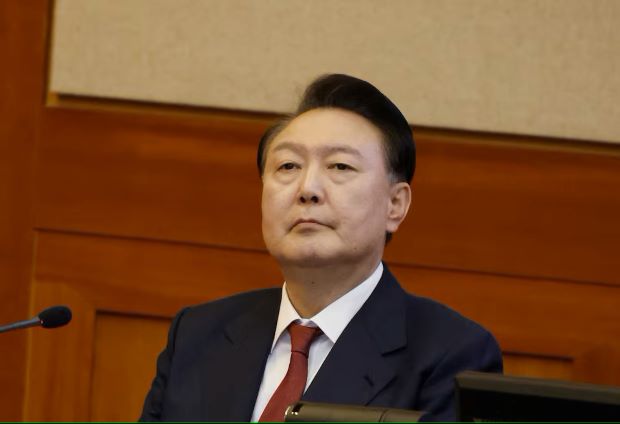
Yoon, who appeared in the courtroom on Friday, exited after the ruling without comment. He and his lawyers have a week to appeal the ruling.
Yoon was unpopular throughout his 2 1/2 years in office. He governed a deeply polarized country, constantly clashing with the majority opposition over his policies and scandals involving his wife. The tensions culminated when he declared martial law on Dec. 3, 2024. He banned all political activities and sent troops to take over the opposition-controlled National Assembly, which he called a “monster” and “den of criminals” that he said “paralyzed” his administration.
But his martial law decree lasted only six hours. The legislature voted it down while citizens held back troops to prevent them from raiding its main voting hall. When the Assembly impeached him, suspending him from office, Yoon holed up in his hillside presidential residence in central Seoul, vowing to “fight to the end.”
He repeatedly ignored summons from investigators to face questioning for insurrection charges. When they sought to detain him last January, he refused to surrender. His bodyguards built barricades of buses and formed human chains to repel investigators and police officers, raising fears of a clash. Yoon insisted that the officials had no right to detain him because he said his call for martial law had been legal.
Only when the investigators visited the compound again several days later in overwhelming numbers could they serve the warrant and detain him. Yoon was the first sitting president of South Korea to be arrested in a criminal investigation. He was later formally removed from office.
Yoon’s martial law, although short-lived, threatened decades of hard-won democracy in South Korea and exposed deep fractures in its politics.
Last year, South Korea elected a new president, Lee Jae Myung, one of the political leaders whom prosecutors said Yoon had planned to arrest under his martial law. Small groups of die-hard supporters of the ousted leader still hold rallies in Seoul, calling his impeachment invalid and chanting, in English, “Yoon again!”
From his jail cell and through his lawyers, Yoon continues to argue that he declared martial law to “wake” citizens up to the danger posed by “anti-state forces” among the political left. He has called special prosecutors who indicted him “a pack of wolves” controlled by “dark forces.” His old People Power Party remains mired in internal fighting between those who call for disowning him and those who remain sympathetic toward him. The party planned to change its name to make a fresh start.
-New York Times

Comments are closed, but trackbacks and pingbacks are open.