

Flooded Chemmani mass grave cleared amid stalled exhumation

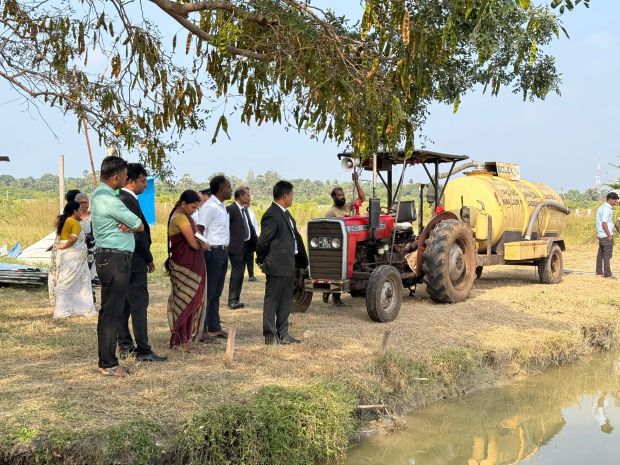
COLOMBO – Authorities on Monday (9) undertook drainage operations to remove rainwater that had accumulated at the Chemmani mass grave site, as preparations continued for the next phase of excavations at one of the North’s most significant burial locations.
During the first and second phases of excavation at Chemmani, investigators identified 240 sets of human skeletal remains, of which 239 have so far been exhumed under court supervision.
Although funding had been allocated and preliminary arrangements completed to begin the third phase, prolonged heavy rainfall in Jaffna since November last year caused rainwater to accumulate at the site, forcing work to be suspended.
Authorities on Monday began pumping out the stagnant water with assistance from the Nallur Pradeshiya Sabha. However, officials said the ground remains heavily waterlogged and unstable, making it unsafe to resume excavation immediately.
A decision on when the next phase can proceed will now be taken on March 16, when the case is scheduled to be taken up again before the court. Proceedings have been adjourned until then.
The drainage operation was inspected by a team that included Jaffna Magistrate S. Lenin Kumar, Judicial Medical Officer Sellaiyah Pranavan, and attorneys-at-law Niranjan and G. Rajitha.
It has also emerged that funds allocated last year by the Ministry of Justice for the third phase of work have lapsed and been returned because the excavation could not commence within the original timeframe. A fresh budget proposal will therefore need to be submitted this year to secure renewed funding.
According to local media reports, the Judicial Medical Officer is preparing a revised cost estimate for submission to the court so that excavation can resume once site conditions improve.
The latest delay has drawn criticism from families of the disappeared and Tamil civil society groups, who say the State has failed to adequately safeguard the site or move swiftly to exhume the remains. They have repeatedly stressed the urgency of completing the process, warning that prolonged interruptions risk the deterioration of evidence and further delays in accountability and justice.
-ENCL/TG

Comments are closed, but trackbacks and pingbacks are open.