

Sri Lanka rolls out digital foundations for smart agriculture

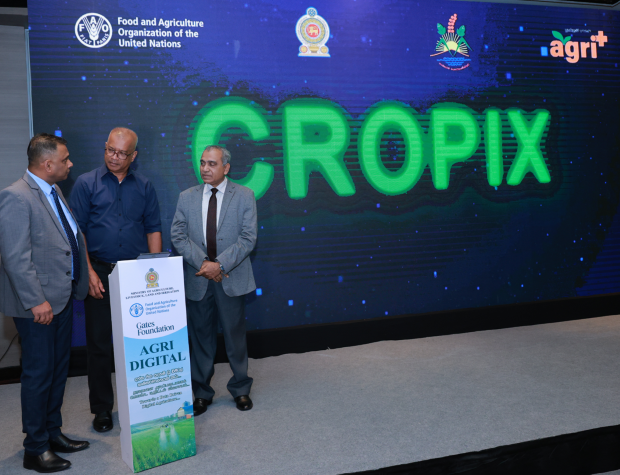
COLOMBO – Sri Lanka on Thursday (22) launched a suite of national digital frameworks and platforms aimed at overhauling agricultural governance and decision-making, marking a significant step in the country’s drive to modernize its agriculture sector through data-led reforms.
The launch included the Agriculture Enterprise Architecture Framework, Agriculture Interoperability Framework, Data Sharing Policies, and CROPIX, a national digital platform for crop data and analytics. The high-level event was co-hosted by the Ministry of Agriculture, Livestock, Land and Irrigation and the Food and Agriculture Organization of the United Nations (FAO), with funding support from the Gates Foundation.
Together, the initiatives establish a unified digital foundation for agriculture, addressing long-standing weaknesses caused by fragmented data systems, limited coordination among institutions, and the absence of reliable, shared information for policy and investment decisions. Officials said the reforms form the core of Sri Lanka’s emerging Digital Public Infrastructure (DPI) for agriculture.
Agriculture Minister K.D. Lalkantha said the launch marked a structural shift in how the sector is governed and supported.
“This is a decisive move toward a data-driven agriculture system,” the minister said, adding, “By introducing a unified enterprise architecture, interoperability framework, and clear data-sharing policies, we are creating the foundation for informed and timely decisions that strengthen food security, farmer livelihoods, and institutional efficiency”.
The Agriculture Enterprise Architecture Framework provides a strategic blueprint to align people, processes, data, and technology across agricultural institutions, ensuring future digital investments are interoperable and scalable. The accompanying interoperability framework and data-sharing policies are designed to enable secure, standardised exchange of data across ministries, departments, and digital platforms.
At the centre of the new digital ecosystem is CROPIX—short for Crop Resources, Optimising Operations through Precise Information eXchange System. The platform integrates national crop registries, cultivation and production data, forecasting tools, extension services, and near real-time field reporting into a single system accessible via web and mobile applications. CROPIX also supports application programming interfaces (APIs) and open data to enable innovation by the private sector and researchers.
Deputy Minister of Digital Economy, Eranga Weeraratne, said the initiative addressed critical data gaps that have long constrained the sector.
“For decades, agriculture lacked a complete and reliable registry of farmers, land, and crops, with information scattered across systems and riddled with duplication,” he said. “The solutions launched today introduce a unified, API-driven platform for trusted data sharing, enabling smarter policies, targeted services, and innovations such as agritech, precision farming, and digital marketplaces.”
Dr Hans Wijayasuriya, Chief Advisor to the President on Digital Economy, said the launch extended Sri Lanka’s national digital transformation agenda into one of its most critical economic sectors.
“Applying enterprise architecture, interoperability, and trusted data-sharing principles to agriculture ensures that digital transformation delivers real value on the ground,” he said. “This approach connects farmers to institutions, data to decisions, and policy to measurable impact.”
FAO Representative for Sri Lanka and the Maldives Vimlendra Sharan said the initiative would strengthen the country’s ability to respond to climate risks and market volatility.
“This is not just about digital systems, but about transforming how data is governed and used,” Sharan said. “Strong digital public infrastructure for agriculture will improve service delivery, support climate resilience, and ensure evidence-based decisions that leave no farmer behind.”
Officials said the launch is expected to accelerate digital adoption within the Department of Agriculture, promote responsible data sharing across government agencies, and embed near real-time data into planning, policy formulation, and investment decisions. The government said farmers would be the primary beneficiaries through improved services, timely information, and more responsive support.
The initiative marks the beginning of a coordinated national effort to build a resilient, inclusive, and data-driven future for Sri Lanka’s agriculture sector, officials said.
-ENCL

Comments are closed, but trackbacks and pingbacks are open.