

Sri Lanka promises equal treatment, as tuk-tuk gangs subvert rule of law, tourism brand

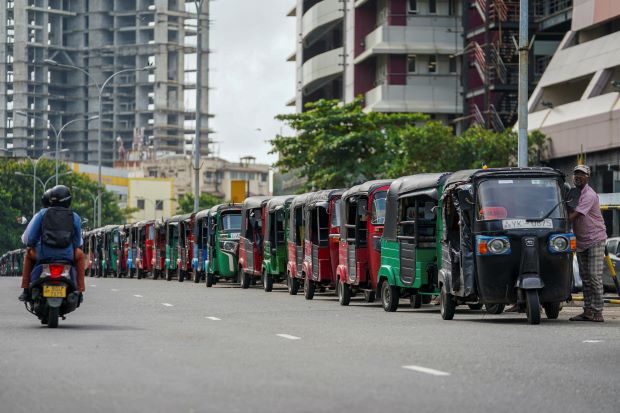
COLOMBO – Media Minister Nalinda Jayatissa has condemned the use of intimidation and violence by certain tuk-tuk driver groups against ride-hailing app drivers, warning that such practices threaten both the rule of law and the country’s image as a safe tourist destination.
Speaking to local media, the minister said that some regional three-wheeler associations, particularly in popular tourist hotspots, have resorted to what he described as “mafia-style tactics” to drive out competition from drivers operating through platforms such as PickMe and Uber, who often charge lower fares to both locals and foreign visitors.
“Whether or not there is competition, using mafia tactics or violence is completely wrong,” Jayatissa said, adding, “The law can be enforced, and the police are taking action. Violence and intimidation have no place in this country”.
The issue has drawn national attention following a series of complaints from ride-hailing companies and drivers, as well as viral social media posts and videos alleging harassment, threats, and physical violence against app-based tuk-tuk drivers. PickMe, one of Sri Lanka’s largest ride-hailing platforms, has publicly accused law enforcement authorities of turning a blind eye to such incidents in certain areas.
Jayatissa acknowledged that at least one or two arrests had been made, but stressed that enforcement must be consistent. “Drivers who charge lower fares are also Sri Lankan citizens, often from the same towns. They have the same right to earn a living,” he said.
Several victims have taken to social media to allege selective enforcement of the law, claiming that some police officers are sympathetic to local tuk-tuk associations because they or their relatives own three-wheelers that benefit from inflated fares. These allegations have further fuelled public anger, particularly among commuters and tourism sector stakeholders.
In some tourist-heavy areas, tuk-tuk associations have even staged public protests, asserting what they claim is their “right” to set higher fares within specific geographical zones. Critics say such actions amount to cartel-like behaviour that undermines free competition and exploits consumers.
One widely shared Facebook video shows a tuk-tuk driver arguing with a police officer, stating that association members charge Rs 1,500 for a short trip to the iconic Nine Arches Bridge in Ella, while app-based drivers charge around Rs 550 for the same journey. The clip has intensified scrutiny of pricing practices in the hill country tourism belt.
Sri Lanka once mandated taxi meters for three-wheelers, a policy that helped make tuk-tuks an affordable alternative to buses and expanded mobility for the public. However, following the 2022 economic crisis and the sharp depreciation of the rupee triggered by successive interest rate cuts, fuel prices soared and fares spiked.
In the aftermath, several three-wheeler associations began announcing “standard fares” through press conferences, effectively normalizing collusive pricing and limiting competition. According to drivers who attempted to reduce fares when fuel prices later fell, those charging Rs 85–90 per kilometre were allegedly threatened and pressured by regional association members to increase prices to around Rs 100 per kilometre.
In tourist hotspots, the situation is even more acute, with travellers often charged three to five times the normal fare, raising concerns among tourism operators about reputational damage to Sri Lanka’s brand.
The controversy has also reignited debate over the government’s move to establish a dedicated regulator for three-wheelers. Critics argue that such a body could expand bureaucracy, increase costs for taxpayers, and potentially entrench price controls that stifle competition.
Minister Jayatissa said he was not fully aware of the current status of the proposed regulator. Analysts warn that, in Sri Lanka, regulators have often evolved into de facto price control agencies, leading to declining service quality and reduced innovation.
“There is a real risk that regulation could encourage collusive pricing and undermine ride-hailing platforms that use technology to lower costs and improve efficiency,” one transport analyst said. Ride-hailing apps typically reduce prices by minimizing idle time, optimizing routes, and using time-based pricing to shift demand away from peak hours.
Economists and consumer advocates see parallels between tuk-tuk fare cartels and broader protectionist practices in Sri Lanka’s economy. While large corporates have historically used import duties and licensing regimes to keep out foreign competition, critics say some three-wheeler groups are now using geography to block “outsiders” from operating in certain towns.
A viral YouTube video from Ella appears to capture a police officer telling an app-based driver from a coastal town: “Don’t run PickMe here. You run PickMe in Negombo. There are vehicle owners here. They have finance leases.”
Such remarks have sparked outrage, with critics arguing that informal territorial controls undermine both economic freedom and the country’s commitment to fair competition.
As tourism gradually recovers, industry stakeholders warn that unchecked intimidation and price gouging could deter visitors and erode confidence. The government now faces mounting pressure to ensure impartial law enforcement, protect competition, and restore trust in Sri Lanka’s transport sector.
-ENCL

Comments are closed, but trackbacks and pingbacks are open.