

RDA re-opens all major roads after Cyclone Ditwah; daytime travel restored on Kandy–Colombo route

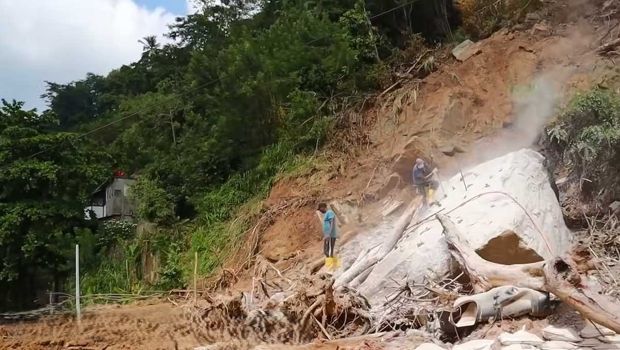
COLOMBO – Sri Lanka’s Road Development Authority (RDA) had re-opened all major roads affected by Cyclone Ditwah, RDA Director General Wimal Kandamby announced on Saturday (6), adding that daytime travel on the Kandy–Colombo road had resumed from Friday (5).
Cyclone Ditwah caused extensive damage to the island’s road network, blocking 256 major roads across 298 locations and damaging 40 bridges, Kandamby said, adding that many routes were rendered impassable due to flooding, while others were obstructed by fallen trees, landslides, and rockfalls.
As of Friday, 252 of the affected locations had been cleared, he said, crediting the RDA’s islandwide teams for working round-the-clock.
“RDA staff, from Deputy Directors to Provincial Directors, District Engineers, Executive Engineers, Technical Officers, Supervisors, and labourers, worked 24 hours a day to re-open these 252 roads,” Kandamby said during a briefing at the Government Information Department.
“In the next three days, we expect to complete clearing the remaining sections by continuing work day and night,” he added.
According to the RDA, districts including Kandy, Nuwara Eliya, Anuradhapura, and Puttalam were completely cut off at the height of the cyclone.
The Kandy–Colombo road, one of the country’s key arterial routes, was blocked due to landslides and rockfalls in Lower Kadugannawa and due to a major road subsidence in Yakkala, near Colombo. The Yakkala subsidence was repaired within three days, allowing all four lanes to re-open on Friday.
In Kadugannawa, one lane was cleared and opened on Thursday (4) under police supervision. However, authorities restricted travel that day to essential services only, after motorists were seen stopping near hazardous rockfall areas to take photographs.
From Friday, the Kandy-Colombo road has been opened to all traffic between 6:00 a.m. and 6:00 p.m, Kandamby said, adding that overnight, from 6:00 p.m. to 6:00 a.m. RDA teams would continue clearance operations, including controlled blasting of unstable large rocks.
“The rocks are very large, and we have to blast them,” Kandamby said, adding that there were also massive amounts of earth which needs to be moved in a scientific manner. “Otherwise, more earth could collapse and endanger our workers,” he said.
-ENCL

Comments are closed, but trackbacks and pingbacks are open.