

Alerts, Access and Awareness: What disaster preparedness needs to look like

By Zayna Zubair
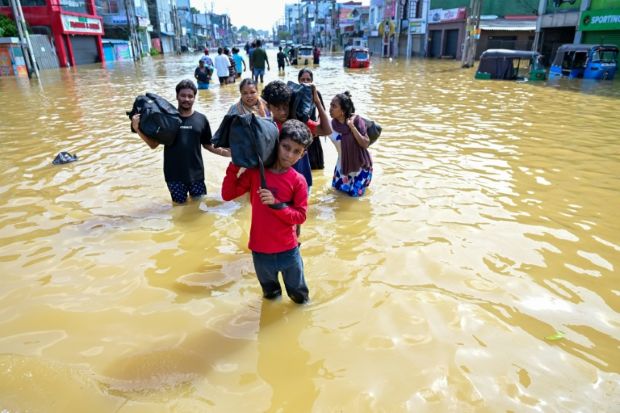
Sri Lanka has always lived with the rhythm of the monsoon, but the floods that followed Cyclone Ditwah were a brutal reminder that the climate crisis is changing the scale of what normal looks like. More than 600 lives were lost, over two million affected and 1.1 million hectares of land inundated.
The tragedy was not just in the storm itself but was a clear representation of how unprepared many communities were to face it. If we want to break this cycle, the government must take a stronger role in building resilience not only through infrastructure but through education and communication.
Preparedness is not a vague idea; it is a set of practical steps that can be taught, practised and embedded into everyday life. One of the most powerful places to start is in schools. According to UNICEF, over 275,000 children were affected due to the intense floods and landslides. Imagine if disaster awareness were part of the national curriculum, taught alongside maths and science. Children could learn how to read flood warnings, what to pack in an emergency kit and how to guide their families to safety. These lessons would ripple outward, turning kids into messengers of resilience in their communities. The government could work with teachers, NGOs and local councils to make this standard practice, ensuring the next generation grows up ready to face the storms that climate change is making more frequent.
Education alone is not enough without communication. Alerts need to reach people fast and in ways they cannot miss. That means investing in mobile phone alert systems that send warnings directly to every device, especially in rural areas. It means using radio, television and social media to spread verified information, not just during a disaster but in the days leading up to it. By default, it is crucial that the government trains local leaders to share updates in person, especially in villages where technology and road access are limited. A national strategy for disaster communication backed by modern technology is essential, thereby stressing on how vital it is that sharing the right information at the right time can save lives, but misinformation or delays can cost them severely.
Disaster preparedness also means practising what to do before the emergency arrives. Communities in cities and towns, including Kandy, Kurunegala and Galle need to practise evacuation drills, families in areas such as Badulla and Nuwara Eliya need to keep emergency kits ready, and local authorities in Matale and Gampaha need to map out safe zones. Preparedness and prevention also look like clear signage pointing to shelters in towns like Colombo and Galle, accessible buildings stocked with supplies in districts such as Kurunegala and public campaigns that remind people what to do when the rain doesn’t stop and when tsunami and flood warnings are alerted. Most importantly, the mitigation of these disasters also requires governments which treat preparedness as seriously as relief. Prevention is always cheaper and more humane than recovery.
There is also the question of access. Floods often cut off rural areas completely, washing away roads and bridges and leaving villages isolated. In Gammaduwa (Matale District), for example, three major bridges were washed away, leaving communities stranded. Relief efforts struggle to reach hill country villages in Nuwara Eliya and Badulla or coastal towns in Galle and Hambantota, which is why preparedness must be designed with them in mind. The government could invest in community boats for riverine areas in Kurunegala, drones for delivering supplies to isolated hill villages in Kandy and Matale and training local volunteers in Gampaha and Colombo to act as first responders. These measures would ensure that even the most remote areas are not left behind when disaster strikes.
The climate crisis means storms like Ditwah will keep coming, stronger and more unpredictable. Sri Lanka’s tragedy is part of a larger regional pattern with Vietnam, Thailand, Indonesia, Malaysia and the Philippines all facing similar disasters in the same month. What happens in one country is connected to the rest of the region, and the solutions must be shared too. By learning from others – Bangladesh’s cyclone shelters, Japan’s earthquake drills or the Philippines’ community warning systems – Sri Lanka can adapt proven models to its own context.
Ultimately, disaster preparedness is about shifting the mindset from reaction to prevention. Too often, governments are judged by how quickly they respond after a tragedy. But the real measure of leadership is how well they prepare their people before it happens. Sri Lanka has the chance to lead by example, showing that education, communication and community resilience can turn floods from sudden catastrophes into challenges that communities are ready to face.
The floods will come again. That is not in doubt. The question is whether Sri Lanka will be ready. By weaving preparedness into education, building reliable alert systems and making sure accurate information flows to every corner of the country, the government can give its people more than relief; it can give them confidence, dignity and hope in the face of the storms to come.
-This article was originally featured on groundviews.org

Comments are closed, but trackbacks and pingbacks are open.