

A war of choice and its uncharted consequences

History rarely announces itself clearly in the moment. But what has unfolded across the skies of Iran, coordinated US and Israeli strikes characterized by their architects as “pre-emptive” and greeted by much of the world as an act of deliberate aggression, may well be remembered as one of the defining ruptures of the twenty-first century. This was not a war that was forced upon anyone. Analysts have been frank in calling it what it is: a war of choice, prosecuted at a moment perceived as one of Iranian vulnerability, with objectives far more ambitious than anything previously attempted.
The distinction matters enormously. Pre-emption, as a legal and moral concept, demands an imminent and demonstrable threat, not a favourable window. What has unfolded here is something more calculated and considerably more disquieting: the exploitation of ongoing diplomatic negotiations, ostensibly aimed at curbing Tehran’s nuclear program in exchange for sanctions relief, as cover for military action designed to achieve by force what diplomacy was never truly intended to deliver. Washington and Tel Aviv did not abandon the negotiating table. They used it as camouflage.
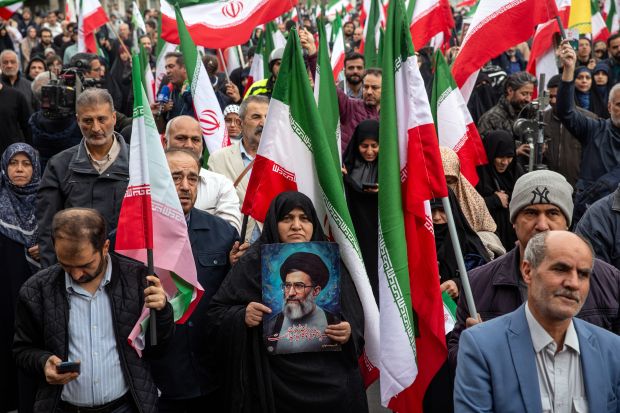
The most seismic single development of the strikes, confirmed by Iranian state media early Sunday (March 1), is the death of Ayatollah Ali Khamenei, the Islamic Republic’s Supreme Leader for over three decades. His daughter, son-in-law and grandson perished alongside him. President Masoud Pezeshkian was reported to have been targeted as well. The decapitation of a government’s entire leadership tier is not simply a military act; it is a bet on a particular theory of political change. The US and Israel are wagering that the removal of the head will cause the body to collapse in a direction favourable to them. History offers little comfort for that theory.
The immediate reality is a dangerous and deeply unpredictable power vacuum. Three scenarios now compete for Iran’s future. In the most optimistic reading, the regime activates succession mechanisms, and a managed transition installs a senior cleric – figures such as Ayatollah Alireza Arafi or Ayatollah Mohsen Araki have been named – who stabilizes the state. The difficulty is that such figures carry neither Khamenei’s authority nor his public legitimacy. They would govern a country that had just been bombed by foreign powers, a context that tends to harden rather than moderate political sentiment.
A second and more troubling path leads to a seizure of effective power by the Islamic Revolutionary Guards Corps (IRGC). The IRGC’s ideology is built on the twin pillars of martyrdom and anti-Americanism. A military-led Tehran, while potentially willing to ease some social restrictions, would be structurally incapable of genuine rapprochement with the West, and would likely prove more aggressive in its regional posture, not less.
The third scenario, regime collapse, mass protests, armed uprisings by Kurdish and Baluch minority groups, and a descent into the kind of failed-state chaos that followed the invasions of Iraq and Libya, is the outcome Washington claims to want. It is also, by any honest assessment, the most dangerous outcome of all, for Iran, for the region, and for global stability.
Tehran did not hesitate. Its ‘Truthful Promise 4’ operation demonstrated, with uncomfortable clarity, that even a degraded Iran retains the capacity to strike across a vast geography. Iranian missiles hit Al Udeid Air Base in Qatar – the largest American military installation in the Middle East, home to US Central Command’s forward headquarters. Al Dhafra Air Base in the UAE, the Fifth Fleet headquarters in Bahrain, and Ali Al Salem Air Base in Kuwait were all struck. Simultaneously, a significant missile barrage was launched at Israel. The UAE confirmed that at least one civilian was killed by falling debris in a residential area of Abu Dhabi.
The message embedded in that target list is unmistakable and carries consequences that will outlast the current exchange of fire. Qatar, the UAE, Bahrain, and Kuwait, states that had cultivated careful, pragmatic relationships with both sides, have been dragged into a conflict not of their making and forced to confront the full cost of hosting American power on their soil.
The UAE, in particular, has built a national vision predicated on positioning itself as a stable hub for global investment and technology. That vision has just been subjected to its most serious stress test. Gulf states have declared they will not permit their territory to be used as a staging ground for further strikes, even as they express solidarity with those targeted. The line they are trying to walk is becoming narrower by the hour.
The conflict has also introduced a new and severe variable into an already fragile global economy. The Strait of Hormuz, through which roughly a fifth of the world’s oil passes daily, has not yet been officially closed, but the mere credibility of that threat has been enough to send markets lurching. In the most contained scenario, oil prices spike before settling back; a temporary inflationary bump, uncomfortable but manageable. If Iran or its proxies move to disrupt Hormuz shipping in earnest, analysts project Brent crude surging to between $120 and $150 per barrel, triggering sustained inflationary pressures that would put central banks in an impossible bind, caught between raising rates to suppress inflation and cutting them to prevent recession.
In a full regional war, the projections become genuinely alarming: record oil prices, a contraction of global GDP growth by as much as 1%, and a broad financial market sell-off. Gold is already hovering near historic highs. The dollar is strengthening. These are the classic signatures of a world pricing in fear.
For Israel, the strikes represent the culmination of years of doctrine. Prime Minister Benjamin Netanyahu has long argued for the pre-emptive elimination of Iran’s nuclear and ballistic missile capabilities, and the degradation of what he called the ‘Ring of Fire’, the network of proxies stretching from Hezbollah in Lebanon to Hamas in Gaza. In the immediate term, that doctrine has been acted upon at a scale previously unimaginable.
The short-term security gains are real. Iran’s nuclear infrastructure has been set back. Its missile capacity has been degraded. The proxies that surrounded Israel have already been substantially weakened through prior conflicts. On the narrow ledger of immediate military objectives, the operation has achieved much of what it set out to do.
But military operations exist in time, and time has a way of complicating clean victories. The assassination of a Supreme Leader does not eliminate the ideology he represented; it can, as history demonstrates repeatedly, inflame and entrench it. A new generation of militants is being forged in the ruins of Iranian government buildings right now. The long-term strategic risk is not merely that Iran reconstitutes its capabilities, but that the attack has made reconstitution an existential national imperative, one that any successor government, however different its character, will struggle to resist.
There is also the question of what the conflict does to the global non-proliferation regime. If the lesson that other states draw from watching Iran is that nuclear weapons are the only reliable deterrent against this kind of strike, the world will become a considerably more dangerous place in the years ahead.
The United States has committed to major combat operations until Iran’s missile industry is, in the blunt phrasing of its own officials, “razed to the ground”. Two carrier strike groups signal both readiness and resolve. But force, even overwhelming force, is not a solution to the questions this conflict has now raised. What comes after the bombing? Who governs Iran in the transition? What happens when the power vacuum is filled by something worse, or simply different, than what was there before?
The honest answer is that nobody knows. And that uncertainty, the yawning gap between the clarity of military objectives and the opacity of political outcomes, is precisely what makes this moment so consequential, and so troubling. The world has watched powerful nations make this particular mistake before. The belief that removing a government creates the conditions for a better one; that strategic bombing breaks a nation’s will rather than hardening it; that the day after the war ends is something that can be figured out later.
Later, as it always does, arrives quickly. And it tends to look nothing like the plan.
-ENCL

Comments are closed, but trackbacks and pingbacks are open.