

Cyclone Ditwah and the hidden burdens on Sri Lanka’s women

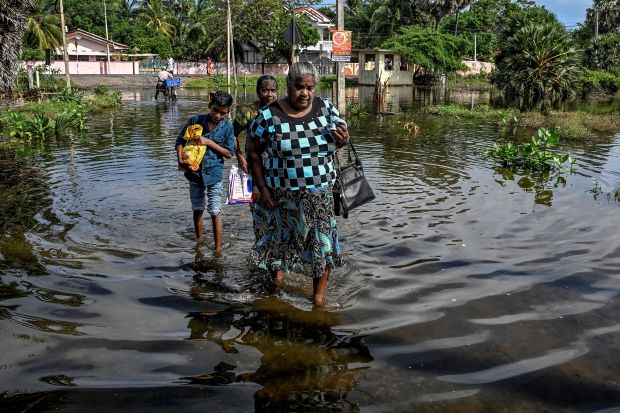
Cyclone Ditwah did not simply pass over Sri Lanka, it carved a wound across the island that will take years to heal. New geospatial analysis from the United Nations Development Programme (UNDP), released on Tuesday (9), reveals the true scale of the catastrophe: nearly one-fifth of the country inundated, 1.1 million hectares flooded, and 2.3 million people exposed to life-threatening water levels. Entire districts vanished under swirling brown floodwaters. Roads, bridges, and railway lines buckled under landslides. The storm brought disruption unmatched in decades.
But beneath the staggering data lies another story, one frequently ignored when disasters strike. It is the story of women, the invisible backbone of Sri Lankan households and communities, who bear the heaviest weight in times of crisis, yet remain the least recognized in official responses.
When a cyclone approaches, women are the first responders inside their homes. When it hits, they are the shock absorbers. When the floodwaters recede, they become the unpaid workforce behind recovery. And when the government designs rehabilitation plans, they are often forgotten entirely.
Cyclone Ditwah did not merely expose physical vulnerabilities; it illuminated the deep gendered inequalities that shape Sri Lankan society. And unless these inequalities are confronted head-on, the next disaster will again fall hardest on those who can least afford it.
According to UNDP’s analysis, nearly 720,000 buildings lay within flood-exposed zones. Close to 16,000 kilometres of road, 278 kilometres of railway, and 480 bridges were affected, bringing mobility, commerce, and emergency response to a near standstill.
Perhaps most alarming, nearly half of those impacted were already living in socioeconomically vulnerable households, many of which rely heavily on women who juggle childcare, elder care, household management, food preparation, and informal work. These tasks do not pause when storms arrive. They intensify.
As floodwaters surged into homes, they invaded kitchens, bedrooms, community wells, toilets, gardens, and storage spaces, the daily landscapes women navigate to keep their families fed, healthy, safe, and functioning.
When these spaces are destroyed, women must rebuild their lives twice over: once as individuals who have lost homes, livelihoods, and security; and again, as the primary managers of household recovery.
Ditwah unleashed nearly 1,200 landslides, particularly across the central highlands. Families were stranded for days without water, electricity, or transport access. Pregnant women, mothers of infants, and women caring for elders faced acute risks as supply chains collapsed.
In many estate-sector and rural communities, women routinely walk kilometres to fetch water, buy basic goods, or access health services. Landslides cut these routes entirely, leaving them isolated and desperate.
For women in Nuwara Eliya, Badulla, Kegalle, Matale, and other districts, already balancing precarious incomes with physically demanding household labour, the cyclone turned everyday survival into a daily battle.
The invisible labour of disaster fell squarely on them. Women were the ones who secured documents, food, medication, and children as water rose; stayed awake through the night to protect belongings; cooked with limited fuel and spoiled supplies in relief centres; kept families clean despite contaminated wells and flooded toilets and comforted traumatized children while suppressing their own grief
This labour does not appear in economic assessments, yet without it, communities would collapse faster than roads or bridges.
And when families moved to temporary shelters, the burden intensified. Overcrowded relief centres lacked adequate sanitation, privacy for women and girls, menstrual hygiene supplies and safe spaces for breastfeeding or childcare.
In these conditions, the risks of gender-based violence, exploitation, and severe stress rise sharply.
Cyclone Ditwah may have been a natural hazard, but the suffering that followed was shaped by long-standing social inequalities.
Climate shocks like Ditwah magnify existing inequalities. In Sri Lanka, where women’s labour force participation remains among the lowest in South Asia and where they shoulder disproportionate unpaid household responsibilities, the impact is devastating.
Cyclone Ditwah’s long-term impacts will be felt most intensely by female-headed households, among the poorest in the country; women in informal work such as agriculture, retail, and domestic labour, whose incomes vanish instantly after a disaster; estate-sector women living in unsafe, high-risk terrains; rural mothers, who sacrifice their own meals to stretch food supplies and girls, who experience schooling disruptions due to displacement and caregiving duties
These patterns are global, but in Sri Lanka, where women sustain entire communities through unpaid labour, the impacts cut deeper.
Despite overwhelming evidence that women face disproportionate risks and responsibilities in disasters, Sri Lanka’s Management Committee of the ‘Rebuilding Sri Lanka’ Fund, established after Cyclone Ditwah, includes no women.
Not one.
This absence is not symbolic. It is structural. A committee with zero female representation is inherently gender-blind, and its policies reflect that blindness.
How can disaster planning be effective when half the population – and the half that shoulders the greatest caregiving burden – is absent from the table?
How can relief and rehabilitation policies be comprehensive when those who know community vulnerabilities best are excluded from decision-making?
Without women in leadership roles, the recovery process will inevitably reproduce the inequalities the cyclone has already exposed.
Cyclone Ditwah must not be treated only as a humanitarian emergency. It is a policy emergency, a warning that Sri Lanka’s disaster governance structures must urgently evolve.
A resilient and equitable recovery must begin with gender-responsive disaster planning that recognizes the distinct challenges women face before, during, and after crises. Emergency plans must guarantee safe, dignified shelters with dedicated spaces for women, ensure consistent access to menstrual hygiene supplies, and establish strong protection mechanisms against gender-based violence. They must also empower women to take on leadership roles through community-based disaster committees, ensuring their knowledge and lived experience shape local response systems.
At the same time, Sri Lanka must acknowledge and compensate the enormous volume of unpaid care work women shoulder during disasters. Recovery policies should formally recognize the hidden economic cost borne by women – who cook, clean, care for children and elders, manage household recovery, and often sacrifice their own wellbeing to keep families stable. Targeted financial assistance and direct relief support must reach these caregivers who form the backbone of community resilience.
Strengthening women’s housing and land rights is equally essential. Without legal ownership of homes or land, countless women remain locked out of compensation schemes, reconstruction support, and the financial tools necessary to rebuild their lives.
Long-term resilience also depends on expanding climate-resilient livelihoods for women. Investment in microcredit, skills development, and diversified income opportunities can provide women with the economic independence needed to withstand future shocks and contribute to sustainable community recovery.
Above all, women must be meaningfully included in climate governance and decision-making. From village committees to national rebuilding bodies, their representation is not simply a matter of fairness, it is a prerequisite for effective policy. Excluding women from leadership, as seen in the current Management Committee of the ‘Rebuilding Sri Lanka’ Fund, is not just a gap; it is a structural failure that weakens the country’s ability to respond to disasters and rebuild equitably.
If Ditwah has taught us anything, it is that disasters do not strike in isolation. They strike along fault lines created by inequality, policy failures, and gender blindness.
Sri Lanka cannot afford to treat climate disasters as annual inconveniences. They are structural challenges that demand structural reforms, with women at the centre, not the margins.
Because when the waters rise, women carry the heaviest weight.
When the rebuilding begins, they must not be asked to carry it alone.
-ENCL

Comments are closed, but trackbacks and pingbacks are open.