

Central Bank imposes Rs 14.6mn worth penalties on key firms for non-compliance

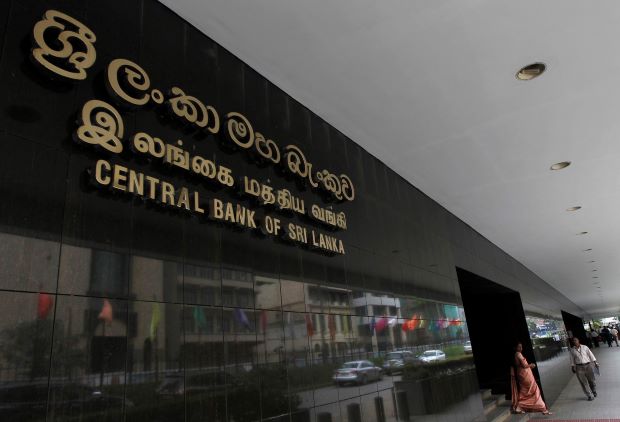
COLOMBO – Sri Lanka Central Bank’s Financial Intelligence Unit (FIU) imposed administrative penalties worth Rs 14.6 million on 11 firms, including Indian Overseas Bank, for non-compliance with the provisions of the Financial Transactions Reporting Act (FTRA), the Central Bank said in a statement.
The penalties were imposed on various financial institutions and designated non-financial businesses and professions (DNFBPs) between October 2025 and March 2026 for serious breaches of the FTRA.
The penalties, while a sign of regulatory enforcement, underscore a troubling reality of segments of the country’s financial and business ecosystem continuing to fall short on critical Anti-Money Laundering and Countering the Financing of Terrorism (AML/CFT) obligations, despite years of reform, analysts say.
The FIU’s enforcement actions targeted both established financial players and smaller entities, highlighting that compliance failures cut across institution size and type.
Several banks and finance companies were penalized for failing to report Cash Transactions Reports (CTRs) or Electronic Fund Transfer (EFT) transactions exceeding Rs 1 million within stipulated timelines.
LB Finance PLC was fined Rs 1 million for not reporting nine such transactions, while Cargills Bank PLC faced a Rs 2 million penalty for missing 18 EFT transactions and failing to maintain an updated list of designated persons under UN Security Council resolutions.
LOLC Securities Limited and Janashakthi Finance PLC each paid Rs 1 million for similar reporting shortfalls.
Indian Overseas Bank incurred Rs 1 million for multiple failures, including unreported transactions, inadequate customer verification for wire transfers, and delays in updating sanctions screening tools.
More alarming were cases involving actual exposure to designated persons.
Citizens Development Business Finance PLC, hit with the highest penalty of Rs 3 million, not only failed in prospective customer screening and ongoing monitoring but also maintained business relationships with three individuals listed under UN regulations. The company neglected to freeze assets and notify authorities within 24 hours as required.
Sanasa Life Insurance Company PLC was fined Rs 2 million for multiple lapses, including issues with politically exposed persons (PEPs) and incomplete sanctions list maintenance.
Among DNFBPs, jewellery traders, often higher-risk sectors due to the ease of converting high-value goods, featured prominently. Swarnamahal Jewellers Ltd. received a Rs 2 million fine for fundamental failures in customer due diligence, beneficial ownership identification, record-keeping, risk assessment, and sanctions screening.
Colombo Jewellery Stores, Zay’s (Pvt) Ltd., and Harbour Village (Pvt) Ltd. were also penalized for gaps in risk assessment and targeted financial sanctions compliance.
This latest round of fines, credited to the Consolidated Fund, reveals systemic weaknesses in transaction reporting, customer due diligence, sanctions screening, and record-keeping.
Such lapses not only undermine the integrity of Sri Lanka’s financial system but also heighten the nation’s vulnerability to money laundering and terrorist financing channels.
The move comes as Sri Lanka is in the process of preventing the country from falling onto the Financial Action Task Force’s grey list for the third time.
Sri Lanka faced a crucial mutual evaluation by the Asia/Pacific Group on Money Laundering (APG) on behalf of the FATF in the first half of this year, amid repeated violations that have raised serious concerns about Sri Lanka’s readiness to implement tough action against AML/CFT.
The FIU noted in several cases that, although no direct links to designated entities were always found during examinations, the systemic gaps created windows for abuse.
Delays in updating screening tools, failure to verify customers against UN lists promptly, and inadequate senior management oversight point to deeper cultural and operational deficiencies in AML/CFT frameworks.
Weak controls erode trust in Sri Lanka’s banking and financial sectors, potentially leading to de-risking by international correspondent banks.
This has historically resulted in higher transaction costs, delays in remittances, and reduced access to global finance, all of which are critical for an import-dependent, remittance-reliant Sri Lankan economy.
Sri Lanka’s strategic location along major Indian Ocean shipping routes and its history of internal conflict make it susceptible to terrorist financing risks as well. Persistent gaps signal to criminals and terrorists that certain institutions remain soft targets.
Past FATF grey-listing episodes reduced foreign direct investment, created currency pressures, and resulted in higher borrowing costs.
Studies on grey-listed jurisdictions show declines in cross-border payments (up to 10%), FDI, and overall capital inflows. For Sri Lanka, still recovering from an economic crisis, renewed international scrutiny could deter investors and complicate access to development assistance.
Experts warn that grey-listing is not merely reputational. It also triggers enhanced due diligence by foreign banks and counterparties, increasing compliance burdens for legitimate Sri Lankan businesses and slowing economic recovery. In extreme cases, it can lead to de-risking, where entire regions or sectors become unbankable internationally.
-economynext.com

Comments are closed, but trackbacks and pingbacks are open.