

Sri Lanka faces new US import duty over forced labour concerns

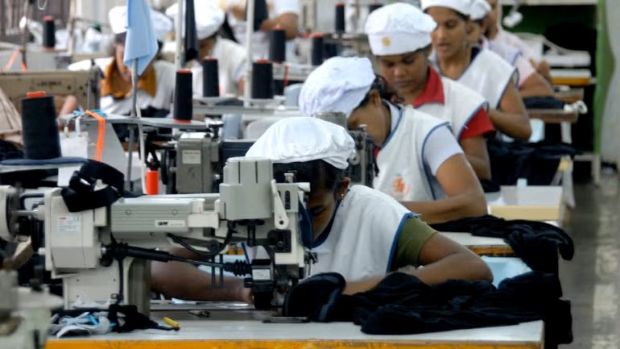
COLOMBO – Sri Lanka has been included among dozens of countries facing new US import duties after Washington concluded that the country has failed to adequately prohibit and enforce restrictions on imports linked to forced labour, a move that could add pressure on Sri Lankan exporters, particularly the apparel sector.
In a report released on Wednesday (3), the Office of the United States Trade Representative (USTR) said Sri Lanka was among a group of countries found to have failed to impose and effectively enforce a prohibition on the importation of goods produced with forced labour.
“USTR found that Sri Lanka has failed to impose and effectively enforce a forced labour import prohibition,” the agency said, adding that the failure was deemed “unreasonable” and was found to burden or restrict US commerce.
The determination forms part of a broader US trade initiative targeting countries whose import control regimes are considered inadequate in preventing products linked to forced labour from entering global supply chains.
Trade analysts warn that the new duties could further complicate market access for Sri Lankan exporters at a time when the United States remains the island’s largest single export destination, accounting for roughly 22% of total exports. The apparel industry, Sri Lanka’s leading export sector, is expected to be particularly affected.
The latest measure follows changes to US trade policy after the US Supreme Court struck down a reciprocal tariff regime earlier this year. Under that framework, Sri Lanka had negotiated a reduction in proposed tariffs from 44% to 20%.
The USTR has now announced a baseline 10% duty for countries that have adopted and committed to enforcing forced labour import prohibitions, while proposing an additional 12.5% duty on countries deemed not to have taken adequate measures.
The agency said the action was intended to prevent global supply chains from facilitating forced labour practices and to ensure fair competition for American workers.
“The failure of our most important trading partners to address the importation of goods made with forced labour is unacceptable,” USTR Ambassador Jamieson Greer said in a statement.
“We will no longer tolerate this disparity. Each of our trading partners must do more to ensure that trade does not encourage or entrench forced labour globally,” he added.
A key focus of the USTR’s concerns relates to textile and apparel supply chains. The report noted that there is a risk that cotton products covered by the Uyghur Forced Labour Prevention Act (UFLPA) could enter the United States through intermediary manufacturers in third countries.
Sri Lanka was listed alongside India, Indonesia, Pakistan, Vietnam, Jordan, Mexico, Ethiopia and Kenya as countries where supply chain links involving Chinese-origin cotton could potentially obscure the tracing of materials subject to US restrictions.
The UFLPA establishes a presumption that goods produced wholly or partly in China’s Xinjiang Uyghur Autonomous Region, or by entities identified under the legislation, are made using forced labour and are therefore barred from entering the United States.
According to the USTR, complex international supply chains and limited transparency can make it difficult to determine the origin of raw materials used in apparel manufacturing, increasing the risk that products linked to forced labour could reach global markets.
The report identified 54 economies, including Australia, Bangladesh, China, India, Japan, Malaysia, New Zealand, Saudi Arabia, Singapore, South Africa, South Korea, Switzerland, the United Arab Emirates and the United Kingdom, as having failed to impose and effectively enforce forced labour import prohibitions.
The USTR also cited Canada, the European Union, Ecuador, Indonesia, Mexico and Pakistan as jurisdictions that have failed to effectively enforce existing prohibitions.
The agency said it is also considering a separate textile mechanism that would allow specified volumes of apparel and textile imports from certain countries to enter the United States at reduced tariff rates. It remains unclear whether Sri Lanka will qualify for any such preferential treatment.
The development is likely to draw close attention from Sri Lanka’s export-oriented industries, which rely heavily on access to the US market and have increasingly promoted ethical sourcing and compliance standards as a competitive advantage
–ENCL

Comments are closed, but trackbacks and pingbacks are open.