

SEC explores infrastructure, municipal bonds to fund public projects

COLOMBO – Sri Lanka’s Securities and Exchange Commission (SEC) is exploring the introduction of infrastructure and municipal bonds as alternative financing mechanisms to fund large-scale public projects, including roads, railway networks and other key infrastructure, SEC Chairman D.B.P.H. Hareendra Dissabandara said on Monday (29).
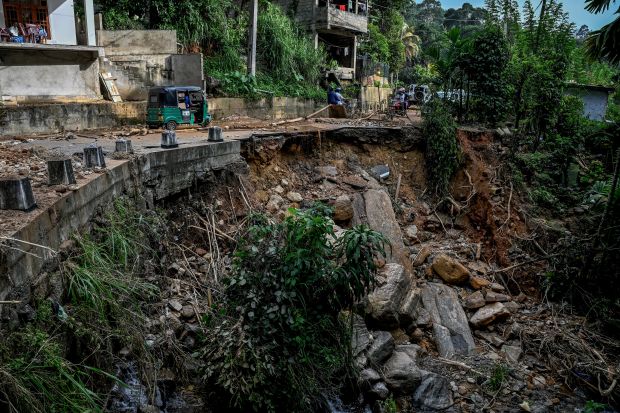
The move comes as the central government continues to allocate a substantial portion of the national budget for public investment, even as fiscal space remains constrained following recent economic shocks and the widespread infrastructure damage caused by Cyclone Ditwah last month.
Speaking to reporters on the sidelines of an SEC event, Dissabandara said proposals for new bond instruments are already under consideration.
“I have already put up a proposal on infrastructure bonds. I will also be moving towards introducing municipal bonds as well,” he said.
Sri Lanka has traditionally relied on direct government spending and external borrowing to finance infrastructure development. However, the scale of damage caused by Cyclone Ditwah has increased pressure on public finances, prompting authorities to examine alternative funding models that could mobilise private capital while easing the burden on the Treasury.
Under the proposed framework, infrastructure bonds would be issued to finance specific national-level projects, while municipal bonds would allow local authorities to raise funds independently for urban development and reconstruction.
The SEC chairman said municipal councils with a proven record of financial discipline and sound governance would be selected initially, and discussions are already underway with a small number of local authorities.
“We are in the process of starting a dialogue with selected municipal councils that have demonstrated financial discipline,” Dissabandara said.
According to the SEC, funds raised through both infrastructure and municipal bonds would be project-based, with proceeds earmarked for clearly defined developments rather than general expenditure. This approach, officials say, would improve transparency and accountability while strengthening investor confidence.
Dissabandara added that the proposed instruments would also provide small and retail investors with new opportunities to participate in long-term development financing.
“These bonds will allow investors, including smaller investors, to participate in infrastructure development while earning stable returns,” he said.
Infrastructure bonds are typically issued by governments, state-owned entities, or development institutions to finance large-scale projects such as highways, railways, ports, airports and energy facilities. These bonds usually carry long tenors of 10 to 30 years and offer fixed or variable interest rates, often backed by government guarantees or project-generated revenues.
Municipal bonds operate on a similar principle but are issued by local authorities to fund projects such as water supply systems, waste management, public transport and urban regeneration. Repayment is generally supported by local tax revenues, service fees or project income, allowing municipalities to finance development without relying entirely on central government transfers.
Internationally, both instruments are widely used to mobilize long-term capital from institutional investors such as pension funds and insurance companies, while also offering stable investment options for individual investors.
While the SEC’s proposal marks a significant shift in Sri Lanka’s approach to infrastructure financing, analysts note that several challenges must be addressed before such instruments can be successfully introduced.
Sri Lanka is still recovering from the 2022 economic crisis, and high sovereign debt levels, inflation risks and lingering macroeconomic uncertainties continue to weigh on investor sentiment. In addition, municipal bond markets require strong legal frameworks, transparent financial reporting, and reliable revenue streams to ensure investor confidence.
Previous assessments, including those by multilateral agencies, have highlighted gaps in Sri Lanka’s public-private partnership structures and limited depth in the domestic bond market, factors that could complicate large-scale issuance.
Market participants also stress the importance of robust regulatory safeguards, clear project selection criteria, and independent oversight to ensure transparency and prevent misuse of funds.
The SEC said it will continue consultations with stakeholders, including municipal councils, market participants and policymakers, to assess feasibility and design appropriate regulatory frameworks before any issuance takes place.
If implemented successfully, infrastructure and municipal bonds could play a key role in post-disaster reconstruction, long-term urban development, and reducing reliance on central government borrowing, officials said.
-ENCL

Comments are closed, but trackbacks and pingbacks are open.