

ILO warns Cyclone Ditwah puts 16% of Sri Lanka’s GDP and 374,000 jobs at risk

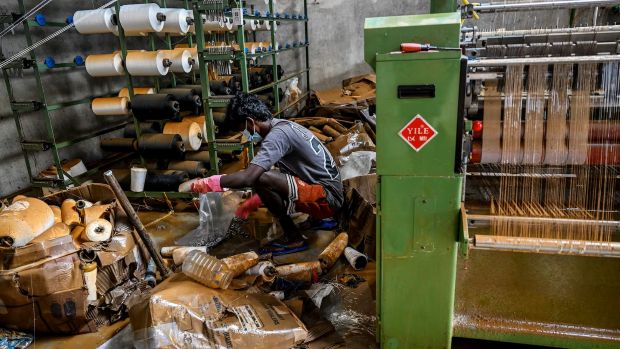
COLOMBO – Floods and landslides triggered by Cyclone Ditwah have placed around 16% of Sri Lanka’s gross domestic product (GDP), equivalent to about US$16 billion, and nearly 374,000 jobs at risk, the International Labour Organization (ILO) warned on Tuesday (23).
In a special brief titled ‘Preliminary Employment Assessment of the Impact of Cyclone Ditwah in Sri Lanka’, the ILO said the economic shock is highly concentrated geographically, raising the risk of uneven recovery and prolonged local economic disruption unless targeted interventions are implemented.
The assessment, which uses night-time light data to estimate the spatial distribution of GDP, found that flooded and landslide-affected areas account for 16.3%of observed economic activity. This suggests that output worth roughly US$16 billion has been exposed to potential damage.
The warning comes a day after the World Bank estimated direct physical damage at US$4.1 billion, or 4% of GDP, excluding income losses, business interruptions, and the full costs of recovery and reconstruction. The Bank said total recovery needs are therefore expected to be substantially higher.
According to the ILO, up to 374,000 workers were employed in areas directly affected by Cyclone Ditwah, which made landfall on November 26, bringing torrential rain and triggering widespread flooding and landslides. If these workers are unable to resume work or find alternative quality employment, potential income losses could reach US$48 million per month, the organisation estimated.
The cyclone hit the country unevenly. Severe flooding affected Northern and Eastern districts, while landslides devastated central regions, particularly tea-growing areas, compounding risks to both livelihoods and export earnings.
The ILO combined remote sensing data on flood extent, population distribution, agriculture and night-time lights with labour force survey data to provide a rapid assessment of labour market exposure. The organization said the approach offers timely insights to guide emergency response measures and medium-term employment recovery.
The agriculture and fisheries sectors were among the worst affected. The ILO estimates that up to 23% of rice-cultivating land has been flooded, while tea output losses could reach 35%. Smallholder farmers, who account for around 70% of national tea production, have been disproportionately impacted.
The brief calls for immediate livelihood support, including emergency cash assistance and employment-intensive early recovery programs that guarantee decent working conditions. These measures should be paired with sector-specific support and targeted assistance to micro, small and medium-sized enterprises (MSMEs) to help restore production and employment.
In the medium term, the ILO urged Sri Lanka to integrate lessons from Cyclone Ditwah into wage protection systems, social protection schemes, employment policies and disaster risk management frameworks, to reduce vulnerability and strengthen resilience to future climate-related shocks.
-ENCL

Comments are closed, but trackbacks and pingbacks are open.