

Sixteen days are not enough

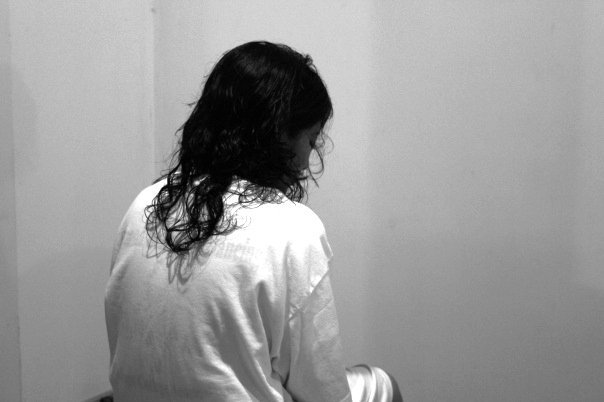
On Wednesday (25), Sri Lanka, and a better part of the world, began an annual ritual -16 Days of Activism against Gender-Based Violence. Marches were held, hashtags launched, panel discussions convened, and officials spoke of zero tolerance. On December 10, they will all end, and the violence will carry on.
Gender-based violence is not an occasional tragedy. It is a permanent condition for millions of women and girls, one the World Health Organization estimates affects roughly one in three women in their lifetime. In Sri Lanka, police last year recorded roughly 125,000 domestic violence complaints, more than 113,000 of them in the first nine months alone. That is hundreds of complaints every single day, and it counts only the women who found the courage, the bus fare and a police officer willing to write it down.
Studies suggest one in five Sri Lankan women will face physical or sexual violence in her lifetime, usually at the hands of someone she knows, yet official statistics capture only a fraction of it. The number we can see is a floor, not a ceiling.
Cynics call the 16 Days theatre. Too often they are right, when agencies treat it as a photo opportunity and a banner. But the campaign’s worth lies in the pressure it creates. It drags a subject that thrives on silence into the open, and it gives victims, activists, lawyers and grassroots organizers a moment when officials must listen and can be held to what they say.
Every serious advance in this field, from domestic violence laws to workplace harassment policies to the very language we use, came because someone refused to let the silence stand. The campaign is a lever. The question is whether we pull it, or merely admire it. A campaign that ends when the banners come down was never a campaign. It was an event.
Journalists like to believe we only report the world as it is. On gender-based violence, we have too often helped make it what it is.
We know the template. A woman is killed, and the headline says she ‘died’ in a ‘domestic dispute’ as if violence were weather. The victim’s character, clothing, marriage and movements are examined, while the perpetrator’s history of threats and the police’s failure to act go unasked. Survivors are named and photographed. Femicides are filed as crime-page filler, a ‘sensational’ story that earns a day’s attention and no follow-up. Rarely do we ask the questions that matter. Why had the police ignored earlier complaints? Why did the protection order fail? Who knew and said nothing?
This is not neutral reporting. Every victim-blaming headline teaches readers that violence has reasons, and that a careful woman can avoid it. Every sympathetic profile of an abuser tells the next one that society will understand. Newsrooms that treat violence as spectacle rather than systemic failure are not covering the problem. They are helping it along.
The fix is demanding rather than complicated. Name the violence for what it is. Centre the survivor’s dignity and safety, not the audience’s appetite. Quote experts and data, not neighbours and rumours. And follow cases through the courts after the outrage has gone.
Behind every statistic is a woman asking where she can go. A safe place is more than a shelter bed, though we have too few of those. It is a home where she is not afraid, a bus she can ride without being groped, a workplace that investigates complaints instead of punishing the complainant, a police station that takes her seriously the first time, and a court that does not put her on trial.
It is counselling, housing and income support, so that leaving is not a choice between violence and destitution. Development partners have reported that gender-based violence rose during the economic crisis, while services remain fragmented and under-resourced. The crisis has eased on paper. The services have not caught up.
Too often safety is made a woman’s own responsibility: don’t go out late, don’t dress that way, don’t speak up. That is not safety. It is a curfew on half the population. Real safety means changing the conduct of those who offend, not shrinking the lives of those who are targeted.
Sri Lanka has made progress, but the gaps are real. The Penal Code addresses sexual and gender-based violence yet retains significant gaps, including a definition of rape that excludes non-vaginal penetration. Marital rape remains largely outside the law’s reach, except where spouses are judicially separated. The Prevention of Domestic Violence Act of 2005 has long been criticized as narrow. The Women and Child Affairs Ministry has announced plans to broaden its definition and recognize more forms of abuse, and a National Commission on Women now exists as a dedicated watchdog, at least on paper, with Cabinet reported to have moved in early 2026 to repeal and replace the 2005 Act.
Announcements are not protection. A woman in Mullaitivu, Monaragala or an estate line room cannot use a bill still awaiting its second reading. Reform must be passed, funded and enforced by officers who have been trained to do so.
Law does not enforce itself. The deeper contest is over the quiet permissions society grants: the uncle who calls a beating “a family matter”,
the colleague whose “joke” no one challenges, the belief that a woman who stays must somehow want to, and the notion that a man’s authority at home is a form of respect. These norms are older than any statute, and they are exactly why violence cuts across class, ethnicity and religion.
Attitudes shift when ordinary people stop going along. They shift when boys are taught that respect is not weakness, when teachers, clergy and employers refuse to treat harassment as a rite of passage, and when bystanders speak up. This work is slow and unglamorous, which is why sixteen days can only be a start.
Technology has handed abusers new weapons, and Sri Lanka’s women are already living with the consequences. A UN Women and UNFPA study found that 57% of respondents felt unsafe online and nearly one in three had personally experienced technology-facilitated gender-based violence. Among survivors, 64% stopped using social media, and 42% faced rejection from their communities. Some lost jobs or dropped out of school. They did not choose to go offline. They were driven out.
Generative AI makes this worse. A single photograph and a free app can now produce a convincing sexual image of a woman who never posed for it. Voices can be cloned, and abusive messages can be mass-produced. The old pattern was already familiar here: a partner threatens to leak intimate images after a breakup. AI means the images no longer need to exist. A threat can be manufactured from an ordinary profile picture. Women journalists, politicians and activists, who already face abuse for being visible, are the obvious targets, and the aim is to shame them out of public life.
Our legal tools were built for an earlier age. Cases are handled by the Cybercrime Investigation Division under the Computer Crimes Act of 2007, a law drafted long before synthetic imagery existed. The Online Safety Act, meanwhile, has been in limbo: the President has said the Act will not be implemented in its present form, with Cabinet approval secured for a new Bill, and a deputy minister has admitted that current legislation has gaps in combating gender-based harassment, hate speech and online threats. Any replacement must name AI-generated intimate imagery as an offence and give survivors fast takedown routes. It must also protect free expression, not become another tool to silence critics, women included.
Newsrooms must also look in the mirror. If we use AI to generate images, automate copy or chase engagement without ethical standards, we risk becoming part of the machinery of abuse.
Parliament must pass the domestic violence reforms and close the Penal Code’s gaps, including on marital rape. It must criminalize non-consensual synthetic intimate imagery in plain language, without handing the State a censorship weapon. The police must treat online abuse as the violence it is, with officers trained to receive complaints in all three languages. Funders and the Treasury must finance shelters, helplines and legal aid every month of the year. Platforms and AI developers must build safeguards before release and answer to Sri Lankan regulators when they fail. And every newsroom must audit its own coverage and ask who it fails when it gets it wrong.
Sixteen days of activism will end. What remains afterwards is the question. Gender-based violence is not inevitable. It is a choice made by perpetrators and enabled by silence. In Sri Lanka, that silence is ours to break.
-ENCL

Comments are closed, but trackbacks and pingbacks are open.