

Colombo, UNDP launch digital tool to map gaps in care services

COLOMBO – The Colombo Municipal Council (CMC) and the United Nations Development Program (UNDP) in Sri Lanka launched a five-month pilot of a digital tool designed to map care services, identify underserved neighbourhoods and improve access to essential care facilities.
The Care Georeferencing Tool (CGT), developed by UNDP, and launched to mark International Day of Care and Support on Thursday (29), will help city planners assess where care services are located, where people who need them live and whether those services are accessible to them.
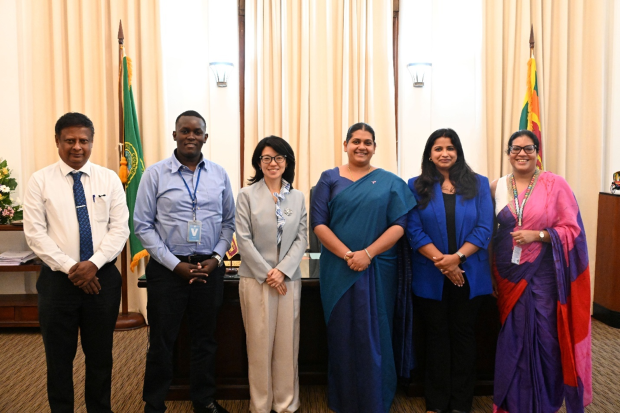
The initiative was launched in the presence of Colombo Mayor Vraîe Cally Balthazaar, UNDP Resident Representative Azusa Kubota, UNDP Regional Adviser on Gender Equality Sudha Gooty, CMC Municipal Commissioner A.D.S. Rohana and senior officials from government institutions, including the Ministry of Women and Child Affairs, Department of Census and Statistics and National Child Protection Authority.
The pilot comes amid growing recognition of the economic and social costs of inadequate care infrastructure, particularly for women, who shoulder a disproportionate share of unpaid domestic and care work.
UNDP estimates cited in the initiative indicate that unpaid housework, care work and voluntary work account for between 10% and 42% of Sri Lanka’s gross domestic product (GDP). More than 85% of the total time spent on unpaid care work in the country is undertaken by women.
Across the Asia-Pacific region, women perform 4.1 times more unpaid care work than men, according to the International Labour Organization (ILO). The ILO reported in 2024 that care responsibilities were cited as the reason for being out of work by 52% of women outside the labour force in the region.
“Every department plays a role in strengthening our city’s care network,” Mayor Balthazaar said, adding that the partnership with UNDP would improve the council’s understanding of infrastructure needs and support informed, people-centred decisions to build a more inclusive and caring Colombo.
Currently, information on care services is dispersed across multiple institutions, making it difficult for authorities to assess whether provision meets demand or is distributed equitably.
The CGT will consolidate relevant data to help identify gaps in services for young children, older people and persons with disabilities. It will also allow planners to overlay information on flood and disaster risks to identify care facilities and communities particularly vulnerable to natural disasters.
Kubota said care was essential infrastructure, but gaps in provision often remained invisible, placing a disproportionate burden on women and families.
Insights from the tool would strengthen the CMC’s ability to respond to residents’ needs and help build an inclusive city where women and vulnerable groups could participate fully in social and economic life, she said.
UNDP would support the council in developing a practical, government-owned solution to improve care service provision and ensure that vulnerable communities were not left behind, Kubota added.
The CMC will lead the five-month pilot, with technical support from UNDP’s Sri Lanka Country Office and its Regional Bureau for Asia and the Pacific. The launch was accompanied by a capacity-building session for officials from the council and other relevant government institutions.
The tool uses a modular, replicable methodology to provide governments with a data-driven understanding of care needs, service availability and accessibility, enabling them to develop targeted and equitable interventions.
According to UNDP, the tool has been used by city councils in 11 countries across Latin America and Africa and has recently been piloted in Bhutan and Malaysia.
At the end of the Colombo pilot, the CMC is expected to have a mapped inventory of care services, an identification of underserved neighbourhoods and an interactive dashboard to support decisions on care policy, infrastructure investment and service delivery.
The initiative highlights the importance of investing in care systems not only to advance gender equality but also to expand economic participation and support Sri Lanka’s sustainable development.
-ENCL

Comments are closed, but trackbacks and pingbacks are open.