

Sallay returns to CID custody after hospital discharge recommendation

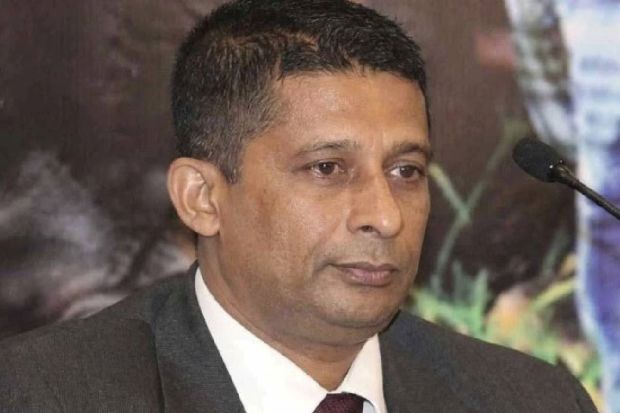
COLOMBO – A medical team at the Colombo National Hospital, including the hospital’s Director, has recommended that former State Intelligence Service (SIS) Director Major General (Retd.) Suresh Sallay be discharged from hospital and returned to the custody of the Criminal Investigation Department (CID), the Attorney General’s Department informed the Colombo Fort Magistrate’s Court on Tuesday (6).
Additional Solicitor General Dileepa Peiris, appearing for the Attorney General, told Magistrate Pasan Amarasena that arrangements had been made to return Sallay to CID custody following the medical team’s recommendation.
Sallay was discharged from the Colombo National Hospital and taken back into CID custody later in the afternoon.
Named the third suspect in the investigations into the 2019 East Sunday bombing, Sallay continued receiving treatment at the National Hospital despite a medical report being submitted to court on September 28.
When the case was taken up on September 22, the hospital’s Director had informed court that a final decision on Sallay’s discharge would be made on September 28. Following the continued hospitalization, the Magistrate subsequently ordered the Director and 10 members of the medical team to appear before court and explain the circumstances.
Ten doctors appeared in open court on Tuesday, including National Hospital Director Dr Sampath Indika Kumar, cardiologists, specialist physicians, a consultant psychiatrist, a specialist nutritionist, a microbiologist and a consultant dental surgeon. Dermatologist Dr Janaka Akarawita was absent as he was overseas.
Peiris told the court that, as the doctors were government officials, the Attorney General had decided to represent them following a request by the hospital’s Director.
According to the medical team’s final report, submitted to court on September 28 and signed by the doctors, Sallay could be discharged subject to six conditions.
These include administering his prescribed medication on time, ensuring a suitable environment, regular medical monitoring, access to appropriate medical facilities when necessary and proper treatment in the event of an allergic reaction.
The report also states that should complications arise involving his cardiac pacemaker, he should be referred to the relevant cardiac unit or another appropriate facility, depending on the condition of the device.
Peiris told the court that, according to the medical assessment, Sallay’s condition was not caused by external factors but was associated with a genetic condition that had been aggravated by a hunger strike he had voluntarily undertaken.
The prosecution also raised the issue of Sallay’s mobile phone and laptop passwords.
Peiris questioned how Sallay was unable to recall the passwords to his devices while having filed proceedings before the Court of Appeal containing 46 documents, approximately 9,700 pages and a 247-page affidavit.
He said the defence had informed the court that Sallay changed his password every three days. Peiris said investigators could consider approaching Apple if necessary, as the devices were manufactured by the company and protected by complex security systems.
The prosecution also made allegations concerning Sallay’s continued hospitalization and treatment, which were strongly disputed by the defence.
President’s Counsel Shavendra Fernando, appearing for Sallay, objected to the prosecution’s remarks and urged the court to ensure that submissions remained relevant and respectful.
The defence also complained that it had not been provided with copies of earlier or recent medical reports and alleged that neither the CID nor the Attorney General’s Department had informed them about the motion through which the matter had been brought before court.
Counsel further objected to remarks concerning Sallay’s personal hygiene and questioned their relevance to the proceedings. The defence maintained that although investigators had requested Sallay’s passwords, no statement had been recorded from him regarding the matter since his arrest.
Peiris rejected the suggestion that he had described the doctors as conspirators, saying he had referred instead to an alleged “medical conspiracy”. He also said Sallay had remained in hospital despite completing treatment and referred to treatment provided for a fungal infection affecting his teeth and the implantation of a cardiac device at government expense.
President’s Counsel Rienzie Arsekularatne appeared for the affected party.
Magistrate Amarasena also questioned whether special measures could be employed to obtain the passwords to Sallay’s mobile phone and laptop. Peiris said the devices were Apple products and that bypassing their security would be difficult, but investigators could consider contacting the company if Sallay genuinely could not recall the passwords.
After considering the submissions, Magistrate Amarasena adjourned the case until October 21 and thanked the doctors who appeared before court.
–ENCL

Comments are closed, but trackbacks and pingbacks are open.