

US, Sri Lanka strengthen maritime sanctions enforcement

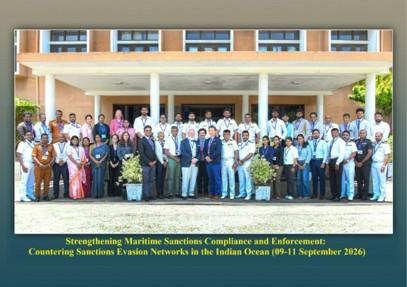
COLOMBO – More than 40 Sri Lankan officials from key government agencies and maritime security institutions received training in detecting and responding to maritime sanctions evasion in a three-day program held in Colombo from September 9 to 11.
Part of efforts to strengthen oversight of shipping activities in and around Sri Lankan waters, the training was conducted by the US Embassy in Sri Lanka through the US Department of State’s Office of Cooperative Threat Reduction, in partnership with the Atlantic Council.
According to a media statement released by the US embassy in Colombo on Friday (25), the training focused on identifying suspicious vessels, detecting deceptive shipping practices, assessing sanctions and proliferation risks, and improving coordination among government agencies in responding to potentially illicit maritime activity.
Participants represented the Sri Lanka Atomic Energy Regulatory Council, Central Bank of Sri Lanka, Sri Lanka Coast Guard, Merchant Shipping Secretariat, Sri Lanka Ports Authority, Ministry of Defence and Sri Lanka Navy.
US Ambassador to Sri Lanka Eric Meyer said Sri Lanka’s strategic position at the crossroads of global commerce brought both significant opportunities and the need for vigilance.
“As sanctions-evasion networks increasingly exploit commercial shipping, the United States is taking decisive action to counter these networks and sharing US expertise with our Sri Lankan partners to protect legitimate trade, secure critical waters, and strengthen regional security,” he said.
The program included presentations and tabletop exercises led by Atlantic Council experts in sanctions and maritime security. Participants examined methods used to conceal illicit shipping activities, including manipulation of vessel identification and tracking information, opaque ownership structures, ship-to-ship transfers and falsified documentation.
The exercises also covered the risks faced by shipping agents, bunkering service providers and other businesses that may knowingly or unknowingly facilitate the operations of sanctioned vessels.
According to the US Embassy, the United States has previously designated brokers, fuel suppliers and cargo certifiers for facilitating the operations of sanctioned vessels. Providing fuel, food or other supplies to a sanctioned vessel could expose companies and individuals to US sanctions risks, including potential civil or criminal penalties, it said.
The training also covered US sanctions and applicable United Nations Security Council sanctions, providing participants with practical experience in conducting due diligence on vessels and associated entities, identifying warning signs, assessing financial and proliferation risks, and coordinating responses across government agencies.
The US Embassy said international sanctions-evasion networks increasingly rely on complex shipping and financial arrangements to conceal illicit activities and exploit legitimate commercial operations.
As a major Indian Ocean transshipment hub, Sri Lanka’s ability to protect its ports and surrounding waters from illicit maritime activity is critical to safeguarding legitimate trade, the embassy said, adding that US-Sri Lankan cooperation was helping strengthen maritime security across the region.
–ENCL

Comments are closed, but trackbacks and pingbacks are open.