

Sri Lanka urged to act as AI Deepfakes target PM, President and political leaders

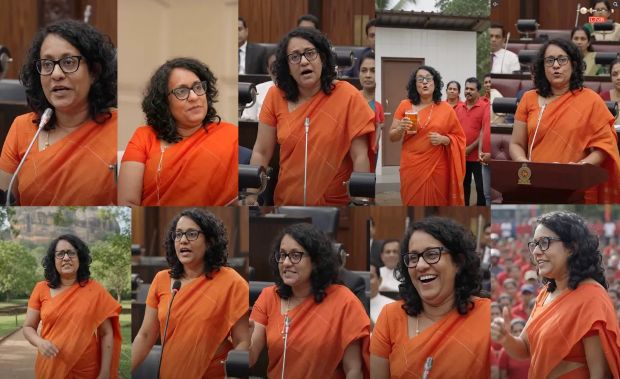
COLOMBO – An independent Sri Lankan researcher on Wednesday (9) urged the government to formally engage Meta over a series of AI-generated deepfake videos targeting Prime Minister Harini Amarasuriya, President Anura Kumara Dissanayake and other senior political figures, warning that the unchecked spread of synthetic content could pose a growing threat to democratic and electoral integrity.
In a letter to Prime Minister Amarasuriya, Dr Sanjana Hattotuwa, independent researcher working on social media, political communication and democratic integrity, calls on the government to seek a detailed response from Meta, the parent company of Facebook, over what he describes as failures to identify, label and address deceptive AI-generated content on the platform.
The concerns are outlined in Dr. Hattotuwa’s latest report, From Bedrooms to Parliament: AI Women, Political Deepfakes, and Facebook’s Growing Failures, shared with the Prime Minister and scheduled to be published on Wednesday (9).
According to Dr Hattotuwa, the report examined 10 AI-generated videos using the likeness and voice of Prime Minister Amarasuriya to fabricate statements she never made, depicting her in Parliament and other settings appearing to admit incompetence, mock government supporters and announce implausible policies.
The 10 videos, Dr Hattotuwa says, had collectively attracted approximately 1.23 million views and at least 7,839 shares at the time they were examined, but none had carried a platform-generated AI-content label on Facebook when they were inspected.
One of the videos, which purportedly showed the Prime Minister claiming that the government would combat dengue by “making mosquitoes homosexual”, had received around 324,000 views alone.
Dr Hattotuwa says that while the videos carried visible watermarks associated with the AI tools used to create them, Facebook had not applied its own native AI-generated content label to any of the 10 videos at the time of observation.
The report also raises concerns over the nature of public engagement with the content, with Dr Hattotuwa noting the comment sections contained sustained misogynistic and sexualized abuse directed at the Prime Minister.
According to the letter to the PM, some users appeared to recognize that the videos were fabricated but nevertheless endorsed or shared them, while others appeared to accept the content as genuine.
From Bedrooms to Parliament: AI Women, Political Deepfakes, and Facebook’s Growing Failures, builds on an earlier study published by Dr Hattotuwa in June, which examined Facebook accounts using AI-generated images and content to create 10 fictitious Sri Lankan women with recognizable names and seemingly ordinary personal lives.
The study found that fabricated identities and apparent personal interactions were being used to generate engagement and direct users towards adult-chat, gambling and cryptocurrency platforms.
Drawing on reporting by the Daily Mirror, BBC Sinhala, the Centre for Investigative Reporting and Newswire, the study also identified comparable AI-driven networks operating through Spanish, Italian and Malayalam-language accounts.
While the study found limited direct evidence of political manipulation, Dr Hattotuwa warned at the time that the same infrastructure used to generate engagement through synthetic personas could potentially be repurposed for political influence operations.
According to the latest report, that concern appeared to materialize by late August, when multiple high-resolution deepfake videos of Prime Minister Amarasuriya began circulating on Facebook.
The report also documents the use of synthetic AI-generated ‘women’ personas to target President Dissanayake, including accounts that combine fabricated political commentary with genuine footage.
Other comparable accounts were found to defend the government and attack its political opponents, reflecting what the Dr Hattotuwa describes as a broader pattern in which AI-generated personas blend lifestyle content, commercial promotion and partisan political messaging.
He says the phenomenon reflects an emerging global trend involving the use of young, conventionally attractive female AI-generated avatars in media and online communications, with similar developments reported in other countries.
In his letter, Dr Hattotuwa warns that the rapid spread of political deepfakes could threaten Sri Lanka’s democratic processes, particularly ahead of future elections.
He cautions that similar technology could potentially be used during election campaigns to fabricate endorsements, statements or announcements, including false claims that political candidates had withdrawn from contests.
He calls on the Prime Minister’s Office to formally write to Meta, enclosing the report and requesting a detailed explanation of how the company intends to address deceptive AI-generated content targeting public figures and other users in Sri Lanka.
Among the issues raised are how Meta plans to label synthetic and manipulated content in Sinhala and Tamil, review impersonations of public officials, respond to gender-based abuse and prevent its recommendation and monetization systems from amplifying fabricated material.
The letter also calls for Meta to establish clear responsibilities, implementation timelines and measurable performance benchmarks, while developing sustained engagement with Sri Lanka’s Election Commission, relevant government institutions and independent researchers.
Dr Hattatuwa argues that the issue requires urgent attention as generative AI tools become increasingly accessible and capable of producing realistic videos, voices and images that can be difficult for ordinary users to distinguish from authentic material.
–ENCL

Comments are closed, but trackbacks and pingbacks are open.